
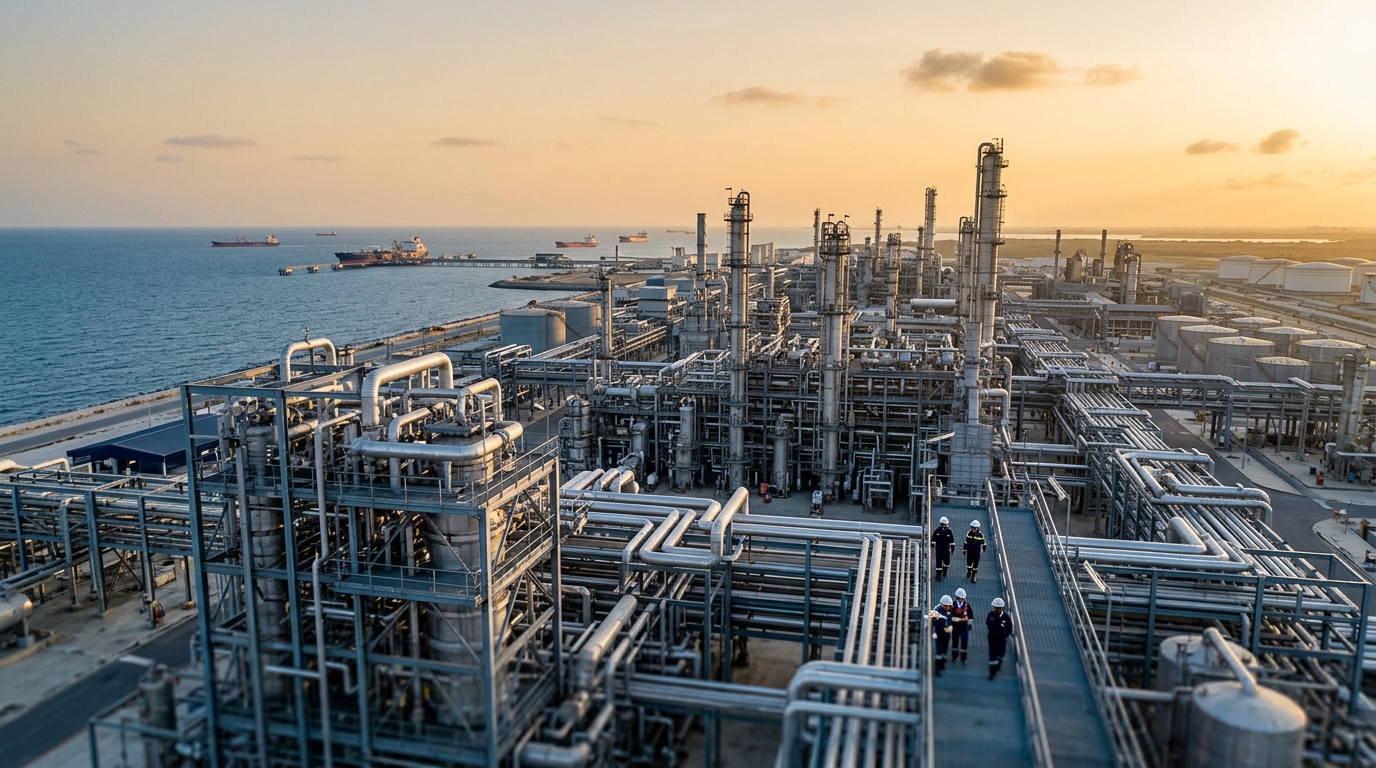
There is a particular kind of investor who looks at an asset that nobody else will touch and decides that is precisely why it deserves a closer look. Aliko Dangote spent the better part of a decade embodying that idea on the Lekki peninsula, and tomorrow the public gets to decide whether it was worth it.
What Is Being Offered
Dangote Petroleum Refinery and Petrochemicals FZE opened its Initial Public Offering on the Nigerian Exchange on September 14, 2026, comprising 4.1 billion new ordinary shares priced at ₦525 each. The listing is the first time a refinery has been offered for public subscription on the Nigerian stock market in the exchange’s history, which dates to 1960. The transaction targets a ₦2.15 trillion raise, roughly $1.4 to $1.6 billion depending on the exchange rate used. With the subscription window closing October 13, the final hours are here.
The Asset Behind the Offer
The refinery is the largest single-train refinery in the world, with investment commonly described as about $19 billion to $20 billion. The timeline was punishing. Dangote announced the project in 2013, ground was broken in 2016, and the facility was commissioned in May 2023, with operations ramping through 2024. Every year brought cost overruns, currency devaluations, and skeptics. In February 2026, the refinery said it had reached its initial nameplate capacity of 650,000 barrels per day.
The financial results since then have been decisive. Ramping up fuel exports during the current supply disruption enabled the refinery to deliver a net profit of $1.82 billion in the first half of 2026 on revenue of more than $13 billion, according to its IPO prospectus, compared with a loss of $476 million in all of 2025. That is not a rounding error. It is a business that crossed from loss to scale profitability in a single year.
Why the Timing Is Extraordinary
The IPO is opening into a distillate market that has no modern precedent. In mid-September, several market reports cited an all-time high for the US ultra-low sulphur diesel crack spread. Before this cycle, diesel cracks often ran far lower than today’s extremes. The Lekki complex sits at the intersection of that scarcity and a geography that can serve it.
Europe imported about 80,000 barrels per day of jet fuel from Dangote during the second quarter of 2026, equivalent to roughly 13% of the resulting supply shortfall, according to Kpler data reported in September. Dangote’s diesel and gasoil exports rose 23% to 48,000 bpd in 2026 to date, with Kpler analyst Sumit Ritolia noting that these barrels have increasingly supplied West Africa and Europe, helping ease an otherwise tight middle-distillate market.
What Could Go Wrong
The strongest argument against enthusiasm here is the one that always applies when an asset lists at peak margins: the timing looks perfect because the cycle has already done much of the work. Diesel cracks at extreme levels are not a permanent condition. When refining capacity and logistics normalise, that spread narrows, and pump prices can fall while crude itself barely moves. A buyer at today’s listing price is, in part, paying for a margin environment that may be impossible to sustain.
There is also concentration risk. In the second quarter of 2026, Nigeria’s seaborne product exports were widely reported at about 350,000 barrels per day, with Europe absorbing roughly 130,000 bpd and other African nations taking nearly 120,000 bpd. That exposure to two major destination markets means any fast reversal in global supply conditions could compress Dangote’s export premium quickly. The refinery was built to serve Nigeria first; international export margins are a bonus, not the core thesis.
The Long-Term Case
Strip out the cycle and the durable argument remains: for decades, West Africa has depended heavily on imported fuel cargoes from Europe and the Middle East, leaving the region exposed to logistical delays and external supply shocks. Dangote built the infrastructure that ends that dependency. The company has disclosed plans to spend about $14.3 billion to expand processing capacity from about 700,000 barrels per day to 1.4 million barrels per day, with completion targeted for 2029.
Peter Lynch used to say the best investments are businesses doing something obvious that nobody else bothered to do. Building a world-scale refinery in the largest economy in sub-Saharan Africa, at enormous personal financial risk, and holding it through a decade of skepticism, qualifies. Tomorrow’s close does not settle the valuation question, but it does confirm that the asset is real, the profits are material, and the market it serves has rarely been tighter.