
October 12, 2026
Bonus Content: Copper Has Gained 39% in a Year. Chile Strikes Test the Rally.
Dear Reader,
Elon Musk just made a shocking prediction.
He said 99% of compute long-term will be for a new kind of AI.
And one tiny company holds 150 patents on the tech that makes it possible.
OpenAI, Microsoft, IBM, AMD, and Amazon have all signed multi-billion-dollar deals with the little-known company.
And I believe this company is in a similar position to Nvidia…
When I recommended it in early 2016…
Before it soared 37,800%…
And gave my readers the chance to turn $5,000 into $1,895,000.
If this stock goes the same way, which I believe it will…
It could be the only stock you need to retire.
Click here to see all the details
Jeff Brown
Founder & CEO, Brownstone Research
P.S. Don’t delay, I believe this company is about to announce its biggest deal ever on November 11. Click to get all the details before it’s too late.
Copper Has Gained 39% in a Year. Chile Strikes Test the Rally.
Copper closed at $6.66 per pound on October 9, up 2.21% on the day and 38.9% higher than a year earlier. Gold, over that same span, gained roughly 5.5%. Silver added about 21%. The metals complex has moved together in 2026, but copper’s surge dwarfs everything else in the group, and right now the Chilean labor calendar is the single biggest near-term threat to the supply side that supports it.
The situation on the ground involves two mines simultaneously, at different stages of the same legal process.
What’s Driving the Market
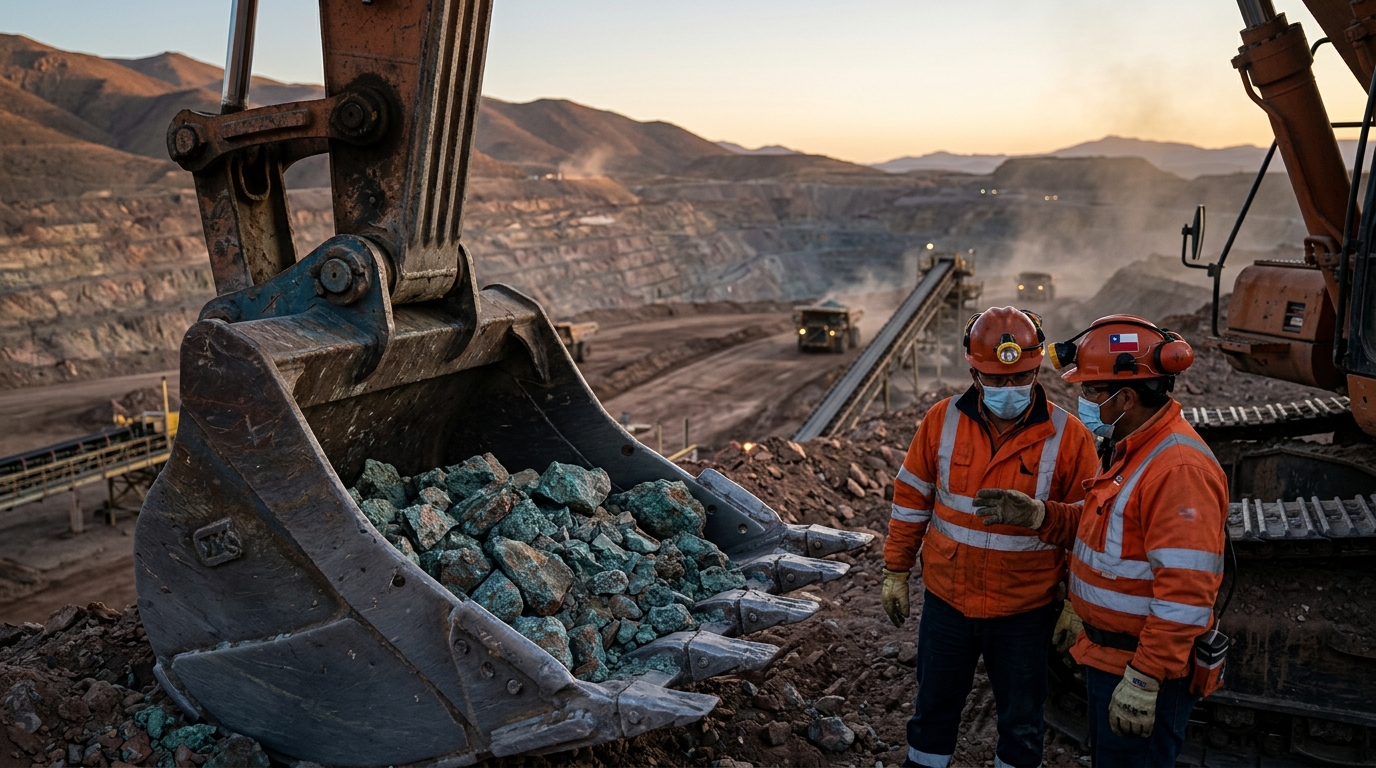
Workers at Antofagasta’s Centinela copper mine in Chile began a strike Wednesday after wage talks ended without an agreement, adding to labor tensions in the world’s biggest copper-producing nation. The walkout is already four days old. Three union members started a hunger strike Friday as labor leaders sought to pressure the company back to the negotiating table. The two unions, Minera Esperanza and Distrito Centinela, have 708 members between them. The strike involves approximately 22 percent of the mine’s direct workforce.
The financial stakes compound over time. The full impact of the strike at Centinela is expected to be felt in November, when production could decrease by half, unions said. The stoppage is the first strike at Centinela and only the second in Antofagasta’s history. The company produced 97,100 tonnes of copper in the first half of 2026 from that complex alone and has maintained its production guidance despite the strike, a position that becomes harder to defend with each passing week.
Escondida is a separate and larger problem. BHP formally requested government mediation on October 5 in its collective bargaining dispute with Escondida’s supervisors union. Under Chilean labor rules, the process temporarily suspends a strike for five working days, allowing the two sides to continue negotiations. Around 95% of participating union members previously voted for strike action, so the risk has not disappeared; rather, the immediate threat of a stoppage has been pushed back. Those five working days may expire this week.
The Investment Opportunity
The supply picture across Chile is deteriorating beyond just these two mines. A new Production-at-Risk Index from GEM Mining Consulting assessed 14 major copper operations across eight threat categories. El Teniente ranked highest at 9% production at risk, followed by Los Pelambres at 8% and Escondida at 7.5%. Chile produced 9.4% less copper from January through July than during the same period in 2025, a decline that extends well beyond any single dispute.
For investors, Freeport-McMoRan (FCX) offers the most direct publicly traded exposure to a sustained copper price above $6.50. The company’s portfolio includes the Grasberg minerals district in Indonesia, and FCX has historically traded at a meaningful premium to its net asset value when copper is in a tight supply period. Glencore’s diversified copper book, which includes Collahuasi in Chile, also warrants attention: Glencore cut its 2026 copper guidance range to 810,000 to 870,000 tonnes, down from a prior 930,000-tonne target, after setbacks at Collahuasi. That guidance cut is priced into expectations. A sustained, unresolved Escondida walkout is not.
Risks to Monitor
The bullish case on copper supply rests heavily on the idea that Escondida stays down for weeks, not days. BHP has previously used mediation to keep work continuing while it negotiates, and the company has signaled it wants a deal that rewards supervisors while remaining responsible with Escondida’s long-term future.
The bearish case is equally clear. Copper is expected to trade at $6.81 per pound by the end of this quarter, according to Trading Economics models. But at nearly $6.70, the market is already pricing in a meaningful supply discount. If mediation at Escondida produces a settlement and Centinela’s unions accept a revised offer, copper’s premium above year-ago levels would need to be justified on structural demand alone, and that is a harder argument at these prices.
Bottom Line
Copper’s 39% year-over-year gain is not a story about industrial demand running hot. It is a story about Chilean supply running cold. Gold has added about 5.5% over the same period; silver about 21%. The red metal’s outperformance makes sense precisely because its supply vulnerability is more acute and more concentrated than either precious metal. The question this week is whether BHP bends at Escondida or lets the five-day mediation window close without a deal. That answer will determine whether copper at $6.66 looks like a ceiling or a floor.