
October 11, 2026
A weak currency and $100 oil are squeezing Indian physical gold demand
The week ending October 9 delivered a sharp reminder that India is absorbing the full force of $100 Brent. Foreign institutional investors withdrew a net ₹12,944 crore from Indian equities on October 8, the second-highest single-day outflow of 2026. The Nifty managed a 1.3% bounce Friday on TCS results, closing at 22,520, but the broader picture is grim: in October alone, foreign portfolio investors pulled ₹44,166 crore from Indian stocks, pushing total 2026 outflows beyond the ₹3 lakh crore mark.
‘Please, Please, Please’: OpenAI CEO Sam Altman Begs Small Company for Help
As reported by Financial Times, those are the exact words OpenAI CEO Sam Altman spoke on an open line to a small company in Arapahoe County, Colorado… which now controls what could be the most important technology in the world. Altman is desperate to get his hands on it… and he’s not alone. This tech is now backed by Elon Musk, Jensen Huang, and more.
Click here to learn how you could invest in this breakthrough alongside Sam Altman and Elon Musk.
The currency tells the same story. The rupee ended last week near 96.78 per US dollar, after weakening to around 96.88 on October 8. It remained close to record-weak levels even after the RBI’s first repo rate hike in nearly four years on October 7. Persistent foreign portfolio outflows and elevated crude oil prices helped keep the rupee under sustained pressure throughout the week.
That rate hike is its own signal. On October 7, the RBI MPC raised the repo rate 25 basis points to 5.50%, the first increase since February 2023, and shifted its stance to “calibrated tightening.” The central bank now projects CPI inflation for FY27 at 5.2%. September inflation data lands Monday. Given the RBI’s own inflation path, nobody in Mumbai is expecting a benign number.
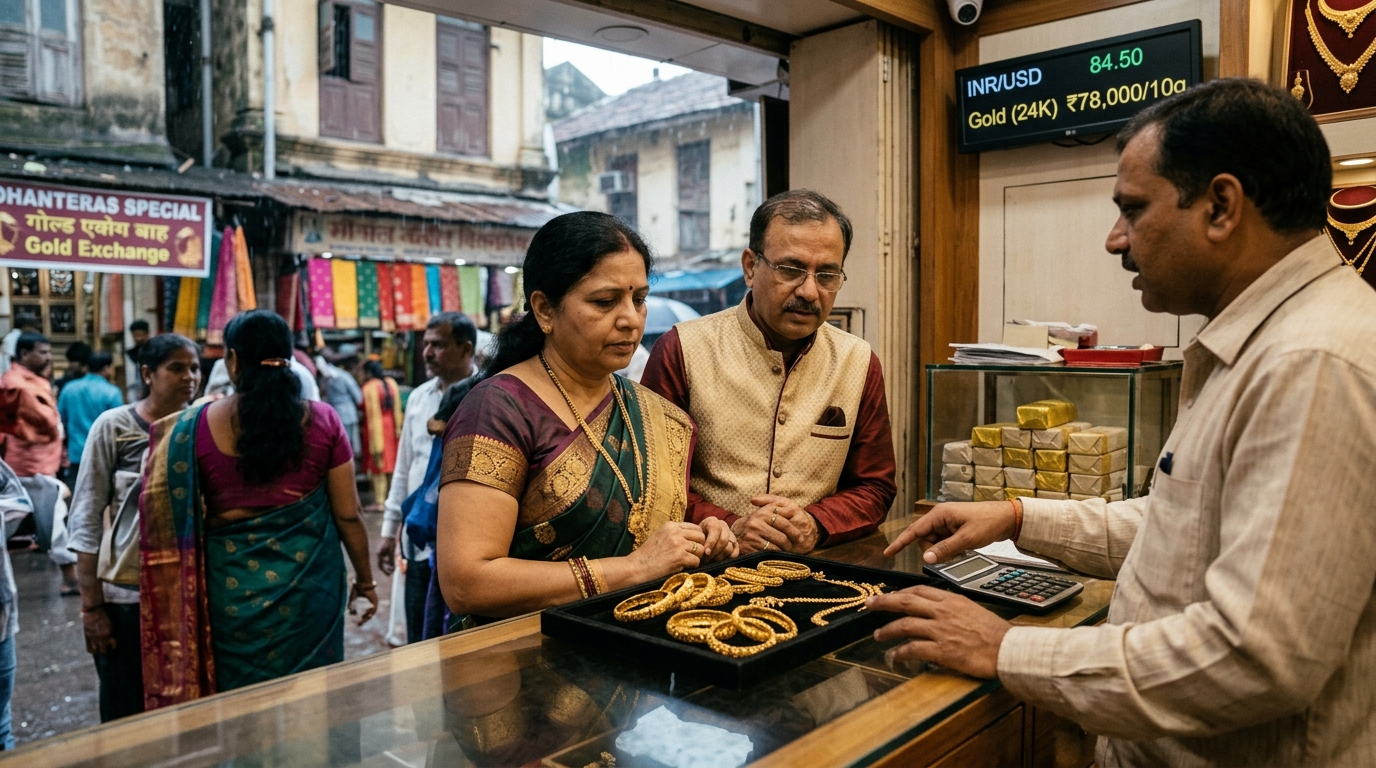
For gold investors, this matters more than the Nifty level. India is the world’s second-largest gold buyer, and the calendar turns critical here: Dhanteras and Diwali sit directly ahead. Gold is embedded in wedding rituals that generate at least half of India’s gold jewellery demand, and festivals including Dhanteras, Diwali, and Dussehra create calendar-driven purchase obligations that are not easily deferred.
Elon’s plan to replace the dollar
Elon Musk has called the dollar “a scam…” and “just an entry in a database.” Now, he’s making a move to replace it. It’s not a crypto or anything to do with the blockchain. And it has big implications for anything you hold in dollars.
Make this one money move to get on the right side of Elon’s “dollar takeover” now.
But this festival season arrives with two compounding headwinds that have no recent precedent operating simultaneously. First, the rupee. The rupee slid from about ₹90 per dollar in January to roughly ₹95–96 by late summer. A weaker rupee inflates the domestic price of gold even when the London benchmark holds flat, because India relies heavily on imported gold and those imports are paid in dollars.
Second, the duty wall. India raised its gold import duty sharply from 6% to 15% in May 2026, the steepest increase on record, alongside broader regulatory tightening to curb imports. As of October 11, 24K gold in India was around ₹1,46,110 per 10 grams in Delhi, before GST and making charges. That price, with the rupee near 96 to the dollar, is the entry point for a Dhanteras buyer this year.
The government’s logic was to protect foreign exchange reserves from a surging import bill. Gold imports rose to a record $71.98 billion in FY26, even as volumes fell. With crude elevated, the current account deficit is widely expected to widen, and several India-focused macro notes estimate that each $10 per barrel move in oil can add roughly 30 to 50 basis points to the current account deficit, depending on pass-through and offsets. The policy was rational. Its effect on festival demand is real.
A Forgotten Energy Source Is Powering Back Up
While investors chase the next tech story, one long-ignored sector is quietly heating up. A mix of global policy, rising demand, and tightening supply could reignite this market before 2026. See what the latest research reveals.
The bullish counterargument is cultural persistence. In early 2026, India’s gold demand surged year on year in value terms as prices rose, even before the duty hike. And historical trends indicate that higher duties tend to increase unofficial inflows, although official imports can remain resilient. Indian buyers have a long record of absorbing higher prices during festivals rather than deferring purchases.
The risk is that 2026 has layered three restraints on top of each other: a 15% duty, a rupee near its weakest ever, and an RBI signalling that relief is not coming soon. Physical demand may hold through the season on cultural obligation, but at lower volumes and lighter gram weights. Watch for any bounce in gold ETF activity in India as a signal that buyers are migrating from jewelry counters to paper gold. Deloitte has flagged gold’s continuing “wealth creation” role for consumers, and the World Gold Council has documented a broader tilt toward investment-led buying, including bars, coins, and ETFs. That structural shift, accelerated by this season’s price shock, may be the most durable consequence of India’s current macro bind.