
October 26, 2026
Musk warns the AI lending window has closed for most of the market
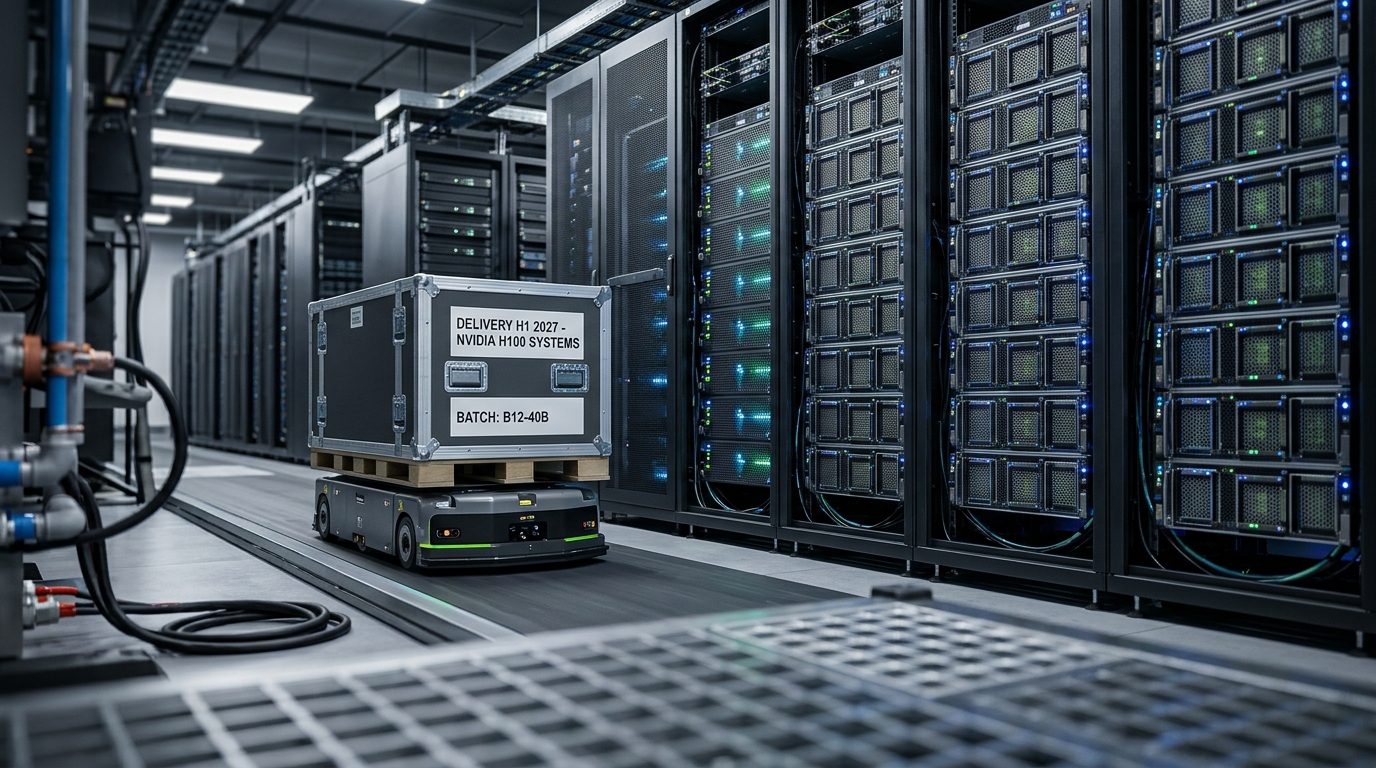
The loudest question hanging over Nvidia for the past two weeks has been whether the order books backing its growth are real. SpaceX just answered it with $40 billion in mostly callable debt, aimed at Nvidia GPUs due to arrive in the first and second quarters of 2027.
He Doesn’t Buy Gold. He “Skims” It.
A former hedge fund manager ranked in the top 1% by Barron’s has developed a three-step strategy to profit from gold – without buying a single ounce.
His followers have had the chance to collect $2,975… $3,781… and even $6,786 at a time. With a 73% win rate.
He calls it “Gold Skimming.” And he’s just revealed the full strategy for the first time.
Musk announced the deal in a post on X on Sunday, noting that SpaceX carries investment-grade ratings and generates revenue from its Starlink satellite internet and rocket launch businesses. That combination matters enormously. Though this kind of financing is still possible for a company with substantial revenue independent of AI data centers, the debt markets have been “almost entirely shut off” for any company that lacks additional revenue streams, Musk claimed.
The timing is precise. Private credit’s expanding role in financing AI infrastructure faced one of its clearest market tests this month as CoreWeave’s bonds fell to distressed levels, with the cost of insuring its debt against default climbing to about 1,200 basis points and yields on some bonds rising to roughly 15% to 16%. Against that backdrop, Musk’s announcement reads less like a victory lap and more like a credit triage report: SpaceX gets the keys because it earns money doing something other than renting GPUs.
What the Deal Actually Says About Nvidia
The $40 billion figure is striking, but the more important number for Nvidia investors is the delivery window. The financing, primarily consisting of callable debt for graphics processing units, is expected to arrive in the first and second quarters of 2027. That is not speculative backlog. It is a specific hardware commitment from a counterparty with the balance sheet to follow through.
Nvidia reported revenue of $96.2 billion for the second quarter of fiscal 2027, up 106% from a year ago, with data center revenue of $89.0 billion, up 117%. Management forecasted that fiscal 2028 revenue will rise by about 70%, and said demand is higher than what its supply chain can support. Demand, in other words, is not the binding constraint. SpaceX’s deal only reinforces that reading.
WARNING: AI Is About to Escape Earth (Watch Now)
Sam Altman calls Elonâs plan “ridiculous.”
AI is set to add an estimated $15.7 trillion to the world economy.
But according to Elon Musk, launching AI into the stars could ignite a brand-new $26 trillion market.
There is a caveat worth noting. Bloomberg reported that while Musk declared the deal closed, people familiar with the discussions indicated that talks over pricing were still ongoing. Earlier reports cited Apollo Global Management as the lead investor, with the structure split between roughly $10 billion in bank loans and $30 billion in investment-grade debt. Whether finalized or not, the scale and direction of the commitment are not in dispute.
The Neocloud Problem Is Real, and It Is Nvidia’s Problem Too
Musk said debt markets have almost entirely cut off money to any company without substantial revenue independent of AI data centers, adding that the squeeze would lead to “guppy-level death and consolidation” among the more than 200 neoclouds that rent AI computing power to developers.
That claim deserves scrutiny from an Nvidia perspective. CoreWeave, one of the largest neocloud operators, has an arrangement under which Nvidia is obligated to buy residual unsold CoreWeave capacity through April 13, 2032, subject to the agreement’s terms. If smaller GPU renters lose access to capital and shrink their buildouts, the customer base that has driven Nvidia’s data center revenue concentrates further into a handful of hyperscalers and names like SpaceX. Fewer buyers with more leverage is a different market than the one Nvidia has been navigating.
For now, the concentration cuts the other way. AWS has committed to take delivery of roughly $5 billion of Nvidia GB300 GPU server racks upfront and expects about $3 billion more per month for the foreseeable future, according to internal emails obtained by Business Insider and reported in follow-on coverage. SpaceX is layering $40 billion more on top. The buyers who remain are spending at a scale that dwarfs anything the neocloud cohort represented individually.
Silver & Gold Spark Breakout on This US$1 Discovery Stock
Silver and gold are obliterating records as capital floods back into early-stage discovery stocks positioned for the next explosive leg higher in 2026-27. One under-the-radar North American silver-gold firm – trading undiscovered below US$1 per share – is leading that shift. The company has unified an entire historic district for the first time, unlocking modern drilling across vast, mineral-rich ground. Phase-2 drilling is underway with initial results confirming high-grade silver-gold mineralization.
Risks to Monitor
The bear case is that creditworthy GPU buyers are fewer than the market priced in, and that the volume lost from struggling neoclouds cannot be fully replaced by large-balance-sheet players. Jensen Huang has said neocloud demand is “off the charts,” while also flagging that the capital needed to fund AI infrastructure is scarce, adding to concerns that smaller AI companies could struggle to finance expansion, which could slow future orders for Nvidia’s chips.
The bull case is simpler. SpaceX just signed for $40 billion worth of 2027 deliveries in the same week the market was questioning whether AI chip orders were durable. The order book answered. The question now is who funds the next $40 billion purchase, and whether there are enough SpaceX-caliber balance sheets left to sustain the pace.
Bottom Line
What precious metals investors should understand here is the same dynamic playing out in every capital-intensive sector right now: credit quality is separating winners from survivors. SpaceX can borrow because Starlink generates real cash flow independent of AI speculation. CoreWeave can borrow, but at far higher implied costs in public markets. That credit bifurcation will reshape which companies actually receive Nvidia chips in 2027, and which do not. Nvidia’s demand story remains intact. The question that has changed is who, exactly, is doing the demanding.