
October 17, 2026
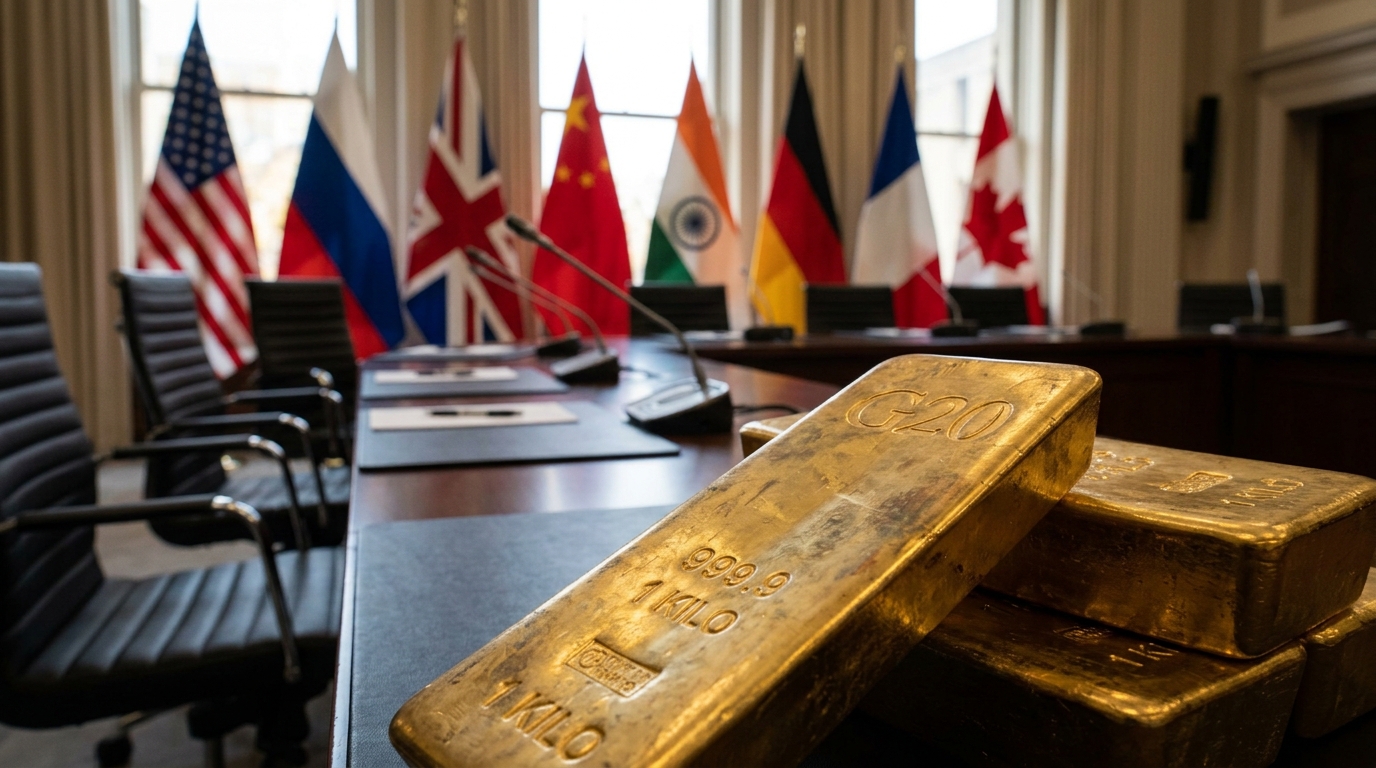
Bonus Content: The G20 Broke Down in Bangkok. Central Banks Are Buying Gold Because of It.
When news broke overnight about China’s Moonshot AI unveiling its new model…

The market gapped down 1% before most traders even poured their morning coffee…
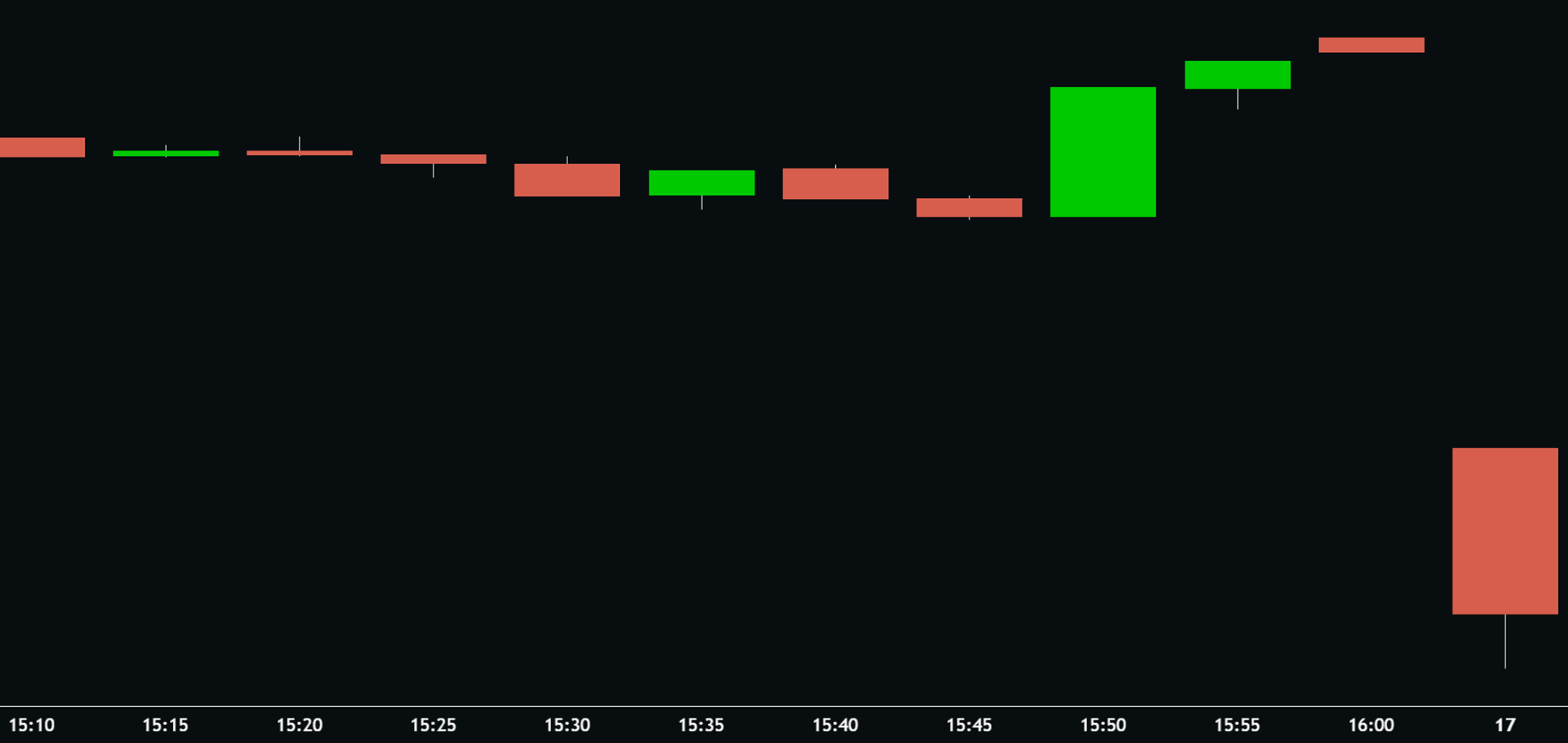
For standard portfolios, it looked like the start of another stressful day…
And over the next two hours, the market barely crawled higher… moving a tiny 0.2%…
To traditional buy-and-hold investors, a 0.2% move is practically useless…
Yet, according to our research, anyone who ignored the overnight headlines and waited until exactly 9:50 AM Eastern could have locked in a $529 payout before lunchtime… on a simple $1,000 starting stake…
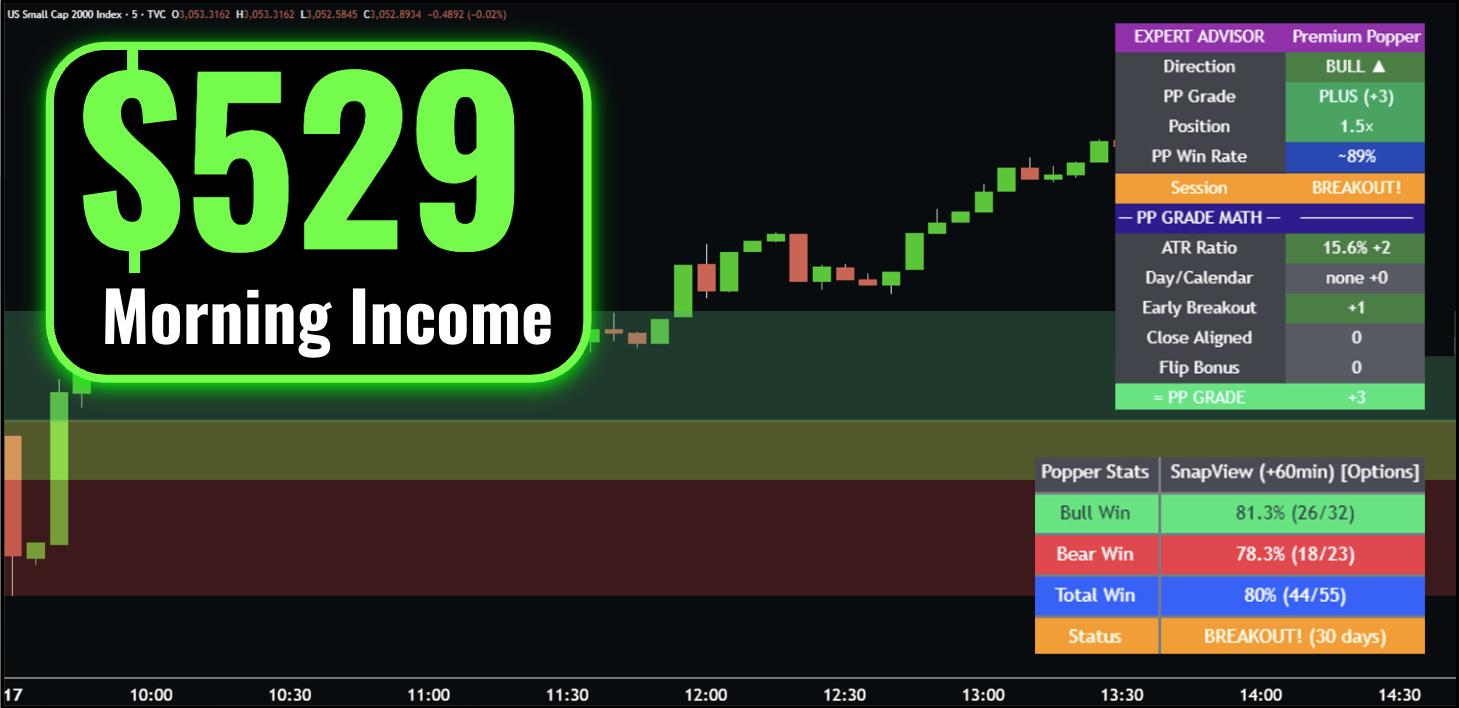
That would not have been an isolated fluke either…
Back on June 25th, when inflation surged past 4%…
And panicked investors expected a massive market beatdown… the market moved just 0.3% after the open… yet that exact same morning setup yielded another $526 payday before lunch…
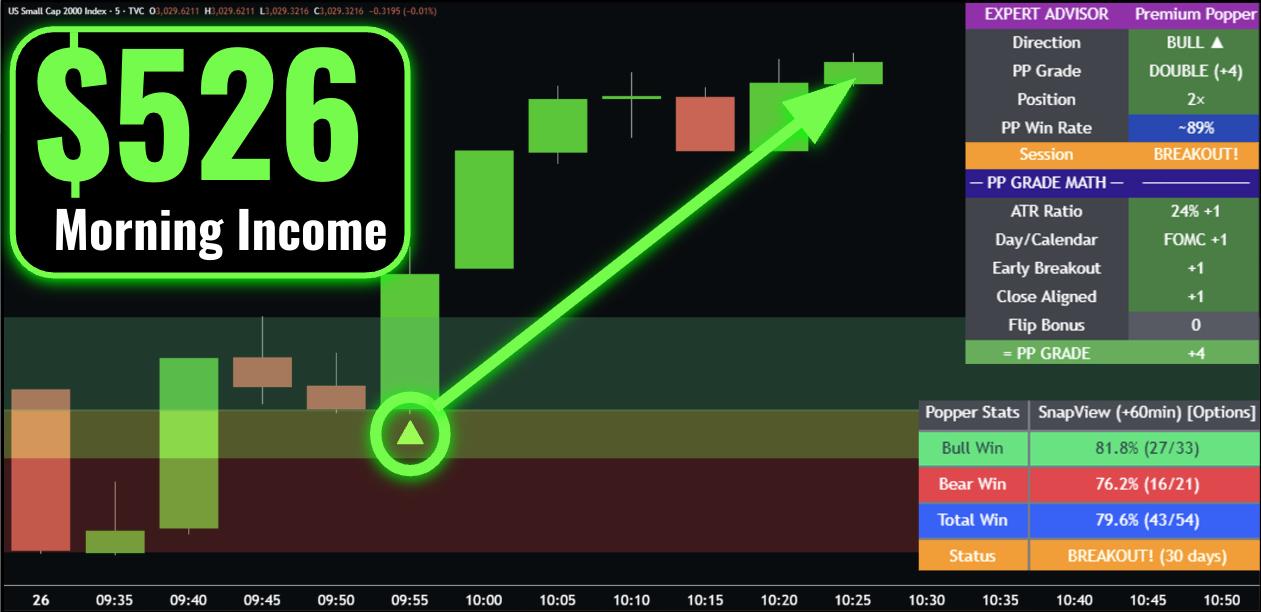
Of course, there would have been smaller gains and some that did not work out, but…
How would it have been possible to pull $500+ out of the market on a tiny fraction-of-a-percent crawl… while traditional traders are getting chopped to pieces?
It all comes down to an institutional phenomenon that happens during the first 20 minutes of every trading day…
Between 9:30 AM and 9:50 AM, Wall Street heavyweights enter a massive brawl to settle block orders… pushing nearly 25% of the entire day’s volume into a brief 20-minute window…
Right around 9:50 AM, the brawl ends… the dust settles… and the market literally hands us its direction for the rest of the morning…
By placing just one simple trade on one ticker right as that direction becomes clear…
You give yourself a shot to walk away with $500 in hand before lunch, leaving you completely free for the rest of your day…
While I cannot make any guarantees in the market…
Recently, I sat down live on camera with a former money manager to lay out the floor data behind this 9:50 AM morning phenomenon…
And how anyone with a normal brokerage account can take advantage of this step-by-step…
Tap here to watch the complete video breakdown before access is taken down.
See you there,
Silas Peters
The G20 Broke Down in Bangkok. Central Banks Are Buying Gold Because of It.
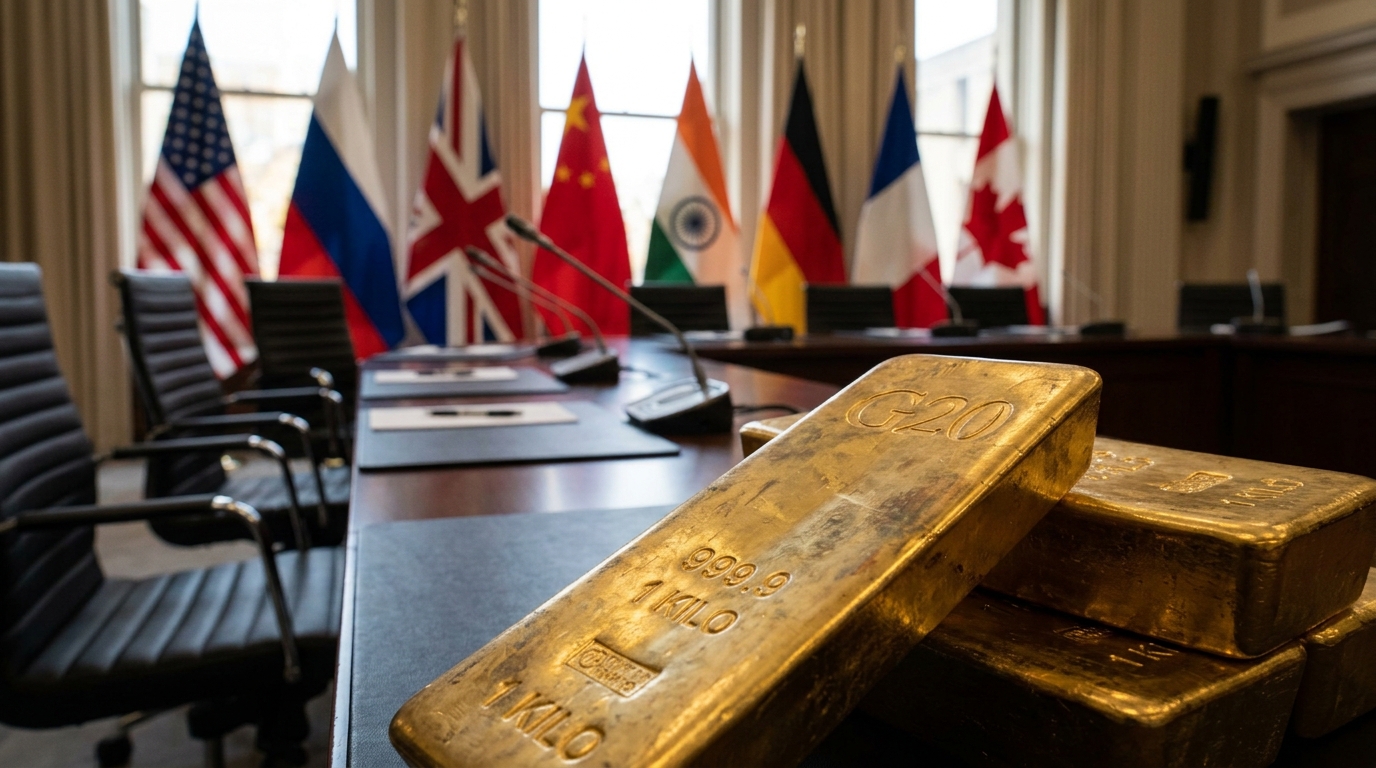
The G20 finance ministers and central bank governors left Bangkok on Thursday without a joint communique. Finance chiefs ended the meeting without a joint statement amid splits over Iran, trade imbalances, and Ukraine. That is the headline. The signal underneath it matters more to gold investors.
Russia returned to the G20’s in-person finance talks at the invitation of the United States, which holds the G20 presidency in 2026. Russian Finance Minister Anton Siluanov attended for the second time since the 2022 invasion of Ukraine, while Germany’s Lars Klingbeil rejected treating Russia as a normal G20 member. Klingbeil said plainly that there would be “no pretending that Russia is now returning as a normal member of the G20 and simply taking its seat at the table again.”
Russia’s return to the G20 table has tested how far Washington’s outreach to Moscow will strain ties with European allies. That fracture is not just a diplomatic problem. It is a reserve management problem for every central bank watching from the sidelines.
The logic is straightforward. When Western allies cannot agree on the basic rules of engagement at a finance ministers’ table, the institutional architecture underpinning dollar-denominated reserves looks less reliable. Central banks in emerging markets drew the sharper lesson from the 2022 Russian sanctions: dollar assets held abroad can be frozen. As UBS commodity analyst Giovanni Staunovo put it, “The fear that the assets cannot be accessed abroad is, since 2022, driving some central banks to repatriate gold held abroad.” Bangkok amplified that concern rather than easing it.
The buying data confirms the trend is structural, but investors should also keep an eye on revisions. Central banks were initially estimated to have purchased a net 244 tonnes of gold in the first quarter of 2026, according to the World Gold Council, but the Council later issued a substantial revision to that estimate. Goldman Sachs expects central banks to average around 60 tonnes per month through 2026, supported by continued diversification demand amid geopolitical uncertainty. And while annual sovereign buying has been running much hotter than the pre-2022 norm, pinning it to a single clean “1,000 tonnes” figure depends on which dataset and revision vintage you use.
The Bangkok breakdown is not a one-off. The invitation to Russia drew criticism from EU officials and a bipartisan group of US senators. EU foreign policy chief Kaja Kallas said it was “clearly the wrong path to normalize people who are starting wars.” The communique failure was telegraphed even before the meeting opened: the gathering was widely expected to end without a joint communique.
Gold is trading near $4,165 per ounce. The metal reached an all-time high near $5,600 in January 2026, and has pulled back since. That pullback, in the context of Bangkok, looks less like a trend reversal and more like a pause. The underlying driver of the multi-year surge has always been sovereign diversification out of a dollar system that looks increasingly contested.
Risks to Monitor
The bull case for gold via reserve diversification is well-documented at this point, which means the risk is complacency. A genuine US-Russia ceasefire agreement in Ukraine could ease the sanctions anxiety that underlies much of the non-Western buying. A sharper-than-expected rise in US real yields would raise the opportunity cost of holding gold across the board. Goldman Sachs Research has also argued that the growing use of certain hedging instruments linked to gold can amplify two-way volatility even when the longer-term trend remains upward.
Europe’s fury at Washington over Siluanov’s seat is also worth watching separately. If transatlantic tensions push European central banks to accelerate their own diversification, that is an additive demand factor. In the Central Banking 2026 reserve management survey, more than half of respondents said they expect to prioritize asset diversification over the next 12 months, with over one-third planning to increase their exposure to gold.
Bottom Line
Bangkok produced no communique and no consensus. What it did produce was another visible crack in the dollar-centric financial order that has anchored reserve management for decades. Central banks already understood that lesson from 2022. The G20 fractured over Iran, Ukraine, and a Russian finance minister who should not have had a seat at all, according to half the room. Each of those fault lines reinforces the same trade: own the asset that carries no counterparty and answers to no particular capital’s foreign policy.