
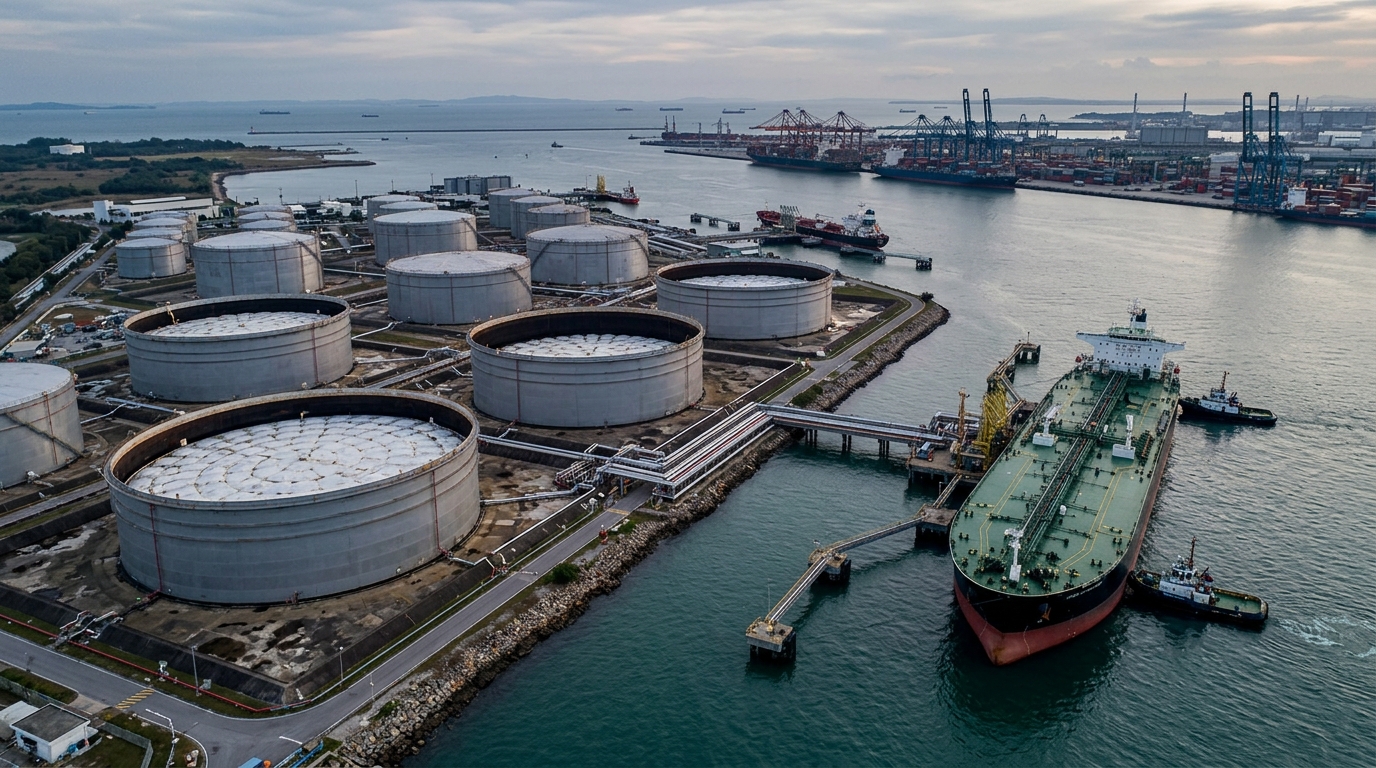
The math is getting uncomfortable. IEA member countries have tapped about 330 million barrels out of the 400 million initially pledged in March. Thursday’s governing board meeting produced an agreement to accelerate the remaining roughly 100 million barrels, including the release of over 20 million barrels of diesel “as soon as possible.” Brent responded by barely moving. It traded around $105 a barrel on Friday morning, down slightly from Thursday’s settlement.
That is the signal the market is sending, and it deserves more attention than the headline figure.
The over-20-million-barrel diesel commitment is small against global middle-distillate demand, and traders treated it as a scheduling move, not a new supply shock. Reuters reported that analysts, including Sparta Commodities’ Abhishek Kumar, saw the diesel component largely as an acceleration of previously pledged volumes rather than an additive increase. The board approved the deal; the market sold the news.
Washington read the room the same way. Bloomberg reported that the US informed fellow IEA members that current plans don’t go far enough to quell rising fuel prices, and US officials have been informally lobbying for an extra commitment of at least 100 million barrels. That demand went unmet Thursday. The board reaffirmed existing commitments. “Gas oil prices ticking higher suggests some disappointment that we are not seeing any firm commitment to add additional barrels here and now,” said Ole Hansen, analyst at Saxo Bank.
The deeper problem is structural, not logistical. ICIS reported, citing IEA data, that global diesel exports in September were 700,000 barrels per day lower than a year earlier, reflecting a combined loss of 1.3 million barrels per day from Russia and the Middle East. The IEA has said lost diesel stocks are unlikely to be replenished beyond normal seasonal changes before the second half of 2027. No reserve release fixes that timeline.
Seven months into the crisis, the buffer is visibly thinner. IEA member governments still hold roughly 1.1 billion barrels of publicly held emergency stocks, including over 200 million barrels of diesel. The cushion exists, but it is not unlimited, and the US is already asking for another 100 million on top of a program that will exceed its original 400 million barrel pledge.
For investors, the most direct read-through is in refining. US refiners have responded by running in the high 90s on utilization in recent months, with Midwest plants at times operating above 100% of operable capacity in EIA weekly data. That physical ceiling matters: a triple-digit diesel crack spread does not translate to proportionally higher refinery output because most US refiners already operate at or near their practical limits. Major refiners including Valero (VLO), Marathon Petroleum (MPC), and Phillips 66 (PSX) are expected to report substantially higher third-quarter earnings, with results due in late October and early November. PBF Energy (PBF) carries the highest per-barrel earnings sensitivity among mid-cap peers, with every $1 per barrel move in gross refining margin worth roughly $304 million annually before costs, making it among the highest-beta expressions of the crack and the most exposed if margins compress faster than expected.
The central question for the oil market is not whether the IEA’s release program has helped; at about 330 million barrels delivered, it clearly has. The question is what the market leans on if Hormuz worsens again. The IEA has argued that the resumption of transit through the Strait of Hormuz is the single most important step toward normalizing flows and easing strain in diesel and other products. Washington’s dissatisfaction Thursday was less a negotiating posture than an acknowledgment of that limit. The reserves are thinning. The strait is not yet normal.