
September 30, 2026
Bonus Content: Two Chilean Copper Mines Are Heading for Strikes. Copper Is at a Record.
Three shipments, fifty tonnes, and 4,405 ounces of silver
Fifty tonnes is about two truckloads. In 1907, 1916 and 1917 men carried roughly that much rock out by hand and by horse.
Government records put the grade between about 2,400 and 4,160 grams of silver a tonne, and the recovered silver near 4,405 ounces.
After 1917, silence for ninety years. Then in 2008 a loose rock from the same area assayed insane results. Enough to get the team mobilized.
See what modern mining technology is finding what was missed 100+ years ago..
Two Chilean Copper Mines Are Heading for Strikes. Copper Is at a Record.
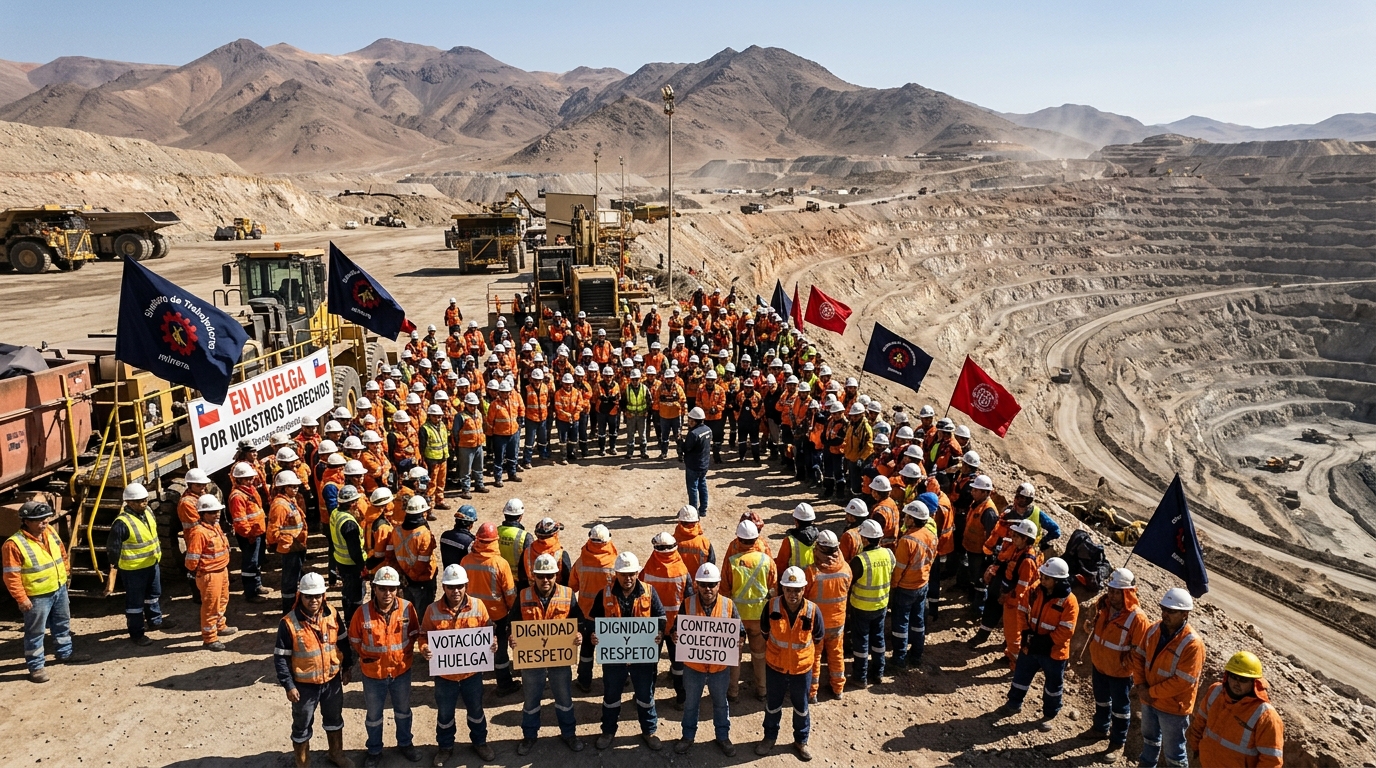
Chile is presenting copper markets with a compounding problem. Workers from two unions at Antofagasta’s Centinela mine in northern Chile rejected the company’s collective contract offer on Monday, paving the way for a strike. The company and unions must now undergo a mandatory five-day government-led mediation process, which can be extended for another five days by mutual agreement, before a strike can legally begin. The vote was not close: Minera Esperanza and Distrito Centinela unions backed strike action by 98.73%.
While that mediation clock starts ticking, a second ballot closes today. Unionized supervisors at BHP’s Escondida copper mine, the world’s largest, voted on whether to reject the company’s latest contract offer from September 28 to 30. The union board unanimously rejected the latest offer, claiming it “lacks essential elements,” and called on members to vote for a strike. The union’s current contract expires today, September 30, 2026.
The disputes are separate, but the calendar compresses them into the same window. At Centinela, mandatory mediation begins immediately. At Escondida, a no vote today triggers an identical five-to-ten-day mediation period. Markets can map a narrow strike-risk window into early to mid-October. When the risk is near-term, copper pricing often reacts most at the front of the futures market, because any disruption would hit supply now rather than years from now.
What’s Driving the Market
Copper’s all-time high on the LME is $14,858 per metric ton for the standard three-month contract, set on September 9, breaking the previous high of $14,708.50 set just one day earlier. The metal has since pulled back modestly, but the supply picture underneath this quarter’s rally is tighter than the headline price alone suggests.
Global mine production actually fell 1.1% in the first half of 2026, according to preliminary data from the International Copper Study Group. Codelco’s El Teniente remains constrained by its 2025 rockburst. Escondida’s copper production in fiscal 2026 was 1.261 million metric tons, down 3% year-on-year, with fiscal 2027 guidance set at 1.0 to 1.1 million metric tons. A mine that is already producing less is now facing a potential work stoppage, at the moment its contract expires.
The Centinela figures amplify the concern. Total copper production at Centinela was 240,400 tonnes in full year 2025, 7% higher year-on-year. Given that output level, an extended work stoppage could create additional supply uncertainty, though the scale of any production impact cannot be estimated unless a strike begins and its duration becomes clearer. What is already clear is the direction of travel: both mines are heading into October with unresolved labor disputes and no agreement in sight.
The Investment Opportunity
For investors already holding copper exposure, the structure of the next ten days matters more than the headline risk. BHP carries the larger weight here, given Escondida’s scale. Rio Tinto holds a 30% stake in Escondida, while Japan-based JECO owns 12.5%. That means a disruption at the world’s largest copper mine spreads financial consequences across BHP, RIO, and their respective shareholders simultaneously.
Freeport-McMoRan (FCX) and Southern Copper (SCCO) are the cleaner expressions of a supply-shock thesis if Chilean production falls short: both are major producers outside Chile, positioned to benefit from any premium priced into physical copper over the next month. The COPX ETF offers broader exposure across the producer complex if investors prefer not to concentrate single-name risk during what could be a noisy mediation period.
Risks to Monitor
Mediation often works. In May 2026, the Centinela supervisors’ union approved a strike measure with 77.21% support, but that measure was subsequently suspended after Antofagasta requested mandatory government mediation. The Chilean government has strong institutional incentives to facilitate settlements before walkouts begin. If both disputes resolve within the mediation windows, the supply-disruption premium built into front-month copper could unwind quickly.
The broader copper market is also carrying its own distortions. Comex copper reached $6.83 per pound on September 22, but that peak has been described by some analysts as partly driven by U.S. tariff expectations rather than a clean signal of global tightness. A decision from Washington on refined copper tariffs could move prices independently of anything happening in the Atacama Desert.
Bottom Line
Chilean copper supply is under simultaneous pressure from two of its most important mines, at the exact moment that contracts expire and mediation clocks start. The strikes are not guaranteed, but the probability is higher today than at any point this quarter. Investors in BHP, Antofagasta, and copper-linked vehicles should understand that the five to ten days beginning today are the period where the supply event copper’s near-record price has been anticipating either materializes or gets resolved. Watch the mediation deadlines, not just the daily price.