
October 1, 2026
Bonus Content: Strike Clock Starts at the World’s Largest Copper Mine
What are you hiding in Fremont Elon???
At a recent shareholder meeting…
Elon Musk announced the END of Model S and X production lines at Tesla’s Fremont Factory…
So that they can convert them into a 1 million unit per year line of ‘Elon’s iPhones’.
A breakthrough technology that will shock the world and generate “INFINITE PROFITS” for Tesla, according to Elon.
And he said the new “production-ready” version could be revealed as soon as October 21st.
But according to Matt Monaco, the legendary tech investor who turned $2k into $3 MILLION trading mega trends like this early…
If you ONLY buy shares of Tesla…
You could be missing the most lucrative part of this new opportunity.
Matt’s pinpointed 5 tiny companies that could ride the coattails of ‘Elon’s iPhone’ when it goes mainstream.
(2 of the 5 stocks are trading for less than $4 per share as of this writing.)
But who knows how HIGH they could fly when this goes mainstream!
So there’s no time to waste…
Strike Clock Starts at the World’s Largest Copper Mine
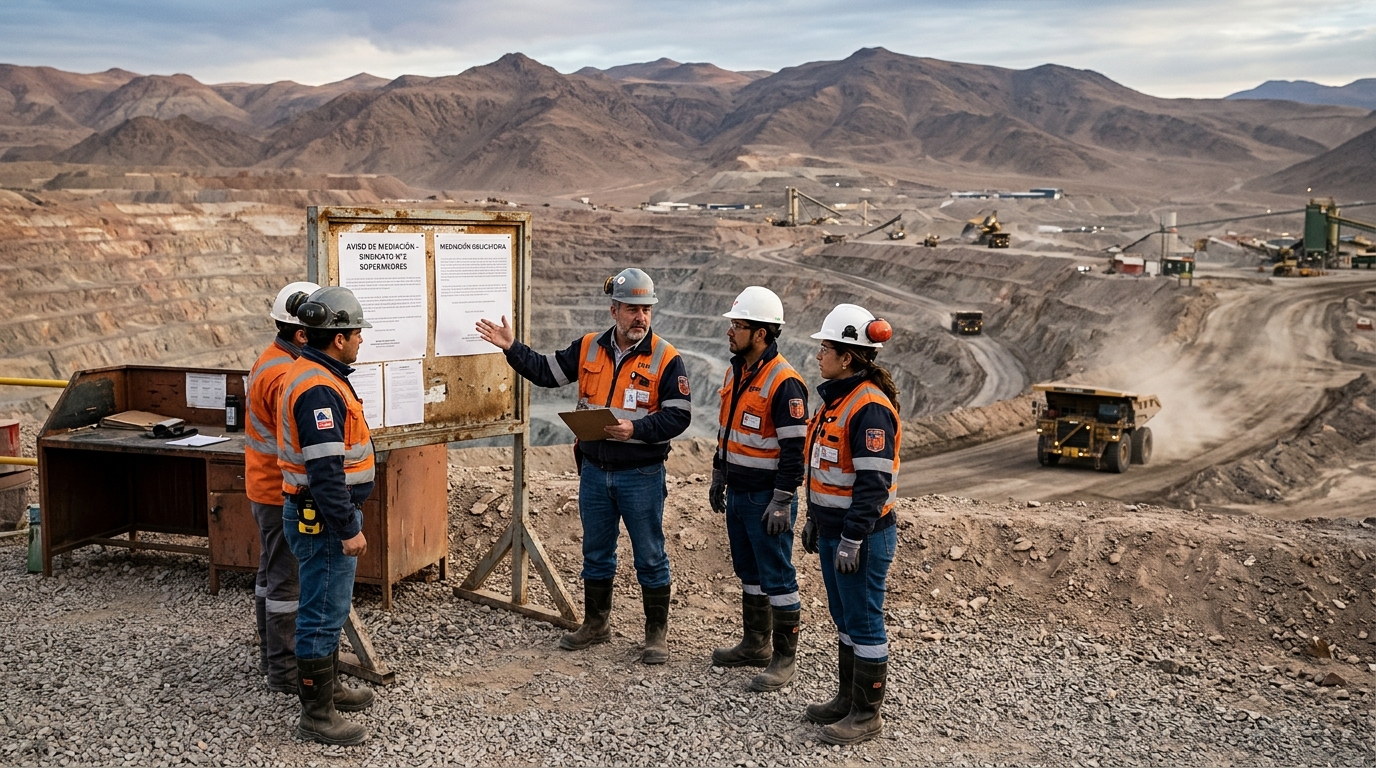
The vote is in. Sindicato N°2 de Supervisores y Staff at BHP’s Escondida copper mine in Chile rejected the company’s final wage offer, with 94.8% voting to authorise strike action. Chilean law now mandates at least five business days of government mediation, extendable by five more business days by mutual agreement, before any legal walkout. Both sides have entered that window as of today.
The grievances are specific. The union of about 1,020 supervisors objected to limited pay improvements, multi-tasking requirements, and a proposed 14×14 shift rotation. Union leader Alexis Barrera has said the latest proposal offers little beyond what the existing contract already provides in salary and benefits, and the union has rejected the company’s push for broader “polyfunctionality”, including training that could put supervisors into plant-operations tasks such as operating trucks, arguing those roles belong to floor staff. BHP’s position is that its offer contains genuine improvements. The gap between those two assessments is wide enough that the mediation clock is running under pressure rather than as a formality.
For copper investors, the timing compounds an already strained supply picture. The mine produced 1.261 million tonnes in fiscal 2026, down 3% year on year, with fiscal 2027 guidance of 1.0 to 1.1 million tonnes. Production is currently unaffected, but the vote compounds supply risk after a fatal accident halted operations in late September. That accident, which killed a contractor on September 23, triggered a suspension of activities before a gradual restart as authorities reviewed the incident. The mine has barely recovered from one disruption before a second threatens to materialize.
The outcome does not land only on BHP: Rio Tinto owns 30% of Escondida and Japan-based JECO holds 12.5%, so any disruption would hit multiple major mining firms’ copper supply. Escondida is not isolated trouble. Unions at Antofagasta Minerals’ Centinela mine also rejected the company’s wage offer, with 98.73% voting to strike, and a mandatory five-business-day government mediation period now applies there as well. Chile’s supply corridor is running hot on labor tension across multiple operations simultaneously.
Copper itself has been the industrial signal of the year. Copper traded around $6.57 per pound on October 1, up roughly 34% compared to the same time last year. Supply and demand are not in balance. Any prolonged stoppage at Escondida would tighten that deficit further.
Freeport-McMoRan, the most liquid pure-play copper name in the U.S. market, offers the clearest equity expression of this dynamic. Freeport-McMoRan fell 1.63% on September 29 to $70.79. The stock’s recent softness looks like an entry window rather than a structural break, assuming the supply squeeze persists.
The mediation period is the thing to watch, not the strike authorization itself. A strike-authorization vote does not shut production by itself, but Chile’s mediation window is set in law, and traders tend to treat it like an event clock where headlines during that period can quickly change expectations for physical supply. The next ten business days will determine whether a deal gets done quietly or copper gets a sharper jolt. Either way, the market has been put on notice.