September 30, 2026
Bonus Content: Who Owns Uniper Matters for Every Metal Smelter in Europe
Dear Reader,
In 1956, the government started building the Interstate Highway System.
Smart investors didn’t buy road construction stocks. They asked a different question: “Who benefits from all those cars on the road?”
The answer was a small hamburger chain planting golden arches at every exit.
And McDonald’s delivered a 38,581% gain in just two decades.
President Trump is pouring trillions into a new kind of infrastructure. And there’s one fund positioned to profit from every dollar that flows through it – the same way McDonald’s profited from every car on the highway…
In fact, Trump put up to $25 million of his own money into this fund… and it pays him as much as $250,000 a month.
Click here to discover how you could get in for less than $20.
Good investing,
Alexander Green
Chief Investment Strategist,The Oxford Club
Who Owns Uniper Matters for Every Metal Smelter in Europe
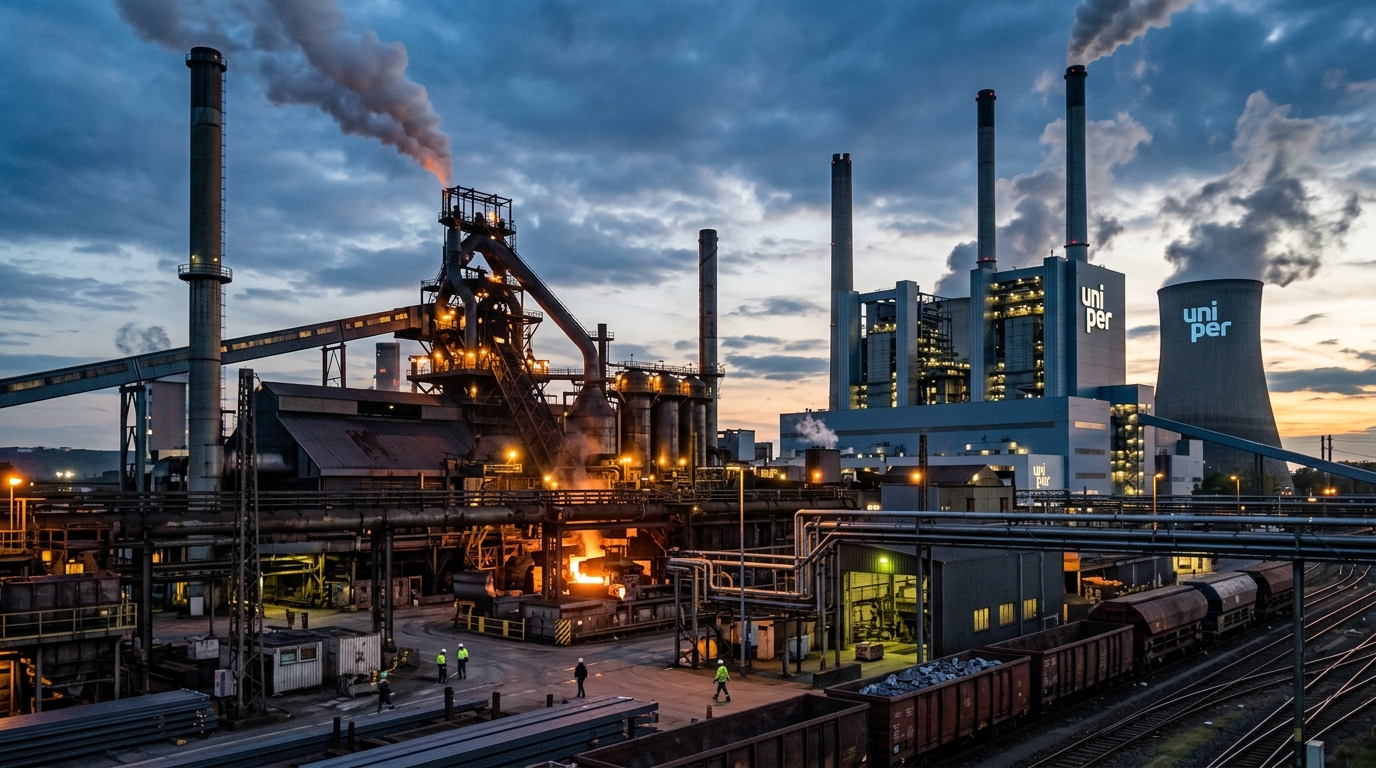
There is no gold or silver inside Uniper. No royalty stream, no ore body, no mill. But the contest around Germany’s state-owned energy giant, now at the non-binding offer stage, has a direct bearing on the cost structure facing every energy-intensive metals operation on the European continent. That is why precious metals investors should pay attention to who wins this process.
What’s Driving the Market
KKR and RWE have teamed up on a non-binding bid for Germany’s state-owned Uniper. Other parties reported to have submitted non-binding offers by last week’s deadline include Norway’s Equinor and Brookfield Asset Management, which bid in a consortium with Canada Pension Plan Investment Board. The field is competitive, the politics are heavy, and the outcome is far from settled.
Uniper is vital to Germany’s energy security as a major gas importer and operator of power stations. The company was bailed out with around €13.5 billion of German state aid during Europe’s energy crisis in 2022. Under EU state-aid conditions linked to that rescue, Germany must reduce its ownership in Uniper to 25% plus one share by the end of 2028. Berlin is not selling because it wants to. It is selling because it has to.
The German state’s controlling stake, built up through the energy-crisis rescue, means any disposal is as much a political process as a commercial one. Whoever ends up holding Uniper will do so on Berlin’s terms, not the market’s.
RWE’s involvement is notable given its position as a domestic peer, since peer-to-peer combinations in this sector can attract heavier regulatory scrutiny. A strategic acquirer combining with one of Germany’s largest generators creates market-power questions that a financial buyer like KKR or a foreign strategic like Equinor simply does not.
The Investment Opportunity
The connection to precious metals runs through energy cost. High electricity prices have put pressure on energy-intensive industries such as chemicals, steel and glass, and German industry has faced higher electricity prices than its international competitors for several years. Smelting and refining base and precious metals is electricity-intensive. When German and Central European power costs are elevated, margins compress across the entire processing chain, from copper cathode to silver refining.
Germany’s temporary industrial electricity price relief scheme, approved by the European Commission on April 16, 2026, has a total budget of €3.8 billion and runs from January 1, 2026 through December 31, 2028. That subsidy plugs some of the gap, but it expires. The longer-term price of electricity in Germany depends heavily on who controls the flexible generation and gas import infrastructure that Uniper provides. A new owner focused on returns rather than security of supply could run that asset differently.
Uniper’s strategy foresees investments of around €5 billion through 2030, with planned spending concentrated in flexible generation and other transformation priorities. Under a financial sponsor, that capital plan could be trimmed or redirected. Under a strategic peer like RWE, portfolio overlap could still trigger remedies or divestitures. Either path carries implications for German power prices, and therefore for the operating costs of metals processors from the Rhine to the Ruhr.
Risks to Monitor
The RWE-KKR pairing faces a heavy regulatory burden. Combining two major electricity market participants would draw scrutiny from Germany’s Bundeskartellamt and could also pull in European-level review depending on structure and thresholds. Remedy conditions, possibly including asset disposals, could dilute the strategic rationale and extend the timeline.
Uniper’s labor representatives have publicly opposed a sale and have urged Berlin to pursue an initial public offering instead, arguing it would better safeguard the company’s independence. Labor opposition in Germany carries real weight: works councils hold co-determination rights and can slow integration. If Berlin decides the political optics favor an IPO over a trade sale, the process could shift, leaving energy market ownership unresolved longer than investors expect.
Bottom Line
Uniper holds no precious metals, but it sits at the center of the energy cost equation that determines whether European smelters and refiners make money. Germany has put up for sale its 74.12% stake, and the transaction has been widely reported as potentially valuing Uniper at roughly €8.8 billion to €11.4 billion based on sector multiples. Whoever wins will have significant influence over how Germany supplies and prices flexible power for the rest of this decade. For precious metals investors watching European processing margins, the Uniper sale is worth tracking not as a direct opportunity, but as a forward indicator of the energy cost environment their miners and refiners will face.