
September 9, 2026
A $101.1 billion fuel bill and $5.90 diesel collide with Friday’s CPI, shaping Fed hike odds.
Cash From Oil in Days. Not Years.
No stocks. No waiting years for a payoff. A former hedge fund manager has a strategy that can turn an oil move into cash in a matter of days, and the chances come up again and again. He calls it “Oil Skimming.” And he’s giving away the entire three-step system for free.
The number that matters most for gold investors this week is not the price on the spot screen. It is the roughly $101 billion that American consumers have paid in extra gasoline and diesel costs since the Iran war began on February 28.
THE STARLINK OF ENERGY
This little-known stock could benefit from a major government catalyst this August
A single “Energy Cube” can be delivered by truck… dropped next to a data center, military base, or industrial site… and provide reliable electricity for decades.
Think of it as the “Starlink of Energy.” A government milestone expected this August could shine a spotlight on one little-known company at the center of the Energy Cube story.
US consumers are paying an extra $101.1 billion on gasoline and diesel alone since the war started, according to a cost tracker published by the Watson School of International and Public Affairs at Brown University. That amounts to more than $760 per household, a figure that will likely rise as fuel costs remain elevated. The meter, per Brown’s real-time tracker, runs at roughly $1 million every two minutes.
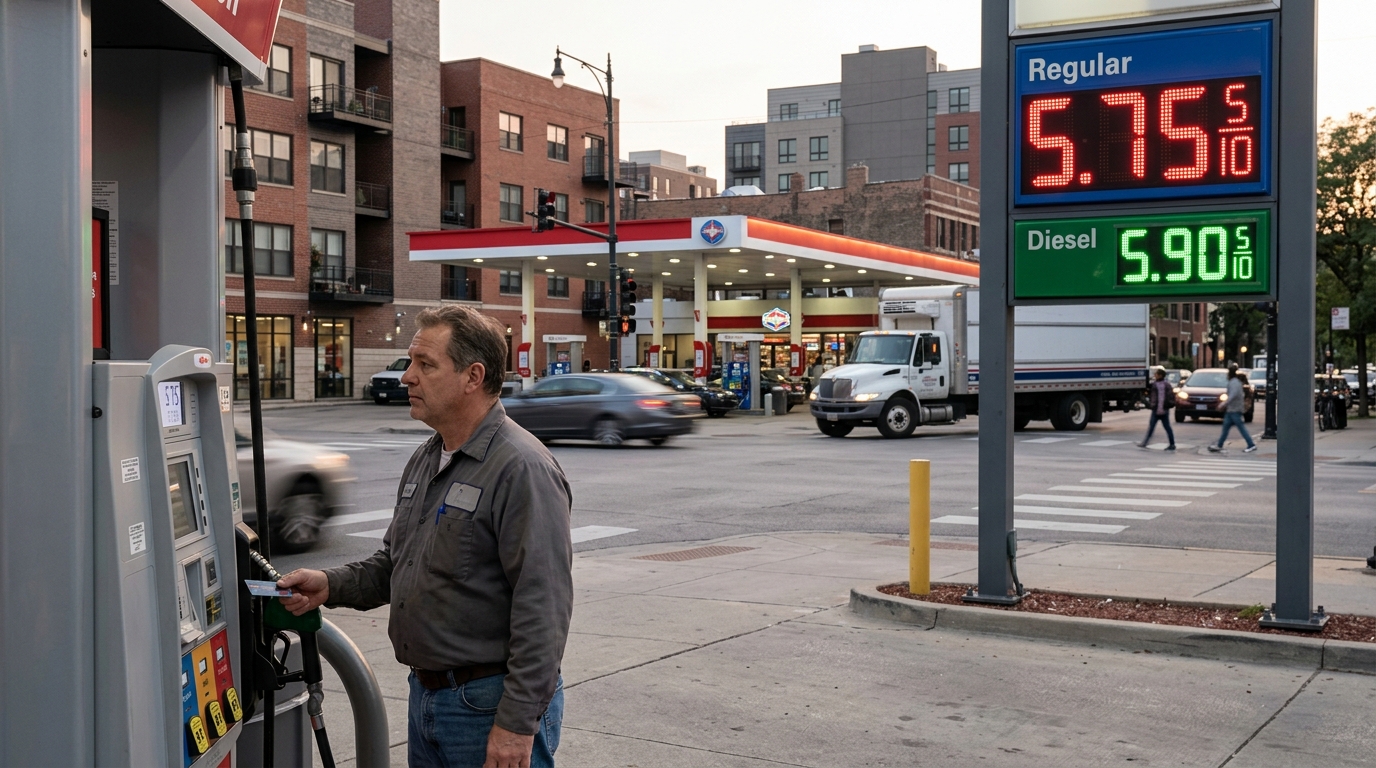
Diesel is where the pressure is most acute. Last Friday, diesel hit a record high and has continued to rise, reaching about $5.90 a gallon in early September per AAA. Americans are spending an extra $46 billion, an average of about $349 per household, on diesel alone, according to Brown University.
Why does that matter for bullion? Because diesel does not stay at the pump. Energy inflation shows up across the entire economy, and the recent surge in diesel prices in particular threatens to have a dramatic impact on freight and travel in the weeks and months to come. Retailers from Walmart to Dollar General absorb fuel surcharges on inbound freight before they pass them on. Fuel accounts for roughly 15% to 30% of the total cost of food, according to the Independent Grocers Alliance. Higher diesel costs often result in more expensive food, although it can take a while for energy shocks to wind their way through the supply chain. That lag is closing fast.
Your Power Bill Is Funding the AI Boom
The bulk order that keeps the lights on across 13 states just jumped from $2.2 billion to $14.7 billion – nearly 7x in one year – because data centers are draining the grid. There’s one energy source that runs 24/7 with no fuel, and Washington just preserved its tax credits through 2033 while terminating everyone else’s. Google signed for 15 years. Bill Gates invested $100 million. One company has spent sixty years building it.
The CPI Collision
The Consumer Price Index for August 2026 is scheduled for release on Friday, September 11, at 8:30 a.m. Eastern Time. That reading arrives with fuel costs baked in at levels that were simply not present in July. Tom Kloza, chief energy adviser at Gulf Oil, warned that this fall is on track to be the most expensive ever for both gasoline and diesel, adding: “And that’s going to fuel every aspect of inflation.”
Gold’s two-way risk is sharpest right here. The pullback reflects one dominant concern. Friday’s stronger-than-expected jobs report prompted traders to price in roughly a 60% chance of a Fed rate hike at the September meeting. While gold is traditionally viewed as a hedge against inflation, higher interest rates tend to weigh on the appeal of the non-yielding asset.
The mechanic is straightforward: the Fed targets core CPI, which strips energy. A fuel-driven surge in headline inflation does not automatically force a hike. But fuel costs feed into core through freight surcharges, food production expenses, and services pricing. A monthly core CPI reading at or above 0.2% could feed into expectations for a rate hike and weigh heavily on gold. Markets have been pricing the odds of a hike at roughly 60% after the jobs report.
The Structural Case for Gold
There is a scenario where Friday’s number actually helps bullion. If core comes in soft, gold is likely to gather bullish momentum heading into the Fed meeting. Conversely, a reading at or above 0.2% monthly could feed into hike expectations and weigh heavily on the metal.
Inside the Nuclear Revival Reshaping Energy Markets
Governments worldwide are investing billions to revive a proven energy source. Supply chains are tightening, demand is rising, and select companies stand to benefit. The Nuclear’s Second Act report explains what’s happening next.
But step back from Friday. About 20% of the world’s oil supply passed through the Strait of Hormuz before the war. The strategic waterway has been largely blocked since the conflict began in February, though limited transits have still occurred. The problem is not simply that oil is expensive. These are not price spikes that resolve in a quarter. They are structural dislocations.
For gold investors, the more-than-$760-per-household fuel bill is not just a consumer hardship story. It is the mechanism by which a war in the Strait of Hormuz becomes embedded in US inflation expectations. When those expectations stay elevated, real yields face a ceiling, and a ceiling on real yields is structurally supportive for bullion regardless of whether Friday comes in hot or cold.
Bottom Line
Friday’s August CPI report is the decisive input before the Fed’s September 15-16 meeting. A soft core reading removes the primary headwind for gold and likely sends it back toward the $4,500 range. A hot reading reinforces the hike case and pressures the metal short-term. What investors should not lose sight of is the bigger force: as long as record diesel prices and a Strait of Hormuz disruption keep compounding a roughly $100 billion energy bill, the inflation problem is not going away. Gold’s most durable support has always come from the expectation that price pressure persists. That expectation just got a significant top-up.