
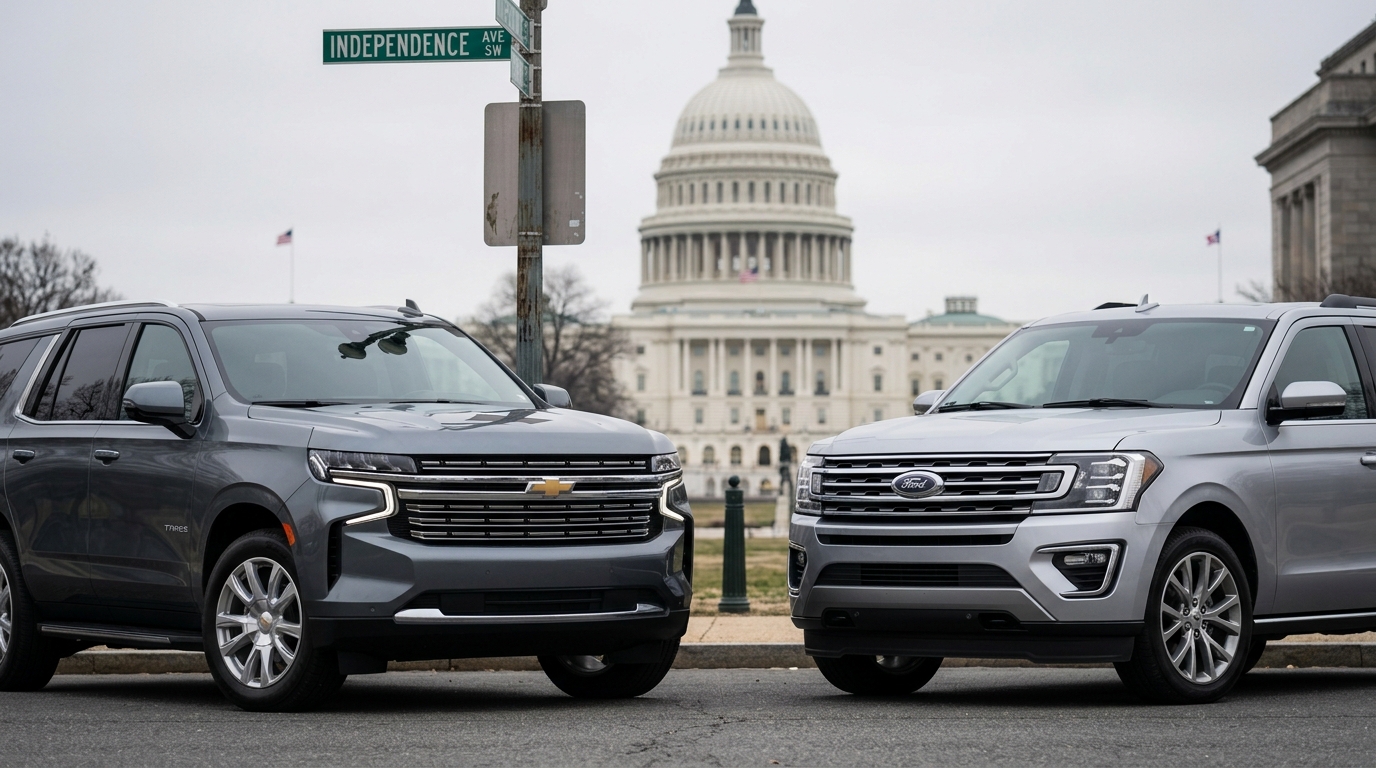
The lobbying ask is unusually blunt. The Alliance for Automotive Innovation urged House and Senate leadership to enact a “permanent ban on the sale, import and manufacture of Chinese connected vehicles, hardware and software before the conclusion of the 119th Congress.” The Alliance represents General Motors, Ford, Stellantis, Toyota, Volkswagen, Honda, and other major automakers. Politically, the effort has real momentum: the House’s Connected Vehicle Security Act of 2026 now has 71 additional co-sponsors.
Chinese automakers have not sold a single connected car in the United States yet, and the country’s biggest manufacturers want to make sure that stays permanent. The national security framing gives the push bipartisan cover. Autoblog reported last week that Alliance CEO John Bozzella argued China is gaining market share in Europe, Australia, Southeast Asia, Mexico, and South America with vehicles capable of collecting, processing, and transmitting sensitive vehicle and consumer data. That argument is making headway on the Hill. The Senate Commerce, Science and Transportation Committee approved the Connected Vehicle Security Act of 2026 in July, and the bill includes an ownership-based test that could restrict sales by automakers deemed significantly owned or controlled by entities tied to China or other foreign adversaries.
The Business
A closed market does not automatically make every domestic automaker worth owning. U.S. auto sales fell 6.3 percent in August, with strong hybrid demand partially offsetting broader weakness. Ford’s month was particularly rough. Ford sold 170,681 vehicles in August, down 10.3 percent from a year earlier, while EV sales dropped 79.4 percent year over year. Part of that EV collapse is structural: EV sales plunged 79.4 percent, partly because the F-150 Lightning was axed, with dealers selling only 148 units last month, down 95.4 percent from a year ago.
GM’s August numbers are still estimated rather than officially reported, but the first-half trend is telling. GM reported Q2 sales totaling 714,896 vehicles, leading all automakers in the United States, though that was a 4.2 percent decrease from 2025. Through the first half of 2026, GM delivered 1,341,325 vehicles, down 6.8 percent from the same period in 2025. Volume is under pressure at both companies. The question is which one is better positioned underneath the sales line.
Why Wall Street Is Paying Attention to GM
On the financials, GM is pulling ahead by a meaningful margin. New targets call for EBIT-adjusted earnings of $14 billion to $16 billion and adjusted EPS of $12 to $14, and GM raised its full-year 2026 guidance for the second time this year after reporting higher second-quarter revenue, adjusted earnings, and free cash flow. North America is doing the heavy lifting. GM achieved an 8.6 percent EBIT-adjusted margin in Q2, up 2.5 points from the previous year.
GM’s share of the U.S. full-size pickup market stands at more than 42 percent through the first half of the year, significantly ahead of competitors. That truck franchise is the moat. The company reported incentives averaging 4.7 percent of MSRP in Q2, compared with an industry average of 6.3 percent, which means GM is moving metal without discounting aggressively. Free cash flow generation was also strong: adjusted automotive free cash flow in the second quarter rose 78 percent to $5.03 billion.
What’s Driving the Opportunity
The Chinese vehicle ban, if enacted, removes a competitive threat that was still priced as a future risk. BYD and Geely have not sold passenger vehicles in the U.S., but their software, battery technology, and pricing have been influencing how investors value domestic automakers. Closing the door permanently would reduce that discount. GM, as the volume leader with dominant truck share and a truck-focused lineup that aligns with current consumer demand, stands to benefit most from a confirmed walled market.
Valuation adds to the case. GM trades at a cheaper forward P/E multiple of roughly 7 times, with Ford at approximately 10 times, both well beneath the industry average of 14 times. The gap reflects GM’s stronger earnings momentum. GM shares closed the week of September 4 at $87.76, up nearly 1.73 percent on the week that included the Chinese vehicle ban letter.
What Could Go Wrong
Congress moves slowly, and a permanent statutory ban requires surviving committee markups, floor votes, and a presidential signature before year-end. The lobbying ask and the co-sponsor count are encouraging, but legislative timing is genuinely uncertain.
On the operating side, GM carries a known near-term headwind. The company has flagged that 2026 results will be influenced by major truck launches as it prepares to bring the next-generation 2027 Silverado and Sierra 1500 to market in late 2026. A stumbled launch of the next-generation Silverado and Sierra would undercut the very franchise that makes GM’s earnings case compelling. EV losses are narrowing but not gone. GM has paid $4.5 billion of an expected $7.2 billion in cash charges related to its EV pullback through the second quarter.
The Bottom Line
Ford and GM are both lobbying for the same closed market, but they are not equally positioned to benefit from it. Ford’s August EV collapse and ongoing restructuring costs create execution uncertainty that is hard to ignore. GM, by contrast, is generating strong free cash flow, maintaining pricing discipline, and raising guidance while managing its own EV retreat more efficiently. The truck franchise, the valuation gap, and the institutional tailwind from the Chinese vehicle ban all point in the same direction. GM is the stronger single holding in this sector right now.