
The headline from China’s National Bureau of Statistics this morning is a 20.1% jump in October industrial profits, the fastest monthly pace since May. Most coverage will focus on electronics, where earnings have doubled year to date. That is the right number to quote. It is not the most important one for metals investors.
The number that matters here is 71.7%.
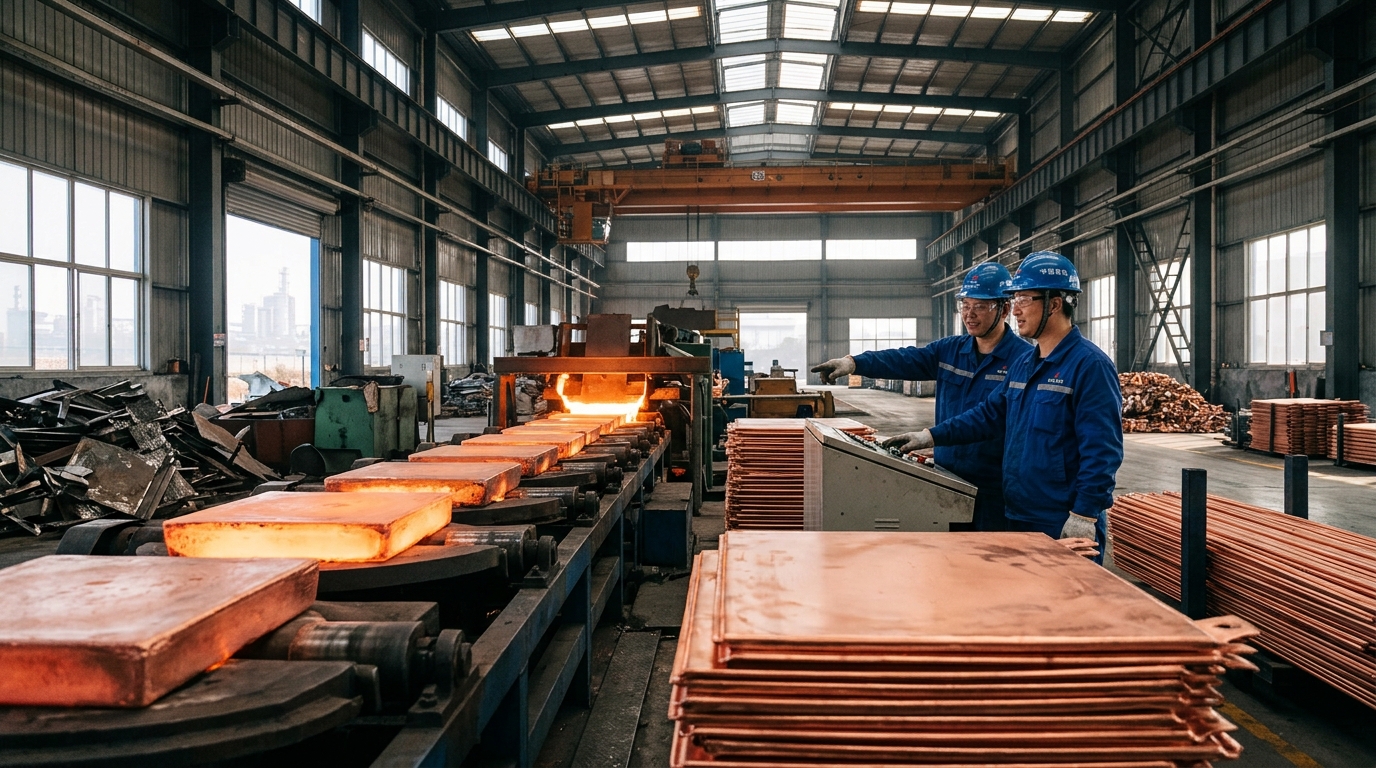
NBS chief statistician Yu Weining said demand for copper and aluminium from new energy and AI pushed prices up, lifting non-ferrous smelting and rolling profits 71.7% and non-ferrous mining 60.2%, together worth 4.6 percentage points of overall industrial profit growth. That is not a rounding error or a base-effect fluke. It is the clearest official confirmation yet that Chinese smelters are running hard, margins are expanding, and the appetite for ore remains intact.
Copper was already moving before that data landed. The benchmark three-month contract on the London Metal Exchange climbed 3.76% to $12,318 a metric ton on Friday, on track for its first weekly gain in seven weeks as equities steadied after a bruising AI-driven selloff. The Shanghai Futures Exchange contract jumped even harder. The most-active Shanghai copper contract rose 4.74% to 92,980 yuan a ton; at its session high, the gain reached 5.22%, the strongest single-session move since late January.
Context matters. LME three-month copper had settled near $12,379.50 a ton after a roughly 6% one-day drop earlier this month, well below the $14,875 record set on September 10. The selloff looked alarming. The Yangshan premium, which tracks Chinese buyers’ willingness to pay above LME for physical metal, climbed from under $100 a ton in September to $360 a ton on November 19, and it later hit a record $500 a ton. Buyers scrambling for physical while paper prices collapsed is not a demand collapse. It is a positioning squeeze. Today’s NBS data makes that case harder to dismiss.
The physical tightness visible in the Yangshan premium did not emerge in isolation. The Escondida shutdown removed roughly 3,500 tonnes of daily supply from an already deficit market, compressing the available metal that Chinese buyers were competing to secure.
The company that sits at the center of this is Zijin Mining. Zijin’s nine-month net profit rose 52% to RMB 57.5 billion, and mined copper output reached 820,000 tonnes; excluding Kamoa, production rose 6% to 730,000 tonnes. The Kamoa drag is a known issue tied to a mine flooding incident and the gradual ramp-up after the resumption of production, not a structural problem. Zijin says the Zhunuo Copper Mine is expected to commence production by the end of 2026, while the Xiongcun mine is expected to commence production by the end of 2028, providing a steady capacity pipeline. Those projects matter because Zijin is not simply riding price. It is growing into higher prices with real volume.
Risks to Monitor
Over the past month, copper’s price has fallen roughly 19%, though it remains about 3% higher than a year ago. The rebound today is real, but it comes off a badly damaged base. If the AI infrastructure cycle stumbles or if Federal Reserve policy keeps real yields elevated into 2027, the demand assumptions underpinning 71.7% smelting profit growth become harder to defend. Utilities’ profits, by contrast, fell 14.8% over the same period, a reminder that Chinese industrial strength is concentrated, not broad.
Furniture profits are down 52.4% for the year. Auto profits are off 26%. The consumer side of China’s economy is not participating in the same recovery that is making non-ferrous smelters wealthy. That split matters for how long the current metals trade holds.
Bottom Line
What today’s NBS release confirms is something copper traders have been debating for weeks: the physical demand from China has not broken, even as paper prices corrected sharply. A 71.7% profit surge in non-ferrous smelting is not a lagging indicator of past demand. It reflects the margin environment that smelters operated in through October, and it tells you that ore demand from Chinese facilities was strong enough to sustain those margins. At $12,318 on the LME today, copper is not cheap. But the underlying industrial data from the world’s largest consumer argues that the recent selloff was more about leveraged positioning than about demand evaporating.