
November 8, 2026
Bonus Content: Honda’s EV Reset Puts Auto PGM Demand Back in Focus
Jeff Brown is the former tech executive who called the rise of Bitcoin, Tesla, and Nvidia years in advance. He’s now predicting Elon Musk is about to open a new wealth window by November 30. Click here to see the details or read more below because the last three times this window opened, those who acted had a chance to walk away with generational wealth.
Dear Reader,
Elon Musk is on record predicting this new opportunity is set to be 180 times bigger than the SpaceX IPO.
That IPO minted 4,400 millionaires overnight.
If this is 180 times bigger…
Just imagine how many more Americans could become millionaires.
Will you be one of them?
Or will you just watch others get rich from the sidelines?
Click here to see the details and decide for yourself.
We have so much to look forward to,
Jeff Brown
Founder & CEO, Brownstone Research
Honda’s EV Reset Puts Auto PGM Demand Back in Focus
Honda Motor reports its fiscal second-quarter results on Monday, November 10, and the report arrives in a compressed window of automotive news that matters directly to platinum and palladium investors. The financial results for the fiscal second quarter ended September 30, 2026 will be announced on November 10, 2026. The results precede a backdrop that is, to put it plainly, still being cleaned up from one of the worst years in the company’s modern history.
Honda’s FY2026 ended with an operating loss of ¥414.3 billion, but its net loss figure is not stated here because it does not match Honda’s published FY2026 materials used for this note. Honda Motor recorded EV-strategy reassessment charges, but this note does not keep the previously stated “$15.7 billion” figure, because Honda’s own disclosure is framed in yen and in ranges rather than as a single dollar amount. The pivot was abrupt. The company canceled three planned North American EV models and reallocated resources toward hybrids. Honda booked EV-related losses of ¥1,577.8 billion for FY2026, including ¥1,453.6 billion at the operating-profit line, and ¥124.1 billion as share of loss of investments accounted for using the equity method.
The first-quarter rebound was real. Operating profit reached ¥530.7 billion in Q1 FY2027, more than twice the prior-year figure, while revenue rose 13.5 percent to ¥6.06 trillion. Whether that momentum held through the September quarter is exactly what Monday’s report will show.
The comparison investors will draw first is Toyota. Toyota reported July–September 2026 operating profit of about ¥1.128 trillion, up about 34% year over year and above the roughly ¥992 billion analyst estimate. A weaker Japanese yen, demand for hybrid vehicles, and cost-reduction measures supported earnings despite tariffs and higher material costs. Toyota raised its FY2027 operating-income forecast to ¥3,900 billion from ¥3,400 billion. Honda arrives into that comparison carrying far more unresolved weight.
The currency backdrop is a live variable. One U.S. dollar bought about 158.5 Japanese yen as of November 7, 2026, up from roughly 153.4 a year earlier. A weaker yen inflates reported yen revenues for exporters and flatters operating margins on overseas sales. It helped Toyota. Honda’s investors will be watching whether the same tailwind offset ongoing restructuring drag and tariff costs in the September quarter.
What This Means for Platinum and Palladium
The connection between Japanese automaker results and precious metals is not abstract. Automotive uses 84.7% of total palladium demand and 43.6% of total platinum demand, based on Johnson Matthey’s 2026 forecast. Car production volumes are the primary input, not corporate sentiment.
The platinum market will see a supply shortfall for a fourth consecutive year in 2026. Palladium demand is forecast to decline by 9% this year, and with the auto sector accounting for more than 80% of palladium demand, any downside risks to vehicle production are consequential.
The shift in powertrain mix is already visible in retail data. Hybrid vehicles capturing record U.S. market share while EV incentives cool is the structural driver behind rising autocatalyst demand.
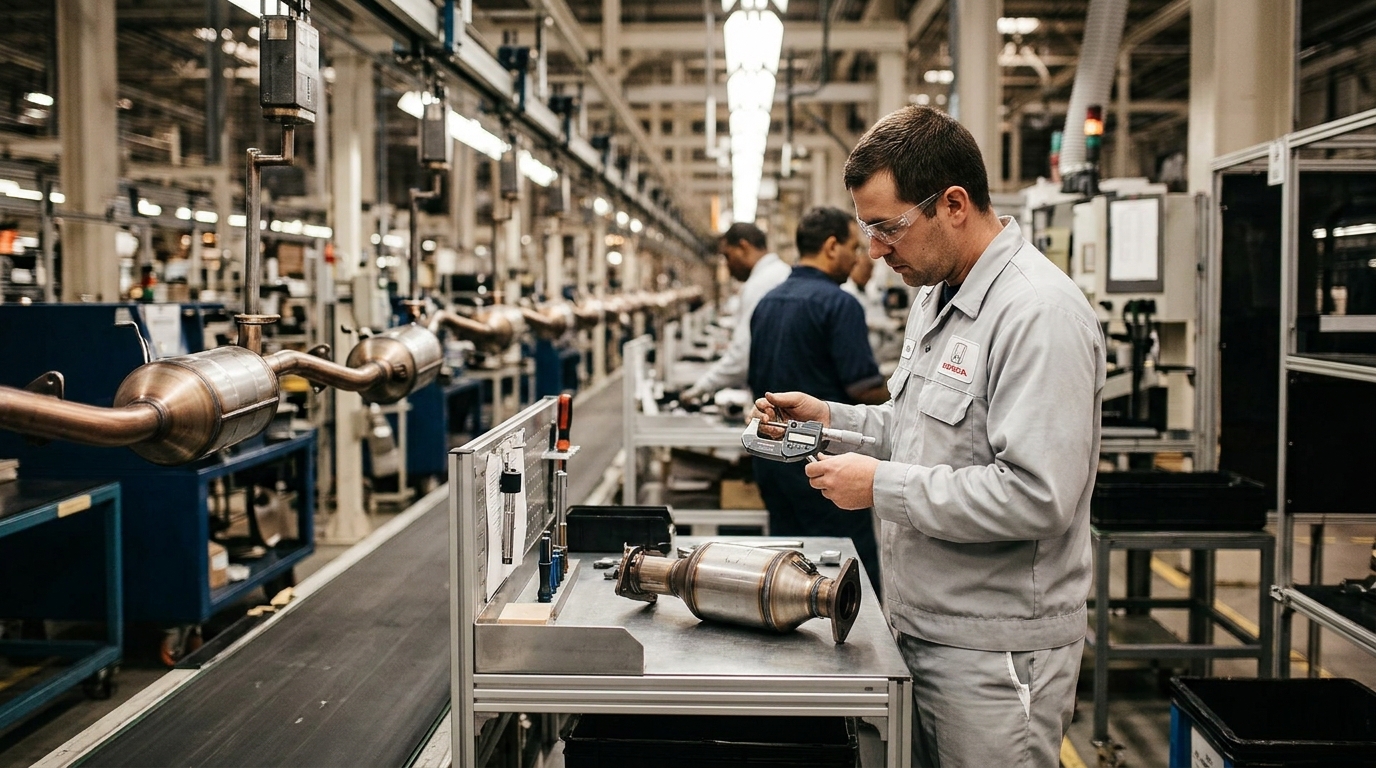
Honda’s strategic pivot matters here. Despite substantial losses tied to its EV strategy reset, Honda’s push toward hybrids is the key point for PGMs. Hybrids, unlike battery EVs, still require platinum and palladium in catalytic converters. For palladium, the trajectory remains structurally negative over time as battery EV market share rises. Honda’s pullback from near-term EV plans, and its shift back toward internal combustion and hybrid production, is a mild counterweight to that pressure.
Risks to Monitor
Honda has previously flagged a sizable tariff headwind in its outlook, but this note does not keep the specific “¥310 billion” figure as stated because it could not be verified in the company materials reviewed here. If Honda’s guidance revision on Monday reflects fresh tariff headwinds or further automobile unit cuts, the signal for near-term ICE production volumes is negative for PGM demand.
On the supply side, primary platinum supply is expected to fall sharply, with Johnson Matthey saying Russian mine production drops to the lowest level for at least two decades. Constrained supply offers some structural floor even if automotive demand remains soft.
Supply constraints are not unique to platinum. Major miners missing copper production targets while prices hit records shows how tightening mine supply amplifies any demand signal from the auto sector.
Bottom Line
Honda’s Monday report will tell investors whether the Q1 rebound was durable or whether tariffs and EV-related costs are still compressing the September quarter. For platinum and palladium investors, the more lasting question is simpler: how many ICE and hybrid vehicles will Honda actually build this fiscal year? Honda forecasts sales revenue of ¥24,150 billion for FY2027, and the automobile unit count embedded in that forecast is the number that feeds directly into autocatalyst demand projections. Watch for any revision to that guidance Monday.