

Let’s be real for a second.
While most traders are still squinting at lagging indicators and trying to “guess” where the next move is coming from…
My top AI trading engine is already light years ahead.
I’ve spent months and a small fortune making sure this engine outclasses any other trading tool you’ll find out there.
And right now, it’s flagging the kind of setups that typically stay hidden behind the velvet ropes of hedge funds and institutional banks.
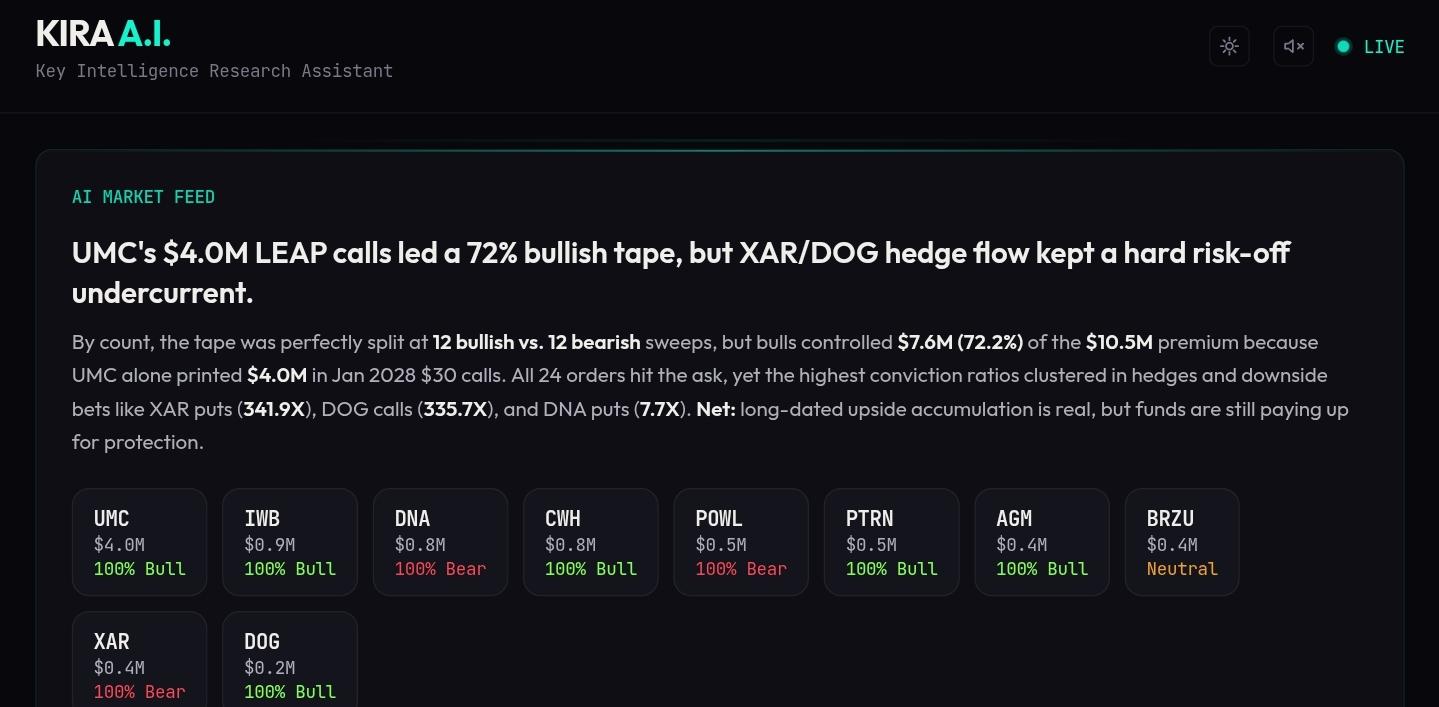
I’m talking about the ability to:
- Identify moves before they even register on a standard chart.
- Target “time-warp” returns that can compress years of gains into days.
- Choose your own risk so you never have to “bet the farm” to see results.
If you still haven’t grabbed your free access, I have to ask… What are you waiting for?
The market isn’t going to slow down for you. The robots running the show today certainly won’t wait for you to catch up.
You can keep doing things the hard way… dealing with the stress, the overthinking, and the emotional roller coaster…
Or you can let AI do the heavy lifting for you.
Claim your FREE access to the AI engine right here (No credit card required)
The proof is waiting inside.
Till the next trade,
Lance Ippolito
A Bank Collapse Just Ended a Presidency. Here Is What Gold Investors Should Take From It.

When a bank fails quietly, the story stays in the financial pages. When it locks out millions of people overnight, it becomes something else: a live demonstration of why people in emerging markets reach for gold the moment trust in institutions cracks.
Paraguay’s central bank voted unanimously on November 2, 2026, to place Ueno into resolution, announcing the intervention on November 3 after regulators said the bank’s solvency ratio had fallen below 50 percent of the legally required minimum. Ueno reported about 3 million customers, equivalent to roughly 60 percent of Paraguay’s adult population. Ueno’s app, cards and transfers went dark and its branches locked their doors, leaving desperate depositors lined up outside.
The scale of the freeze is what makes this relevant beyond South America. The digital bank managed roughly $800 million to $850 million of public funds, including about $380 million invested by Paraguay’s state pension and health fund. Those locked out include people who used Ueno for day-to-day payments and transfers. These are not speculators. These are ordinary savers whose only mistake was trusting a heavily promoted institution with apparent government backing.
Regulators said their review of Ueno’s books turned up poorly documented lending and expenses the bank had wrongly counted as assets. Government money poured into Ueno’s coffers under Peña, who also appointed Carlos Carvallo, president of Financiera Ueno, the predecessor to Ueno Bank, to run the central bank, the agency charged with supervising the digital lender. The conflict writes itself.
Paraguay’s lower house voted unanimously to impeach President Santiago Peña just minutes after he announced his resignation, as the collapse of the digital bank tied to his government froze millions of people’s savings, sent protesters surging into the streets and turned his own party against him. Prosecutors opened criminal investigations tied to the bank crisis. Vice President Pedro Alliana has now been sworn in as president.
For precious metals investors, the mechanism here is worth understanding clearly. Paraguay is not an isolated case of mismanagement. It is a concentrated version of a pattern that repeats across emerging markets: a rapidly growing financial institution, government funds funneled in with inadequate oversight, a sudden solvency revelation, and depositors with no recourse on day one. The collapse has plunged the country into its deepest political crisis in more than a decade. Political crises of this kind reliably accelerate private demand for assets outside the banking system.
Physical gold is the most historically durable of those assets. It carries no counterparty, it cannot be frozen by a resolution order, and it requires no app to access. The Paraguayan situation makes the case in vivid terms that digital banking infrastructure, however convenient, adds a layer of institutional dependence that physical gold eliminates entirely.
Risks to Monitor
Under a law rushed through Congress this week, authorities began an advance payment of the deposit guarantee starting November 6, 2026, initially covering balances of up to 10 million guaraníes, roughly $1,600. If that program succeeds and larger account holders recover funds quickly, the acute confidence shock may pass faster than expected, limiting the sustained demand impulse. A smooth resolution would blunt the story’s resonance in regional markets. The bearish read on gold’s near-term benefit from this event is simply that depositor anger, once addressed, fades.
The bullish case rests on something longer-lived: the memory of millions of people discovering, in a single morning, that their digital savings could vanish before breakfast. That kind of event reshapes savings behavior for years, not weeks.
Bottom Line
Paraguay’s Ueno collapse is a reminder that the case for physical gold in emerging markets is not theoretical. It is activated, repeatedly, by exactly this kind of institutional breakdown. Investors positioned in physical gold, or in royalty and streaming companies with assets across politically stable jurisdictions, hold something that no resolution order can freeze. That is not a small thing. Ask the millions of Paraguayans who could not pay their bills this week.