
October 6, 2026
Bonus Content: Japan’s $2 Trillion Pension Fund Passed on Bonds Again
All eyes are on copper, and for good reason.
The market is waking up to the fact that copper is much more than just a metal used for industry.
Without enough copper supply, nations can’t realize their ambitions related to green energy.
Without enough copper supply, the build out of data centers related to AI grinds to a halt.
Those two factors alone are a big reason why copper prices are on the way to breaking past all-time highs.
When you throw in the fact that, on top of those things, supply is dwindling, it makes complete sense why more traders are paying attention to this often overlooked metal.
The big winners in this new reality for copper will be under-the-radar names that have access to substantial resources in safe jurisdictions.
One company, with control over a historic copper belt in Canada’s Yukon, is exactly the kind of name that fits that criteria.
It’s already confirmed high-grade copper at its flagship asset.
It’s going to begin exploring past-producing areas.
It has plans for moving other target areas toward drilling, potentially adding more pounds of copper to its books.
Between multiple rigs working in a district-scale area and the company being fully funded through the end of next year, share prices likely won’t stay low for very long.
That’s why you’ll want to take a look at our brand-new online report FREE OF CHARGE.
Inside, you’ll learn all of the details about the company, its assets, its recent results, and why it has a very bright future ahead. You’ll also hear directly from the CEO and learn all about what’s next.
Japan’s $2 Trillion Pension Fund Passed on Bonds Again
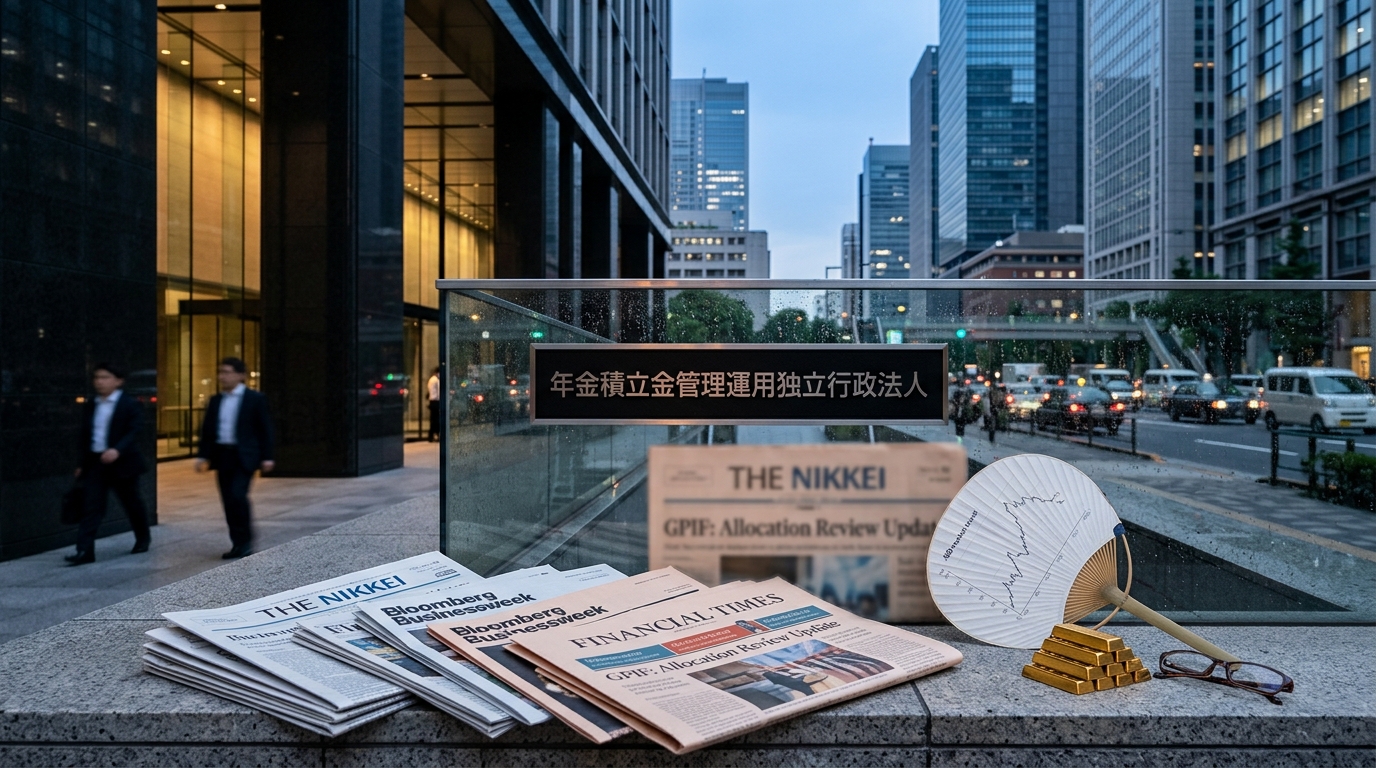
The bond market move that was supposed to come from Tokyo isn’t coming yet. Japan’s Government Pension Investment Fund, the world’s largest pool of retirement savings at roughly ¥318 trillion (about $2 trillion), did not discuss its portfolio allocation at its September board meeting, according to sources cited by Bloomberg on Monday. That kills, for now, speculation that had been building since August that GPIF would raise its domestic bond weighting and become the marginal buyer Japanese government bonds desperately need.
Why does this matter to gold investors sitting thousands of miles from Tokyo? Because the 10-year JGB yield has pushed to about 3.10% in early October, the highest level in decades. The 30-year JGB yield is around the low-4% range, up roughly a full percentage point from about a year ago. Without a new institutional buyer stepping in, those yields have no obvious floor. That is a global rate story, not just a Japanese one.
What’s Driving the Market
Investors had been on edge over whether GPIF might increase its allocation target for domestic bonds after a portfolio review appeared on the agenda of a board meeting held at a highly unusual time during the August summer break. GPIF’s management committee convened on August 21, its first publicly announced meeting in the holiday month in seven years. That alone was enough to send traders into speculation overdrive.
September brought silence. Koji Okuda, executive researcher at Daiichi Life Research Institute, said there is “no indication that the latest management committee meeting made any new decision to move forward with a review of the basic portfolio,” while noting that ongoing technical discussions cannot be completely ruled out. The fund declined to comment.
The yen was around 158.16 per dollar on October 6. A weaker yen inflates the yen-denominated returns that GPIF earns on its foreign assets, which historically reduces the urgency for a domestic reallocation. But it also keeps importing inflation into an economy where the Bank of Japan’s policy rate already stands at 1.25% and rising. GPIF’s allocation decisions are watched worldwide precisely because of the fund’s scale: a single percentage-point shift in its holdings can translate to more than ¥3 trillion in flows.
The Investment Opportunity
Here is the question gold investors have to answer: are JGB yields rising because Japan’s inflation is finally catching up with the rest of the world, or are real yields climbing? The answer determines everything for gold.
Gold was around $4,141 per ounce on October 6, down about 6% over the past month, and up sharply from a year earlier. Analysts have attributed the recent softness largely to higher US Treasury yields and a stronger dollar, rather than a deterioration in gold’s structural demand drivers. That distinction is critical. If JGB yields are rising alongside inflation expectations, real yields stay contained, and gold’s current pullback is a buying window. If they are rising because global capital is demanding a genuine risk premium on sovereign debt across the board, then real yields push higher and gold faces a genuine headwind.
The evidence leans toward the former. Reuters reported Monday that gold has remained above $4,000 despite elevated bond yields, with central-bank buying, geopolitical concerns, and reserve diversification helping to support prices. None of those demand drivers disappear because GPIF stayed quiet in September.
Risks to Monitor
Analysts caution that the absence of discussion in September does not mean the review has been shelved entirely. GPIF’s second-quarter portfolio results, scheduled for release on November 6, will offer clues on any tactical shifts. If that disclosure shows meaningful deviation from the 25% domestic bond target, the market will reprice JGBs fast. That could send real yields higher and compress gold’s near-term momentum sharply.
The Nikkei, meanwhile, closed at 70,684 on October 6, up about 1% on the day. A climbing equity market in Tokyo reduces pressure on GPIF to act defensively on its bond book, giving the fund further reason to delay any formal review.
Bottom Line
GPIF’s silence is not a resolution. It is a postponement. The bond market was waiting for a $2 trillion buyer to stabilize JGB yields, and that buyer did not show up. Long yields will keep rising in Japan until something changes, whether that is a formal GPIF reallocation, Bank of Japan intervention, or fiscal restraint from a government that has shown little appetite for it. Gold investors should watch the November 6 portfolio disclosure closely. If GPIF’s domestic bond holdings are already drifting above target without a formal decision, the fund’s hand is closer to being forced than the September silence implies, and the rally from here could be sharp.