
September 25, 2026
Quarter-end rebalancing is already happening. The question is where the money goes next.
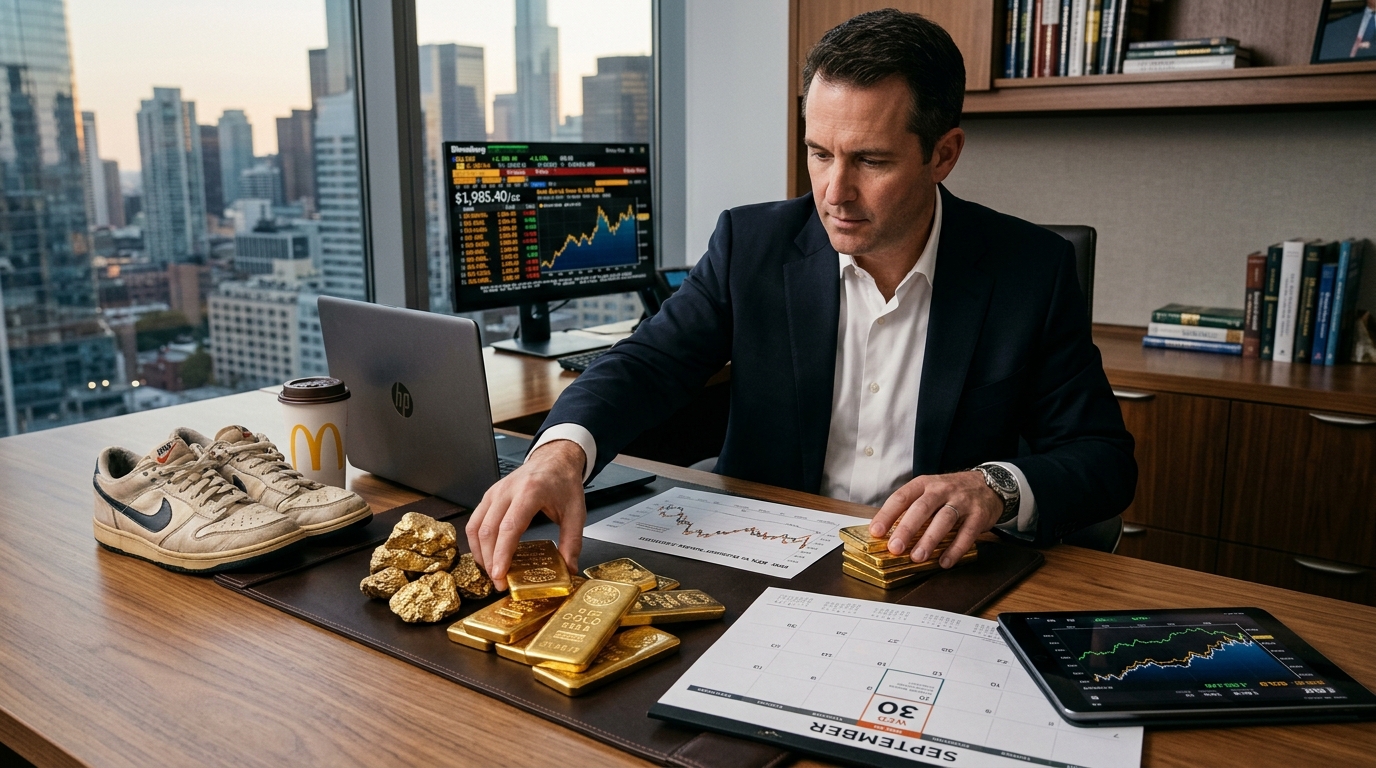
Quarter-end arrives in five days, and the equity market has already done the heavy lifting for you. The dispersion in September has been extreme enough that investors sitting on Nike, McDonald’s, and HP do not need to manufacture a reason to rebalance. The market handed them one.
Your Power Bill Is Funding the AI Boom
The bulk order that keeps the lights on across 13 states just jumped from $2.2 billion to $14.7 billion – nearly 7x in one year – because data centers are draining the grid. There’s one energy source that runs 24/7 with no fuel, and Washington just preserved its tax credits through 2033 while terminating everyone else’s. Google signed for 15 years. Bill Gates invested $100 million. One company has spent sixty years building it.
At the start of September, the Russell 2000 was up about 20% year to date, ahead of both the S&P 500 and the Nasdaq-100. By this week it had given back much of that lead, sitting in the mid-teens year to date while the S&P 500 extended its gain and the Nasdaq remained positive. The culprit is not subtle. The correlation between IWM and the 20-plus-year Treasury ETF has recently been reported around 0.5, and last week the relationship between small caps and the 10-year note price was described as touching a one-year high above 0.97. Small caps, in other words, are now essentially a bond proxy, and bonds are being sold.
Investors pulled $3.3 billion from IWM last week alone, as reported by market commentary that cited The Kobeissi Letter, marking its second-largest weekly withdrawal of 2026 and one of the largest in nine years. The S&P 500 has outperformed the Russell 2000 for five consecutive weeks, and another week of this would make it the longest such stretch in eight years.
Meanwhile, the legacy consumer names that many portfolios have refused to cut are now at levels that make the decision for them. Nike has traded at levels described as a 12-year low in September, pulled down by weak digital sales and a removal from the S&P 100 effective September 21, 2026, ending nearly 18 years in that blue-chip group, as reported by Fortune. McDonald’s slipped to an annual low around $247.65 in mid-September. HP told its investors what hardware demand looks like from here: the company withheld fiscal 2027 guidance and flagged that its preliminary planning assumption calls for industry-wide PC unit volumes to decline roughly mid-single digits next year. Morgan Stanley responded by naming HPQ its top enterprise Underweight.
The index removal is a symptom, not the cause. Nike’s slide has been building for longer than most portfolios acknowledged, driven by a strategic misstep that management has been slow to reverse. how Nike’s distribution reset is echoing the DTC pivot that damaged its North America business is worth understanding before deciding whether the stock is cheap or simply broken.
Trump Takes on Foreign “Cartel” (and You Could Profit)
Trump is finishing a 25-year battle against a foreign “cartel.” And a single ticker is handing investors the chance at payouts like $8,704 in six days from the fallout.
The opposite side of this ledger looks very different. The Magnificent Seven have been pushing to new highs, and the Roundhill MAGS ETF has been strong in September. The group’s scale, cash flow, and balance sheets are drawing investors who want a haven in a rising rate environment that punishes both stocks and bonds. The argument is not wrong, but it also describes a crowded position bought near the month’s highs after a large recovery from its 2026 trough.
Gold offers a different calculation. Gold is trading near $4,268 today. In January, gold did push above $5,000 and notched multiple record highs late in the month, according to the World Gold Council, but the specific claim of a $5,589.38 all-time high on January 28, 2026 is not supported and has been removed. That gap matters. It means new capital entering gold here is not chasing a fresh peak. GDX, the VanEck Gold Miners ETF, has returned about 14.69% year to date through August 31, 2026, with a one-year return of about 57.82%, and unlike the Magnificent Seven, miners are trading well below their earlier-year records rather than at them. The sector’s fundamentals support the position: Gold Fields reported profit attributable to owners of the parent of $2.07 per share for the first half of 2026, up from $1.15 a year earlier, with attributable production rising 12% to 1.267 million ounces and adjusted free cash flow more than doubling to $2.225 billion.
That earnings growth has not been fully reflected in miner share prices, a disconnect that predates this quarter. When GDX was already trading well off its highs earlier in the year, the options market was signaling that sophisticated money viewed the gap between fundamentals and price as temporary. the unusual call flow in GDX when miners were down 20% from their all-time high offers useful context for reading the current setup.
The case for routing quarter-end rebalancing into gold and miners rather than back into beaten consumer names comes down to one question: what is the funding source for the next leg of the cycle? Rising Treasury yields are already the answer for small caps, and markets are pricing roughly a two-thirds probability of another Fed rate hike at the October 2026 meeting. Legacy consumer names face structural demand erosion. Mega-cap tech is the crowded consensus at new highs.
The Supreme Court Protected Your Location. What About Your Financial Data?
In June, the Supreme Court ruled that acquiring an individual’s cell-phone location data constitutes a Fourth Amendment search. But your financial activity on most public blockchains can still be visible. One overlooked altcoin was designed around financial privacy – and our team believes it deserves attention as crypto momentum builds.
Discover our next “Freedom Coin” and get the complete $3 research report today.
Gold at $4,268 is not the safe consensus. It is a position with distance from its recent highs, miner earnings growing at rates that benchmark-hugging equity investors would envy, and a macro backdrop, real rate volatility, fiscal expansion, central bank buying, that built the original bull case and has not resolved. Selling what dispersion already broke for you and buying what the rate cycle has temporarily discounted is the better use of the rebalancing window.
Risks to Monitor
A further spike in real yields would pressure gold directly, as the metal pays no income and competes with risk-free rates at multi-year highs. The 10-year Treasury yield did reach fresh 19-year highs this week, with multiple outlets reporting an intraday move above roughly 5.1% on Wednesday. Dollar strength is the companion risk: gold slipped below $4,300 at points this week as the U.S. dollar firmed. Miners also carry operational exposure that bullion does not, jurisdiction, cost inflation, and execution. GDX’s beta of 1.82 means drawdowns amplify. Investors who want the gold exposure without the equity volatility can anchor with physical or near-physical ETFs and add miner exposure around it.
Sizing that anchor position is the harder question, especially when Treasury yields are competing for the same capital. Goldman’s current framework addresses exactly that trade-off, weighing the income cost of holding gold against the portfolio insurance it provides when real rates are volatile. Goldman’s case for gold allocation with the 10-year near 5% and a $4,900 price target lays out one disciplined way to think about the position size.
Bottom Line
The quarter closes Wednesday. The selling in Nike, McDonald’s, and HP was not a choice investors had to make, the market made it for them. The question is whether that capital rotates into the crowded consensus at all-time highs, or into a sector where the earnings growth is real, the entry is off the peak, and the macro forces driving the original move remain fully in place. Gold and miners are the less crowded answer.