
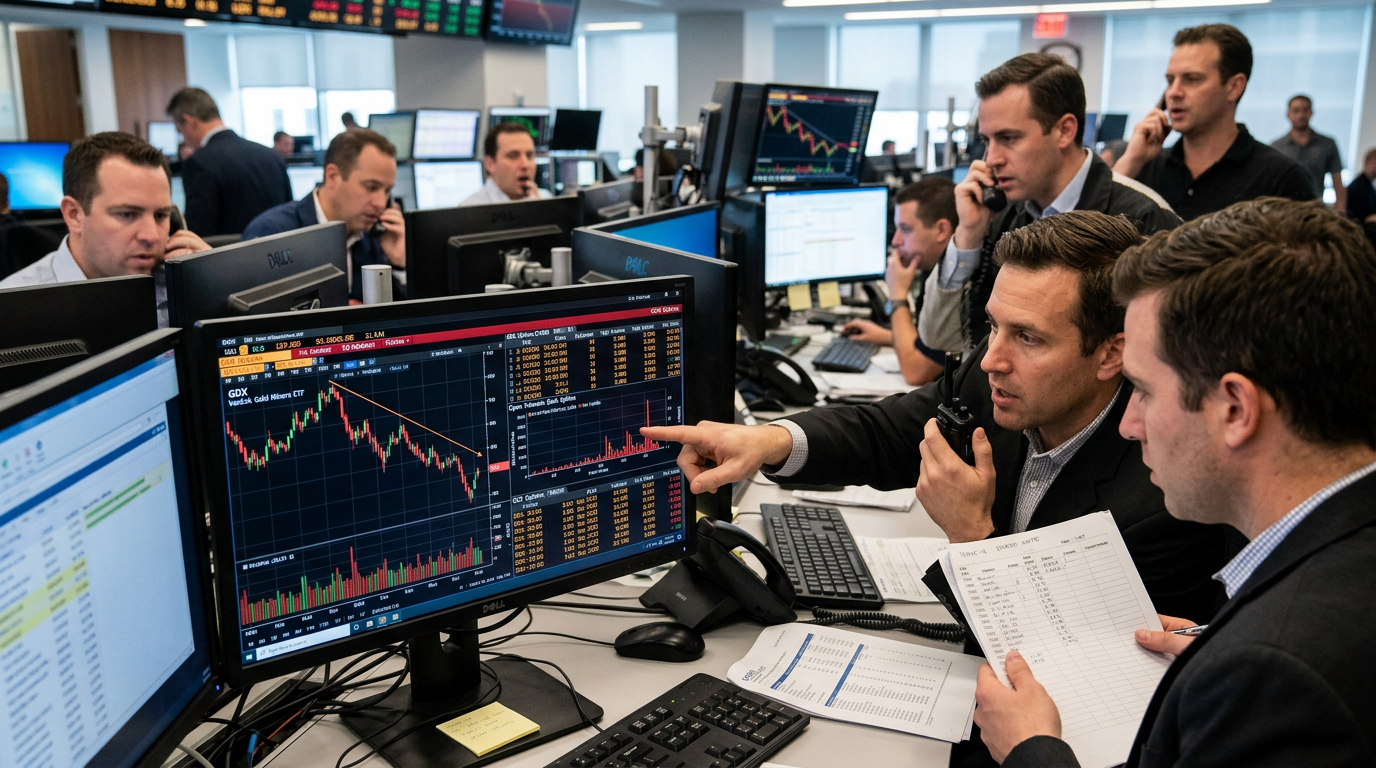
Gold miners have had a strange year. The metal itself has been on one of the most aggressive structural runs in modern history – and yet the miners, which should theoretically provide leveraged exposure to rising gold prices, have been in a correction since March.
The VanEck Gold Miners ETF (GDX) hit an all-time high of $117.18 on March 2, riding a gold spot rally that pushed prices above $5,700 per ounce at peak. Since then, GDX pulled back approximately 20%, trading near $88 as of early June. Spot gold itself has corrected from those highs but remains well above $5,000 – and the macro backdrop driving the gold thesis hasn’t changed.
That disconnect is what’s drawing attention in the options market right now.
The Macro Setup Behind Gold Hasn’t Gone Anywhere
JP Morgan – which revised its 2026 gold forecast to $6,300 per ounce in February and has since maintained a year-end target near $6,000 – describes the current environment as a period of first-half underperformance relative to its broader bullish thesis, not a structural reversal. Central bank demand is forecast at approximately 755 tonnes for full-year 2026, down from the 1,000+ tonne peaks of recent years but still nearly double pre-2022 averages. According to the World Gold Council, 76% of central bank officials expect gold to make up a higher share of international reserves over the next five years.
The Iran situation is an active wildcard. Reports of a potential U.S.-Iran deal – including a possible reopening of the Strait of Hormuz – sent Brent crude down 11% in a single week recently, which also briefly weighed on the safe-haven bid in gold. But geopolitical risk hasn’t been retired. It’s been repriced.
Slight tangent, but worth noting: the same week Brent dropped 11%, the S&P 500 hit new record highs led by semiconductor stocks. That’s not a flight-to-safety environment. That’s a risk-on environment – and gold miners still got bought on dips. That tells you something about the structural bid underneath this sector.
What the Options Flow Is Actually Saying
Here’s where it gets interesting. Last week, GDX posted a more than 4% rally in a single session despite gold futures dropping on the day. Options volumes leaned heavily bullish – call volumes outpaced puts more than 5:1 at one point, with more than 10,000 calls trading at the ask (indicating they were bought rather than sold). The most active contracts by volume were the 100-strike and 110-strike calls expiring June 18.
Those calls need a significant rally from current levels to break even at expiration. Someone is either positioning aggressively for a bounce, hedging a short gold position, or expressing a view that the miner-to-metal spread compresses back toward historical norms. Any of those reads is directionally bullish for GDX near-term.
The technical picture is more mixed. GDX is currently trading below its key moving averages, with MACD in negative territory. RSI is approaching oversold conditions, but no bullish crossover has confirmed. Key support sits near $83–$86, with resistance at $89–$90 capping the first recovery attempt.
Structured Trade Framework
- Bull case (mean reversion thesis): If GDX reclaims $95 on renewed gold momentum or miner margin expansion, defined-risk call spreads in the $90/$105 zone with August or September expiration capture the move without the full premium cost of outright calls.
- Bear case (further derisking): If gold spot breaks below $4,800 or if the Iran deal accelerates risk-on rotation away from safe havens, GDX downside toward $82–$83 support becomes the scenario. Protective put spreads in that range offer defined-risk downside capture.
- Neutral case: GDX compresses between $86–$95 into mid-summer. With implied volatility elevated relative to recent realized vol, short premium structures – iron condors or short strangles – may extract value from a range-bound grind.
The broader thesis hasn’t changed. Gold is in a structural bull market driven by central bank reserve diversification, dollar debasement concerns, and persistent geopolitical risk. Miners are the leveraged expression of that thesis – and right now, that leverage is working against holders on the correction. Whether that reverses in June or in Q3 is the open question.
The June 18 call buyers in GDX are betting it’s June.