
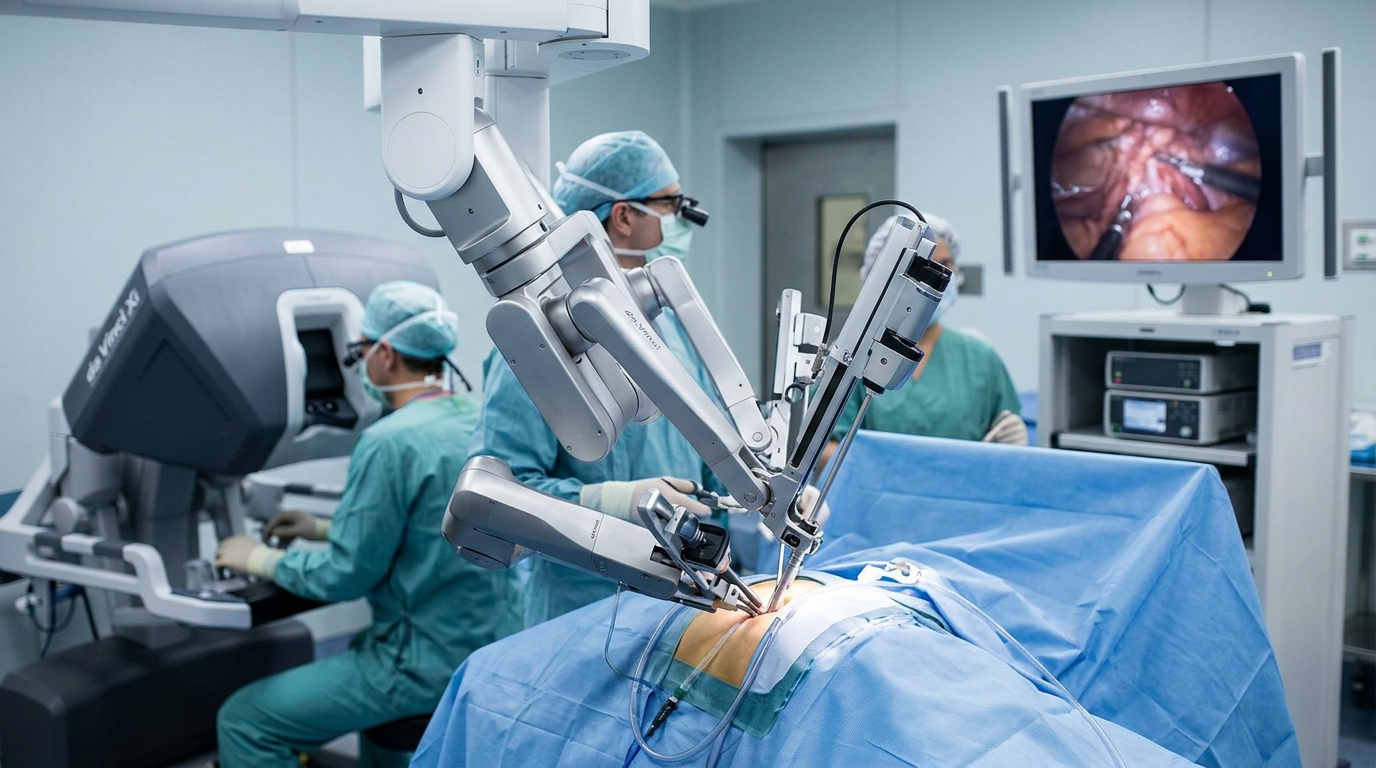
Intuitive Surgical has not missed a quarter in over a year. The stock is down 37% since January anyway. That disconnect is the opportunity, or the warning, depending on how seriously you take the new competition walking through the operating room door.
The Q2 2026 numbers were not ambiguous. Revenue reached $2.89 billion, up 19% year-over-year. Non-GAAP EPS of $2.80 extended the streak to five consecutive quarters of beating expectations. Da Vinci system placements rose to 468 from 395 a year earlier, including a meaningful step-up in the da Vinci 5 model. Ion procedures, the lung biopsy platform, surged 36%.
The Business
Intuitive makes robotic surgery systems. The da Vinci installed base reached about 11,710 systems globally. The Ion endoluminal system is installed at 1,096 sites, up 21% from a year ago. What makes the model durable is not the hardware but the blades: 85% of Intuitive’s revenue is recurring, generated each time a surgeon uses an instrument cartridge or consumable. That recurring stream grew regardless of whether hospitals were adding new systems, and first-half 2026 free cash flow hit $1.8 billion, up 71% year-over-year.
Why Wall Street Is Paying Attention
ISRG now trades around $382, close to a decade-low forward price-to-earnings multiple that some analysts put near 30 times, against a 10-year median closer to 58 times. BTIG has called it the cheapest ISRG has been in a decade. UBS initiated coverage at Buy with a $500 price target, and at least one firm maintains a $685 target. The stock’s year-to-date decline has more to do with the sector’s derating and a guidance read the market treated as conservative than with anything wrong in the operating room.
What’s Driving the Opportunity
Da Vinci 5 adoption accelerated sharply in Q2: 246 units placed in the quarter versus 180 a year earlier. Management guided full-year da Vinci procedure growth of 13.5% to 15.5%, with results expected near the midpoint. R&D spending is growing faster than SG&A, which is not the behavior of a company conceding ground. Non-GAAP gross margin expanded to 70.0% in Q2 from 67.9% in the year-ago period despite tariff headwinds.
The geographic story adds a layer: worldwide procedures grew about 16% in Q2, suggesting international adoption is carrying weight even as U.S. volumes face scrutiny from GLP-1 drug adoption reducing some procedure categories.
What Could Go Wrong
Competition arrived. Medtronic’s Hugo RAS system received FDA clearance on December 3, 2025. Johnson and Johnson received FDA market authorization for its Ottava robot on July 22, 2026. Analysts noted that J&J’s Ottava is unlikely to have material competitive impact before 2028 at the earliest, but the pricing pressure that comes with two new entrants in the same operating room is real, and it is showing up in hospital procurement conversations now.
Tariffs add a further overhang. Management flagged that additional tariffs beyond current assumptions could materially affect results, and the guidance already bakes in a 1% adverse tariff impact on gross margins.
The Bottom Line
A business generating $1.8 billion in free cash flow in a single half-year, with 85% recurring revenue and five straight earnings beats, trading at the cheapest multiple it has seen in a decade deserves the scrutiny the competition concern brings. It also deserves more credit than a 37% drawdown implies.