
September 13, 2026
Bonus Content: Saudi Aramco’s Dividend Is Now a War Risk
In the 1849 gold rush, most prospectors went home broke. The fortunes went to the people selling picks, shovels, and denim to everyone doing the digging.
The AI gold rush is running the same script. The money is piling into chips. But a chip is a paperweight until you plug it in, and the plug is where the real shortage is.
The United States must more than triple its annual power capacity, from 25 gigawatts of data center demand in 2024 to more than 80 gigawatts by 2030.
American PowerGen is already assembling that infrastructure: a 22 gigawatt pipeline across 16 projects in Texas, where large new electricity users have already requested more than 430 gigawatts of new power. That’s nearly 5x the state’s current peak capacity. Land secured. Gas supply arranged. ERCOT interconnection studies completed. Air permits submitted. 3 gigawatts of construction is set to start in 2027.
Nasdaq ticker “APGX” reserved. Shares are $2.50 per share at a $27 million pre-money valuation, with up to 17% bonus shares for early investors.
Minimum investment: $1,000.
Saudi Aramco’s Dividend Is Now a War Risk
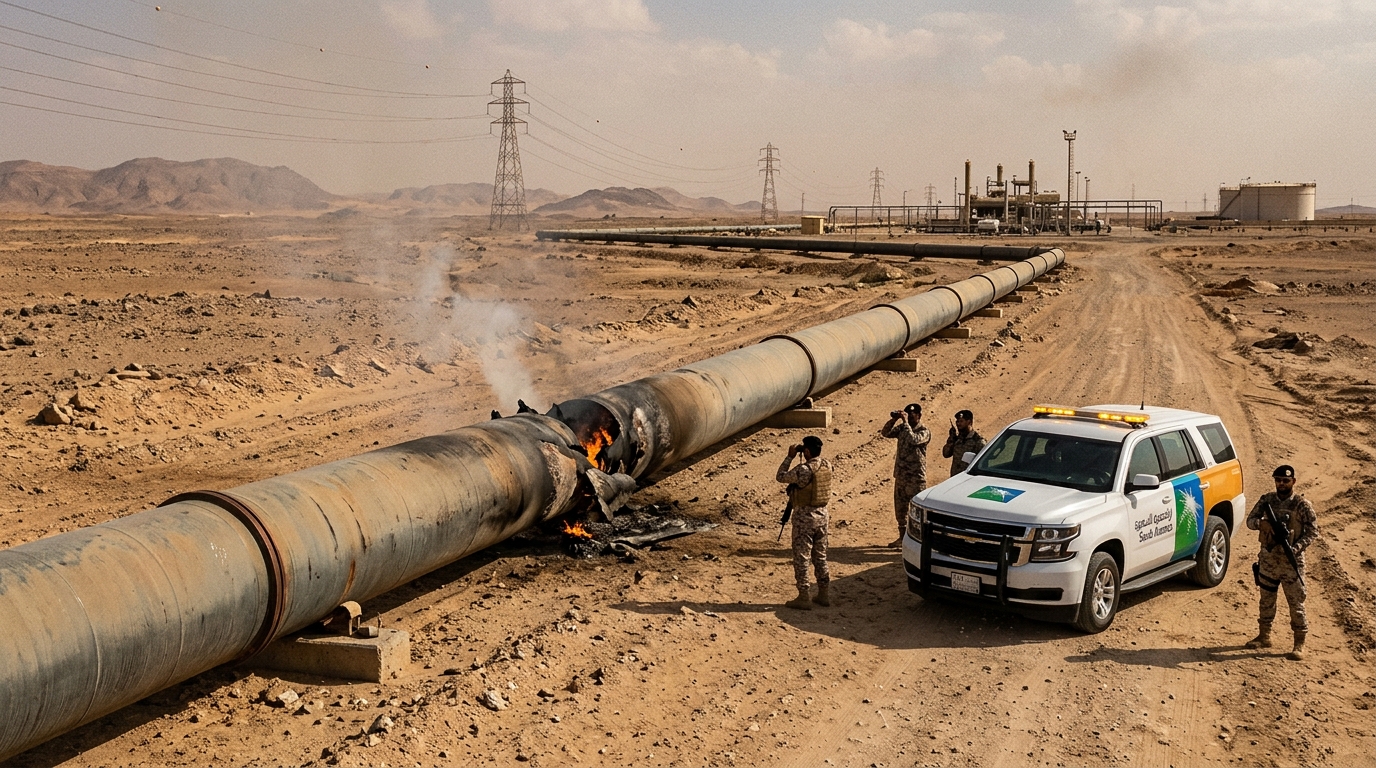
Saudi Arabia entered this weekend with no viable way to move oil at scale. The Strait of Hormuz remains heavily disrupted by the U.S.-Iran war, even as the U.S. has said maritime traffic has not been fully stopped. The East-West pipeline, the roughly 746-mile overland route that had helped Saudi Arabia bypass Hormuz, was hit by drone attacks on the morning of September 10. The Saudi Energy Ministry confirmed the shutdown on Friday, September 11, saying the line was shut down as a precaution after multiple attacks and that the strikes caused injuries while teams assessed the pipeline’s safety. And now Bab el-Mandeb, the Red Sea chokepoint that had become the kingdom’s most important alternative exit, is under direct Houthi pressure after their seizure of a strategic island in the strait.
The pipeline strikes came as Houthi forces captured Mayun, also known as Perim Island, in the middle of the Bab el-Mandeb Strait. The Houthis also captured the Red Sea port city of Mokha on Thursday. Effective Houthi leverage over Bab el-Mandeb could further imperil oil exports while granting Iran powerful new leverage in its war with the United States.
The Production Collapse Is Already Historic
Before this week’s escalation, the kingdom was already bleeding barrels. Saudi supply fell 2.3 million barrels per day in the most recent monthly reading, dropping to 6 million bpd in August, its lowest level in three decades, according to the International Energy Agency. Separate Kpler figures cited in recent reporting show Saudi oil flows through Bab el-Mandeb bound for Asia plunged from about 3.4 million bpd in June to about 128,000 bpd in August, with a partial recovery to roughly 700,000 bpd in September. The pipeline shutdown and the Houthi move at Bab el-Mandeb only worsen a trajectory that was already alarming.
Saudi Arabia had been relying more heavily on the Red Sea route as Hormuz traffic remained restricted during the war launched by the U.S. and Israel in February. That workaround now looks far less reliable.
What This Means for Aramco’s Dividend
This is where the story turns from geopolitics into corporate finance. Saudi Aramco is not merely an oil company. It is the primary mechanism through which Riyadh funds its government. The kingdom’s FY2026 budget projects a deficit of about 165.4 billion riyals, roughly $44 billion at the budget’s stated conversion. Estimates of Saudi Arabia’s fiscal breakeven oil price vary by methodology and year; Bloomberg Economics has put it around $96 per barrel. With output capped by physical disruption rather than policy choice, Aramco cannot simply pump more to compensate.
That is why any sustained hit to volumes quickly becomes a dividend problem. Aramco has maintained a large base dividend in 2026, but the war-driven cash flow squeeze increases the odds that shareholder distributions, and especially any variable or performance-linked element, become politically and fiscally harder to sustain.
Riyadh Leans on Washington
Saudi Arabia has requested military assistance from the U.S. against the Houthis, though Washington has so far stopped short of direct military action and has offered intelligence sharing and targeting support, according to reporting that cited sources familiar with the discussions. That restraint is not simply strategic: higher fuel prices during the war have already carried political costs for President Donald Trump and Republicans ahead of November congressional elections. MBS wants military action. Trump wants cheaper oil. The two are in direct tension.
For shipping, the Houthi consolidation at Bab el-Mandeb reshapes the risk calculus immediately. Major shipping firms and oil companies, including Maersk and Hapag-Lloyd, had already rerouted vessels away from the Suez Canal to circumnavigate Africa. By early September, Maersk and Hapag-Lloyd had moved selected services back through Suez while describing the return as ad hoc and measured rather than network-wide, with conditions described as unpredictable. Those cautious re-entries now look premature. Frontline, which reported a record quarterly profit of $659.2 million in Q2 2026 on surging tanker rates, stands to benefit further as Saudi barrels become harder to move and longer voyages around Africa remain the default.
Risks to Monitor
The bearish case for this outlook is Washington capitulating to MBS faster than markets expect. A credible U.S. military strike on Houthi command infrastructure in Yemen could reduce the threat to Bab el-Mandeb within weeks, and any pipeline repair timeline shorter than the market assumes would release capped Saudi supply quickly. Recent reporting on the IEA’s September oil market assessment said the agency now expects global oil supply to fall 5.7 million barrels per day in 2026, with a Gulf recovery deferred until 2027. If that timeline compresses, the current supply panic softens.
Bottom Line
Saudi Arabia is not a passive victim of this conflict. It is the party most structurally damaged by it. Every barrel that cannot reach a tanker is a dollar Aramco cannot pay to Riyadh, and every dollar Riyadh does not receive widens a budget deficit already projected at roughly $44 billion. Gold, sitting near $4,350 per ounce in recent trading, is absorbing part of this risk signal. But the sharper question for precious metals investors is duration: if the IEA is right that Gulf flows do not normalize until 2027, the fiscal pressure on the kingdom, and the geopolitical instability that pressure generates, has much further to run.