
September 12, 2026
With Brent above $100 and eleven leaders in one room, the case for official bullion buying just got a new catalyst.
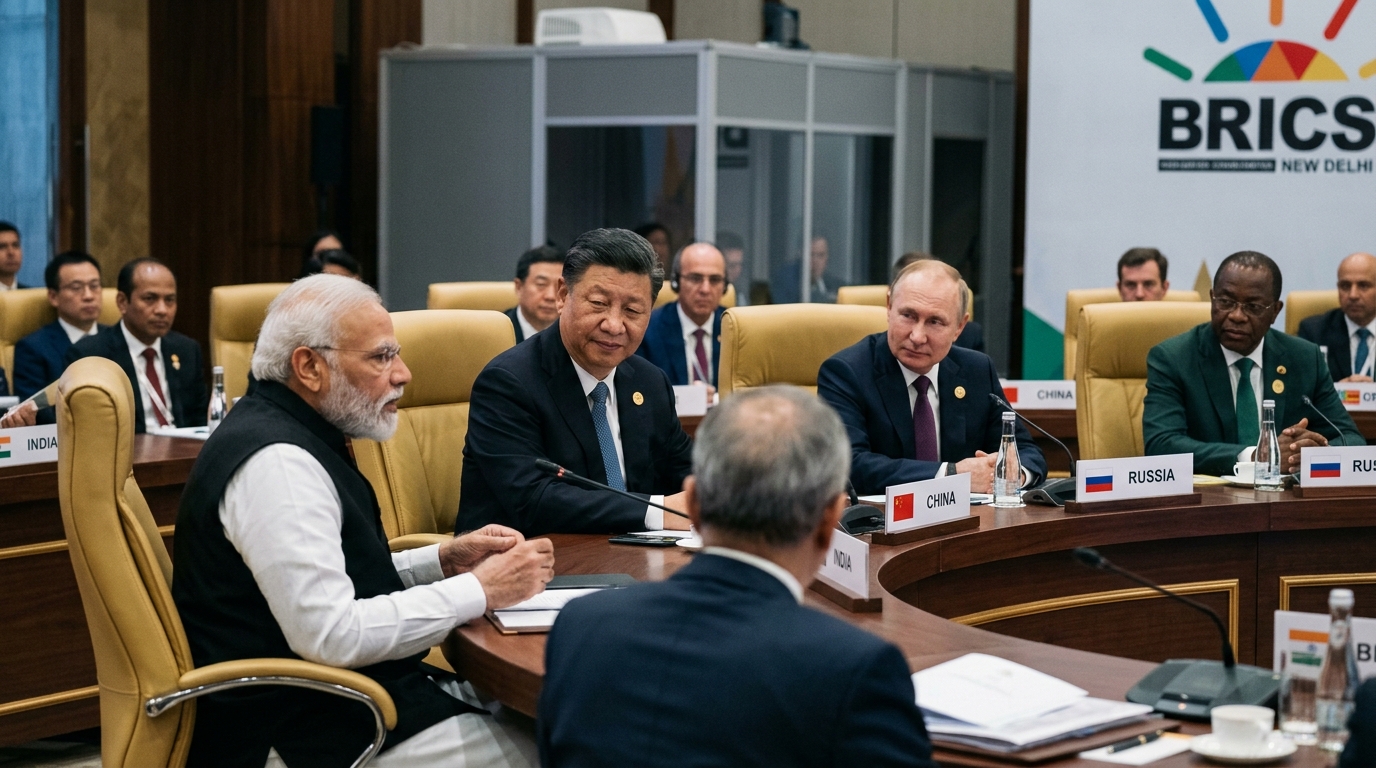
The 18th BRICS Summit opened this morning at Bharat Mandapam in New Delhi, and the room contains a concentration of sovereign balance-sheet firepower that gold investors should not underestimate. Xi Jinping, Vladimir Putin, and Iranian President Masoud Pezeshkian are all present alongside leaders from Brazil, Saudi Arabia, the UAE, Egypt, Ethiopia, Indonesia, and South Africa. India assumed the BRICS chairmanship on 1 January 2026 and is hosting the summit under the theme “Building for Resilience, Innovation, Cooperation and Sustainability.” The geopolitics surrounding it are anything but stable.
Alert: The DeFi Token Set to Explode as Markets Recover
Major institutions are fighting to acquire this DeFi protocol before prices surge in the post-tariff rally that’s already beginning. This isn’t speculation – this platform’s role is so essential to crypto’s financial system that its current price defies all logic.
Just Released: The DeFi token set for massive gains as markets heat up – only $3!
Brent crude settled at $107.63 per barrel Thursday, with oil prices advancing more than 18% in September alone as the market braces for a prolonged conflict in the Middle East. Brent hit $100 per barrel after a day of developments that included US strikes on Iranian oil tankers and Houthi attacks on Saudi Arabia. That is the backdrop against which Iran and Saudi Arabia are now in the same conference hall. The geopolitical absurdity of the moment is, for gold, structurally useful.
What the Reserve Math Says
BRICS summits reliably generate headlines about de-dollarization. Most of those headlines overpromise. BRICS nations are pushing for local-currency trade and interoperable payments to reduce dollar dependence, but stop short of proposing a common currency. India’s foreign minister has been blunt about it: Brazil explicitly dropped a common currency during its 2025 presidency, and India’s foreign minister has stated there is “no policy on our part to replace the dollar.”
5 Nasdaq Stocks Under $5 That Aren’t What You Think
Most stocks under $5 come with a reputation. These don’t.
Each company on this list is tied to major trends like AI, cybersecurity, and next-gen infrastructure.
They may not have the spotlight yet, but they are building real businesses in real markets. That combination is not always easy to find at this price level.
That measured reality, however, does not diminish what these governments are doing quietly in their own reserve departments. Central bank purchases accelerated to 100 tonnes per month in June 2026 on a three-month seasonally adjusted basis. The People’s Bank of China added 7 tonnes in Q1, extending a buying streak of more than 17 consecutive months, with official holdings now at 2,313 tonnes representing 9% of total reserves. That 9% figure is the tell: unofficial estimates put actual Chinese holdings at two to three times the official figure, due to accumulation routed through state-owned entities and the Shanghai Gold Exchange that never appears in official data.
Saudi Arabia is the sleeper buyer that the market has not yet priced. Saudi Arabia and the UAE have not yet made significant public gold reserve additions, with Saudi Arabia holding approximately 323 tonnes. Increasing gold to even 5% of reserves would require purchasing approximately 300 tonnes. Riyadh has every incentive to diversify when $107 oil is being produced in a war zone it is partly caught inside.
The Infrastructure Being Built Around Gold
BRICS Pay has been discussed as a potential cross-border payments architecture linking national systems such as Brazil’s Pix, China’s CIPS, Russia’s SPFS, and India’s UPI. A separate initiative, the gold-linked Unit has been discussed in BRICS policy circles, but it remains at an early stage and is not a live settlement rail. Neither of these is a dollar replacement on any near-term timeline. Both increase the volume of intra-bloc trade settled outside dollar channels, and intra-BRICS trade settled in local currencies can create ongoing reserve buildup in countries that are actively choosing to hold gold rather than US Treasuries.
Nuclear Energy’s Comeback Could Spark Before 2026
Global energy demand is surging and one overlooked power source is quietly returning to the spotlight. New policy support and supply constraints are setting the stage for a surprising shift in the energy markets.
Risks to the Thesis
The structural buying trend has absorbed genuine headwinds without breaking. Reported central bank net purchases were sharply lower in Q1 2026, and Turkey was a notable seller during the quarter. The bloc is also structurally divided: China favors yuan internationalization, India prefers its own digital rupee and resists binding agreements, and India’s parallel Quad membership limits any China-Russia axis. A ceasefire between the US and Iran that brought Brent back below $80 would remove one layer of urgency from the reserve diversification argument.
Central banks bought a record 289 tonnes of gold in Q2 2026, while prices posted their steepest quarterly decline in a decade. That is the pattern that matters: sovereign buyers absorbing weakness, not chasing strength. According to the World Gold Council’s 2026 survey, 89% of reserve managers expect global central bank gold holdings to continue increasing over the next 12 months, and 84% believe gold will hold a higher share of total reserves five years from now. The New Delhi summit will not announce a gold standard. What it does is put the world’s most consequential buyers of physical metal in one room, under conditions that make dollar alternatives look more urgent than they did last year. That is enough.