
September 9, 2026
Bonus Content: Lowe’s Online Pro Portal Is Now Its Sharpest Weapon
The Last Copper Boom Made Fortunes. Is This One Just Starting?
Copper has never been the flashy trade.
But it is everywhere.
Inside data centers. Inside power grids. Inside transformers, substations, EVs, buildings, factories, and the infrastructure needed to keep the AI boom running in the real world.
And now the numbers are getting hard to ignore.
Copper recently hit historic highs after a reported 41% year-over-year surge. S&P Global forecasts global demand could rise 50% over the next 14 years, from 28 million metric tons today to 42 million by 2040.
At the same time, new supply is not easy to bring online. That could be the opening.
Because when demand accelerates but supply staggers, investors often start looking past the obvious names and toward smaller stories tied to future supply.
One North American copper company may be sitting in that exact window.
Still early. Still under the radar. But copper’s moment may finally be here.
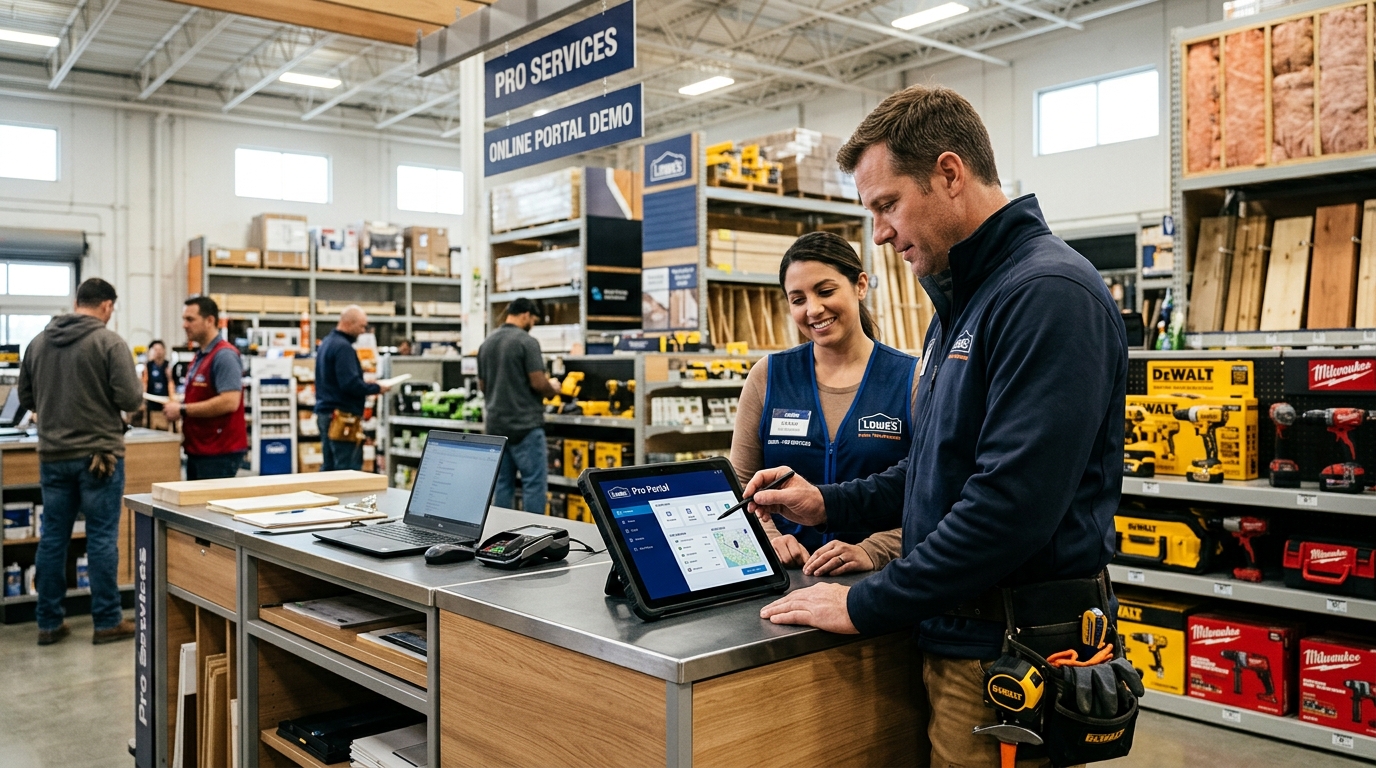
Lowe’s Online Pro Portal Is Now Its Sharpest Weapon
The clearest sign that Lowe’s has fundamentally changed what kind of company it is came on August 19, when it reported second-quarter results that would have looked mediocre by almost any traditional home-improvement metric. Total sales for Q2 2026 reached $26.0 billion, an 8.3% increase from $24.0 billion in the prior-year quarter. Dig one layer deeper, though, and the architecture of that growth tells the more important story.
Comparable sales rose just 0.2%, driven by strong performance in Pro and home services, as well as a 15.7% increase in online sales, partially offset by persistent DIY macro pressures. In plain terms: the weekend warrior is not showing up, and Lowe’s is replacing that revenue stream with professional contractors who order digitally, buy in bulk, and return week after week.
Professional contractors remain a major strategic focus for Lowe’s because they purchase more frequently, buy across multiple product categories and generate larger average order volumes than do-it-yourself consumers. That structural difference in spending behavior is exactly why the company has invested so heavily in building a dedicated online ecosystem around the Pro customer.
Lowe’s has strengthened its offering for small-to-medium pros by expanding product access through its Pro Extended Aisle, enhancing digital tools that simplify quoting and purchasing, and delivering immediate value through MyLowe’s Pro Rewards, making it faster and easier for pros to shop, source materials and manage their businesses whether in store, online or on the job site. That last point matters. A contractor who manages purchasing from a phone between job sites is not cross-shopping. Friction removed at the point of ordering is revenue retained.
The Pro platform syncs with Buildertrend. That kind of back-end integration can eliminate manual data entry and reduce administrative overhead, a meaningful reason to stay loyal to one supplier rather than price-shop at a competitor.
Lowe’s also rolled out an AI-enabled Pro Companion, which provides information that helps Pro sales team members prepare for conversations with Pro customers, and a Pro Extended Aisle, which gives sales associates at the Pro desk direct access to suppliers’ catalogs. The combination of back-end integration and AI-assisted sales support is what separates a retailer building a platform from one simply adding SKUs.
Both Home Depot and Lowe’s increasingly resemble infrastructure platforms serving the contractor economy. The real story is no longer lawn and garden demand, weather volatility, or appliance promotions. It is the emergence of a competitive model built around professional contractors, integrated logistics, AI-powered workflow tools, and construction-oriented distribution networks.
For investors, the question is not whether contractor-focused digital spending is a good idea. It clearly is. Management lowered its full-year fiscal 2026 outlook to the bottom end of its prior guidance ranges, a signal that the broader market is not cooperating even as the Pro channel performs. The company now expects approximately $92.0 billion in sales and flat comparable sales for fiscal 2026. The Pro platform can win share. What it cannot do, at least not yet, is fully offset a housing market that keeps refusing to loosen.
That is the risk worth watching. Lowe’s online Pro portal is the right long-term bet. The timetable for the payoff depends on factors no digital tool can control.