
There is a pattern buried inside this week’s Washington-Seoul spat that precious metals investors should not miss. President Trump threatened new trade retaliation against South Korea if it doesn’t follow through with an investment in a liquefied natural gas project in Alaska. “If they don’t want to do it, that’s OK with me. I’ll just charge them more,” Trump said, then added: “Tell them if they don’t sign shortly, I’m gonna double it up.”
The target of that pressure is a deal Seoul says it never firmly made. South Korea pushed back on the announcement, saying it had agreed to the project only if it proves economically feasible. “What the Korean government agreed with the US is that the Alaska project will proceed only if it is commercially viable,” Industry Minister Kim Jung-kwan said in a televised briefing. No members of the South Korean government attended Trump’s Oval Office announcement on Wednesday. A representative of the privately held Glenfarne Group, which is developing the LNG venture, was in attendance.
The commercial skepticism from Seoul is grounded in real economics. The head of business intelligence for Asia Pacific at Poten & Partners noted that “the economics of Alaska LNG is expensive given the long pipeline versus other LNG projects” and “it will not be the cheapest supply for South Korea.” The Alaska LNG project has long drawn skepticism about whether its economics can justify the capital outlays it would require, and South Korean Industry Minister Kim Jung-kwan called the project “high-risk” last year, warning that the country could not justify involvement without adequate cash flow.
None of that stopped Trump from framing the $54 billion figure as a done deal. Trump touted the figure as part of a broader agreement for Seoul to invest $200 billion in U.S. energy in exchange for lower tariffs on South Korean goods. When the Korean side pushed back publicly, the response was a tariff threat against one of Washington’s most durable security allies.
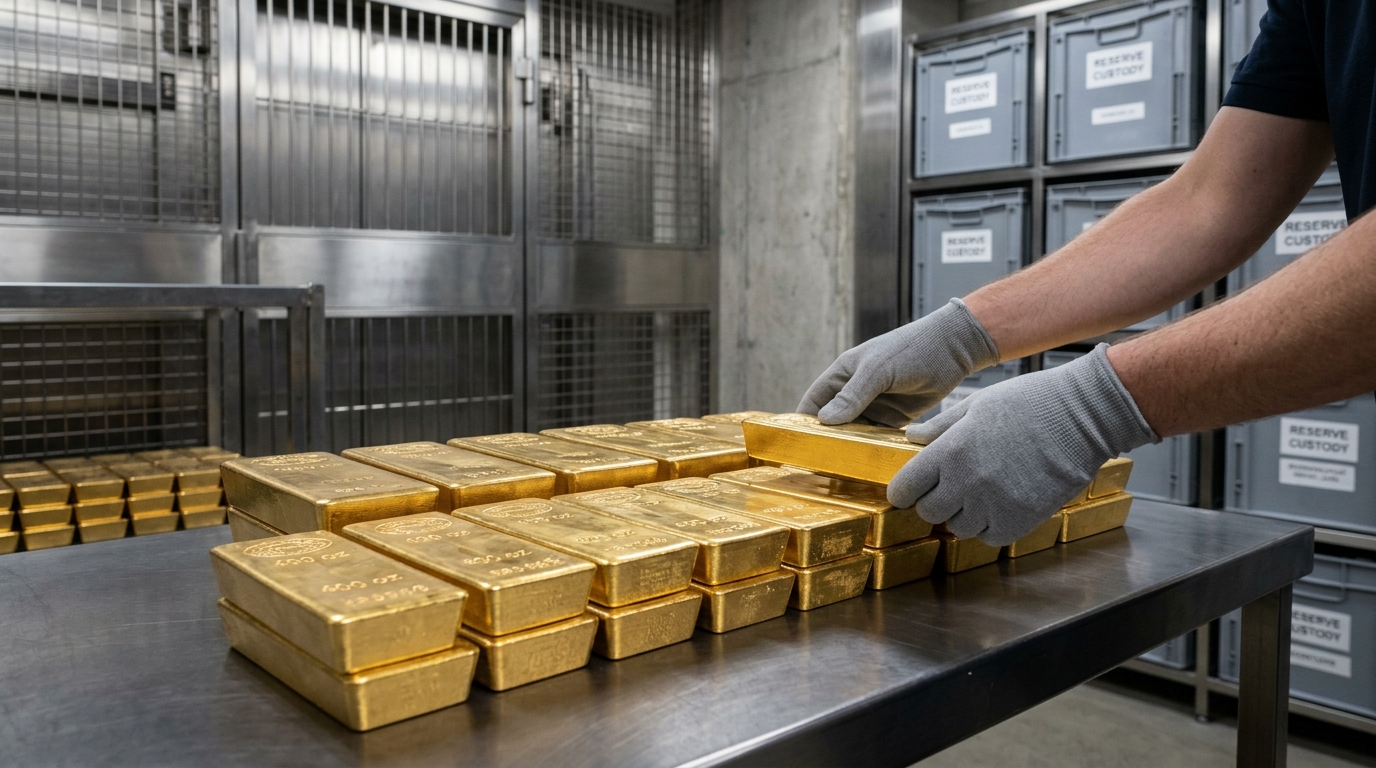
This is precisely the dynamic accelerating central bank gold accumulation in 2026. The immobilization of about $300 billion in Russian central bank assets in 2022 marked a turning point for global reserve management. In response, countries like China and several Central Asian economies have accelerated gold purchases, treating bullion as a reserve asset that sits outside the reach of foreign governments. Unlike foreign currency reserves, physical gold held in a country’s own custody is not subject to foreign jurisdiction, making it attractive in a fragmented geopolitical landscape.
The numbers confirm the shift is structural, not episodic. Central banks bought a net 244 tonnes in Q1 2026 alone, exceeding both the prior quarter and the five-year average. A World Gold Council survey drawing responses from a record 76 central banks found that 89% expect global gold reserves to increase over the next 12 months, and a record-high 45% plan to boost their own holdings. The same survey found that 74% of central banks expect to see moderate or significantly lower U.S. dollar holdings within global reserves over the next five years.
What This Means for Investors
The Korea dispute illustrates why that diversification trend is hard to reverse. When the U.S. uses tariff threats as leverage over the terms of an investment pledge that was still under commercial review, every reserve manager watching draws the same conclusion: dollar-denominated relationships carry political risk that gold does not.
Gold, which carries no counterparty risk and cannot be frozen or sanctioned in the way a foreign-held bank deposit or security can, has become a preferred diversification instrument for reserve managers navigating an increasingly fragmented geopolitical landscape. This dynamic does not require outright dollar rejection to generate sustained gold demand. Even incremental shifts in reserve allocation, when multiplied across dozens of central banks simultaneously, produce enormous aggregate buying volumes.
Risks to Monitor
The bullish read assumes the Korea standoff deepens mistrust rather than resolves quickly. It remains unclear whether Trump has the power to unilaterally raise levies on South Korean goods as a retaliatory measure, after the Supreme Court curtailed his ability to impose certain tariffs without clear congressional authorization. A legal block or a swift diplomatic resolution would remove some of the geopolitical premium currently priced into gold. Dollar strength, if it reasserts itself on improved trade clarity, would also weigh on bullion regardless of central bank appetite.
Bottom Line
The Alaska LNG dispute is not a gold story on its surface. Underneath it is the clearest argument gold bulls have had this week: U.S. dollar diplomacy is generating the kind of friction that makes neutral, no-counterparty reserve assets more attractive, not less. Central banks already know it. The data says they are acting on it.