
October 5, 2026
Bonus Content: A Pool Supply Chain’s Collapse Tells Gold Investors a Story
Long before the current drone boom, one small aircraft helped make history.
During a search and rescue operation, it used an infrared camera to locate an injured man near a snowbank. The mission became recognized as the first drone assisted rescue of a human life.
That moment showed what this little-known company is capable of building.
Its patent portfolio may reveal even more about where it could go next.
For investors, patents can create something extremely valuable: a moat.
As Washington pushes for more American drone technology, companies that own their intellectual property have an advantage over those simply assembling parts designed elsewhere.
One overlooked Nasdaq name has the history, the patents and the products.
Now America may finally bring the demand.
Uncover the technology behind this Under-the-Radar Nasdaq company.
A Pool Supply Chain’s Collapse Tells Gold Investors a Story
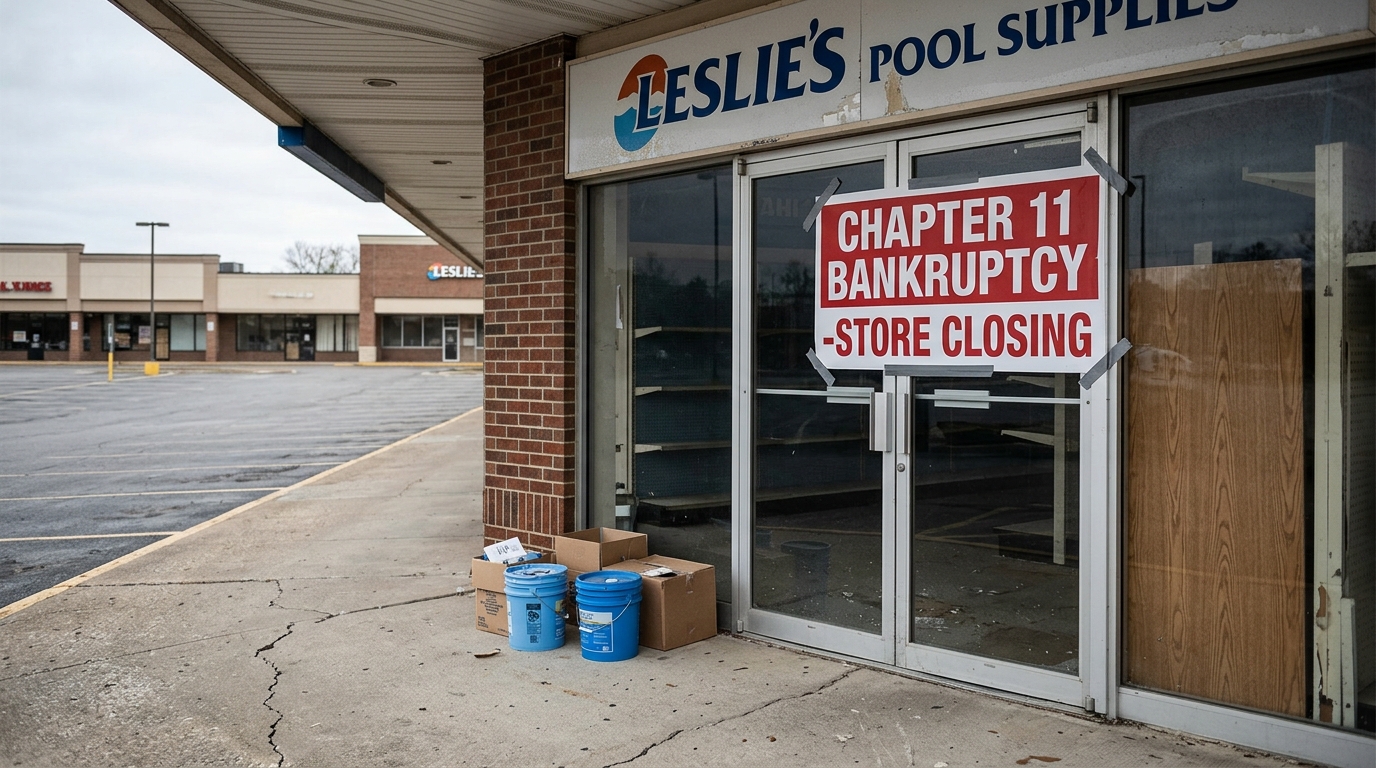
There is no silver lining here for precious metals. Leslie’s Pool Supplies filed for Chapter 11 bankruptcy on September 30, and the story belongs to retail, not to gold. But the forces that broke a 63-year-old specialty chain are worth understanding, because they are the same forces reshaping consumer spending across the economy and feeding the case for hard assets.
What Happened at Leslie’s
Leslie’s, the country’s largest direct-to-consumer pool supply chain, filed for Chapter 11 bankruptcy and immediately closed 76 stores as part of an effort to align its retail footprint with customer demand. The restructuring would eliminate approximately $685 million, or about 90 percent, of its outstanding funded debt. The prearranged case was filed in the Southern District of Texas, with the Phoenix-based company securing $90 million in new-money debtor-in-possession financing.
Leslie’s had already committed to closing approximately 80-90 underperforming stores and one distribution center earlier this fiscal year. The company expects to complete the restructuring and emerge from Chapter 11 in early 2027. Over 850 locations remain open, for now.
Why a Pool Retailer Drowned
Fiscal third-quarter sales fell 8.4 percent and comparable sales declined 6.2 percent, while gross margin dropped from 39.6 percent to 36.5 percent. That kind of simultaneous volume and margin compression is a signal that a business is losing pricing power and customer relevance at the same time.
The competitive math was always going to be difficult. National home improvement retailers such as Home Depot and Lowe’s compete on a seasonal basis, while mass-market retailers like Walmart and Costco devote shelf space to the same products, and Amazon covers the online channel. As one analyst put it, a lot of what Leslie’s sells simply is not hard to find anymore, which puts pressure on the company to justify why a customer needs them. The expertise and service still have value when something goes wrong with a pool, but that is a much narrower advantage than simply being the place where people buy supplies.
As pandemic spending faded, inflation and higher interest rates squeezed household budgets, new-pool construction slowed, and consumers became more selective about discretionary spending. For the first nine months of fiscal 2026, Leslie’s reported a net loss of $87.7 million.
The Angle That Matters Here
Leslie’s carries no direct relevance for precious metals investors. Pool chemicals and gold bars do not share a supply chain. But the macro context does matter.
When a century-old category of specialty retail cannot sustain itself against inflation, rising debt costs, and consumer wallet pressure, it confirms something gold markets have been pricing in for months: the consumer economy is under structural stress. Elevated real rates punish leveraged businesses. Sticky inflation erodes discretionary budgets. Leslie’s closures are part of a broader consolidation trend in the pool industry, where Pool Corporation dominates the wholesale distribution side.
That same dynamic, rate pressure compressing margins, debt loads becoming unserviceable, and consumers pulling back on non-essential spending, is part of why gold has found sustained institutional support in 2026. Capital searches for stores of value when the operating environment gets this unforgiving.
Bottom Line
Leslie’s bankruptcy is not a precious metals story. It is, however, a useful confirmation of the environment in which precious metals are thriving. When a business with more than 850 locations, a recognizable brand, and decades of customer loyalty still cannot escape a $685 million debt burden under today’s rate and demand conditions, the argument for owning assets with no counterparty risk gets a little louder. That is the takeaway worth carrying into Monday.