

October 28, 2026
Bonus Content: Israel Has No Government. Gold Has No Clear Catalyst.
Below is an important message from one of our highly valued sponsors. Please read it carefully as they have some special information to share with you.
** If you’re within miles of one of these dots you could see your electric bill increase. **
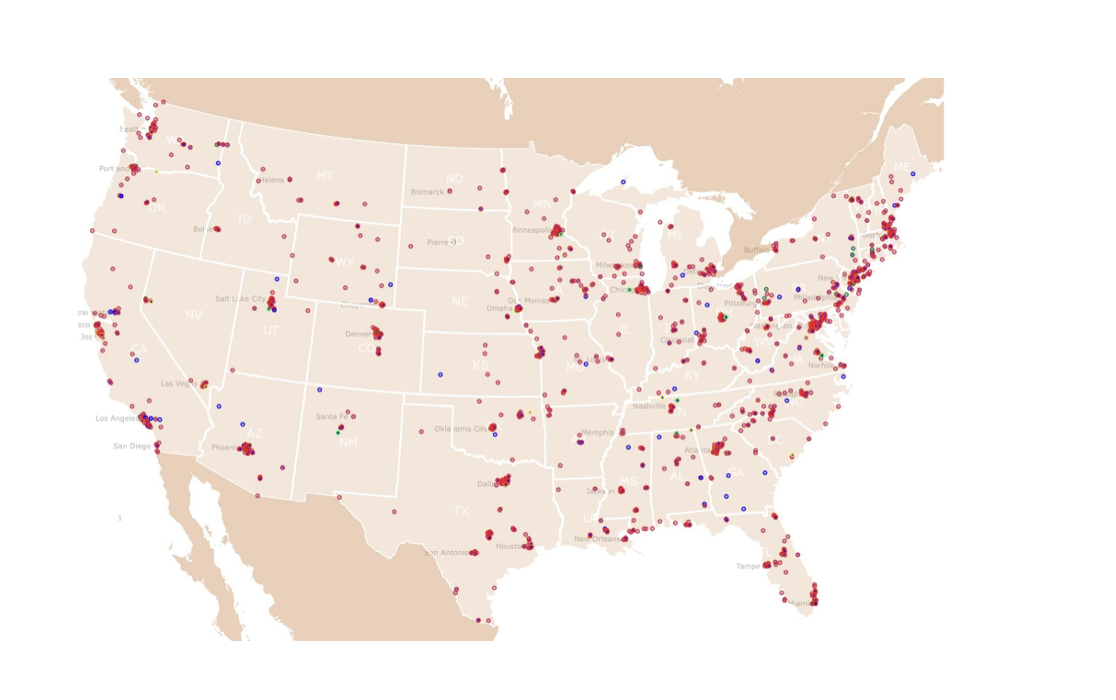
These are data centers. Warehouses full of computers, built to run AI.
There’s about 1,300 operating in America right now.
A single one can draw as much electricity as 100,000 homes.
In Manassas, Virginia, a man who’s lived in the same house for 40 years opened a $281 electric bill in January.
The month before, he paid about $100.
And this is just the beginning.
Another 2,500 data centers are set to be built in the coming years.
It’s only a matter of time before all of us feel this. If you haven’t already.
So who’s going to stop it?
I can tell you it isn’t your congress man. It isn’t your senator.
There’s exactly one person who can. And he’s not in government. Elon Musk. His new “hidden” project would take data centers out of our cities entirely
He’s already filed his plan to do this with the FCC.
And Trump has been in full support of this,, so that you don’t get hit with rising electric bills in the coming years.
And this goes one step further.
Which is the real reason I’m writing to you today.
We’re at the ground floor of a problem only Elon can solve.
And there’s one company I believe is sitting at the center of his solution.
It’s a company 99% of people have no idea exists, let alone has Elon’s name attached to it.
It’s publicly traded, and it costs less than $100 a share.
Imagine getting in on the ground floor of PayPal. Tesla. SpaceX.
That’s exactly where we are right now with his next project.
And this one could not only be his last… but it could be BIGGER than all of his past projects combined.
Learn how to get positioned before December 8th.
> GET POSITIONED BEFORE DEC 8 <
Sincerely,
James Altucher
Israel Has No Government. Gold Has No Clear Catalyst.

Israel’s election on Tuesday produced the one outcome that keeps every risk premium alive and resolves nothing: a deadlock. Partial results and exit polls showed no clear winner, with neither the bloc led by Prime Minister Benjamin Netanyahu nor that of his main rival, Gadi Eisenkot, on a clear path to a governing majority. An inconclusive result would leave Israel in political limbo, allowing Netanyahu to remain in power in a caretaker capacity while parties try to forge a governing coalition. Another election is possible if no one can reach 61 seats.
What’s Driving the Market
Netanyahu’s bloc of ultra-Orthodox and far-right allies lost its majority, projected to collapse from 68 seats in the outgoing Knesset to about 50 to 52 seats in the next Knesset, depending on the broadcaster’s exit-poll update. While exit polls suggest Arab-led parties could emerge as kingmakers, both Netanyahu and Eisenkot have ruled out partnering with them. That arithmetic leaves coalition talks in a genuine impasse.
For gold, the political fog matters less than the military one. Gold slipped 0.3% to $4,045.29 an ounce on Wednesday, giving back part of a roughly 1% gain from the previous session, as an oil spike pushed inflation fears ahead of the US Federal Reserve’s rate decision later in the day. The metal is holding above $4,000, but it is not rallying on the election result. That gap between political chaos and price action deserves scrutiny.
The Fed decision is the immediate pressure point. Gold holding the $4,000 level while the Fed vote count narrows is the dynamic that determines whether this consolidation holds or breaks.
The oil market is telling a different story. Oil prices climbed Wednesday after Tehran-backed Houthis said they attacked Saudi Arabia’s largest refinery. Brent rose to about $115.36 a barrel early Wednesday, up roughly 1.3% from the previous day. That move is squarely about supply disruption risk, and it is complicating gold’s path. Higher oil feeds inflation expectations, which keeps Fed rate-hike odds elevated, which pressures gold. Ricardo Evangelista, director and CEO at ActivTrades, told Reuters that gold was under pressure from the dollar, yields, and persistent inflation concerns driven by high oil prices.
This is the tension gold investors must sit with: the geopolitical backdrop that should be supporting bullion is simultaneously generating the inflationary energy shock that works against it. The safe-haven metal has fallen under pressure from rising Treasury yields, a stronger dollar, and profit-taking as investors liquidated positions to offset losses elsewhere. Morgan Stanley noted earlier this year that gold was tracking more closely with US Treasuries than with conflict headlines, suggesting that gold is currently more sensitive to real interest rates and monetary policy than to geopolitical risk.
The Investment Opportunity
The Tel Aviv stock market was closed on election day and reopened Wednesday morning. The pre-election rally came ahead of the closely contested vote; Reuters said investors see further upside if an opposition victory eases political and regional risk, while an inconclusive result could extend coalition negotiations. The TA-35 had already fallen 2.38% to 4,124 in the week before the vote, and opening prices Wednesday will be the first real-time verdict from Israeli equity markets on what a caretaker government means for domestic risk appetite.
For precious metals investors sitting outside Tel Aviv, the cleaner opportunity may be in the spread between gold and oil. JPMorgan forecasts demand from central banks and investors will ultimately push gold to $6,300 per ounce by end of 2026, with its analysts writing that a near-term boost in geopolitical risk premium is far from the sole reason they remain structurally bullish. Royalty companies with low direct exposure to Middle East production costs and strong central-bank demand tailwinds look better positioned than pure producers facing energy-driven cost pressure.
Risks to Monitor
A Reuters poll trimmed the 2026 gold average forecast to $4,495 from $4,509 and lifted 2027 to $4,650, signalling analysts see a delay rather than a broken thesis. The Fed decision later today is the more immediate lever: gold and silver prices opened lower on Wednesday as investors awaited the Fed’s policy decision, and the Fed is widely expected to leave rates unchanged. Any signal toward December tightening would push real yields higher and extend gold’s consolidation. Separately, a surprise coalition breakthrough in Jerusalem that ends the caretaker limbo could remove the residual political risk premium from both oil and gold simultaneously.
Bottom Line
Israel’s election resolved the political question by answering nothing. What investors should understand today is that gold’s safe-haven bid from the Middle East is partly neutralized by the same conflict’s effect on oil, inflation expectations, and Fed policy. The war premium is real; it is just sitting in Brent, not bullion. Until oil eases or the Fed pivots, gold’s structural case rests on central bank buying and dollar weakness rather than geopolitical fear. That structural case remains intact. It just needs patience, not headlines.