
October 14, 2026
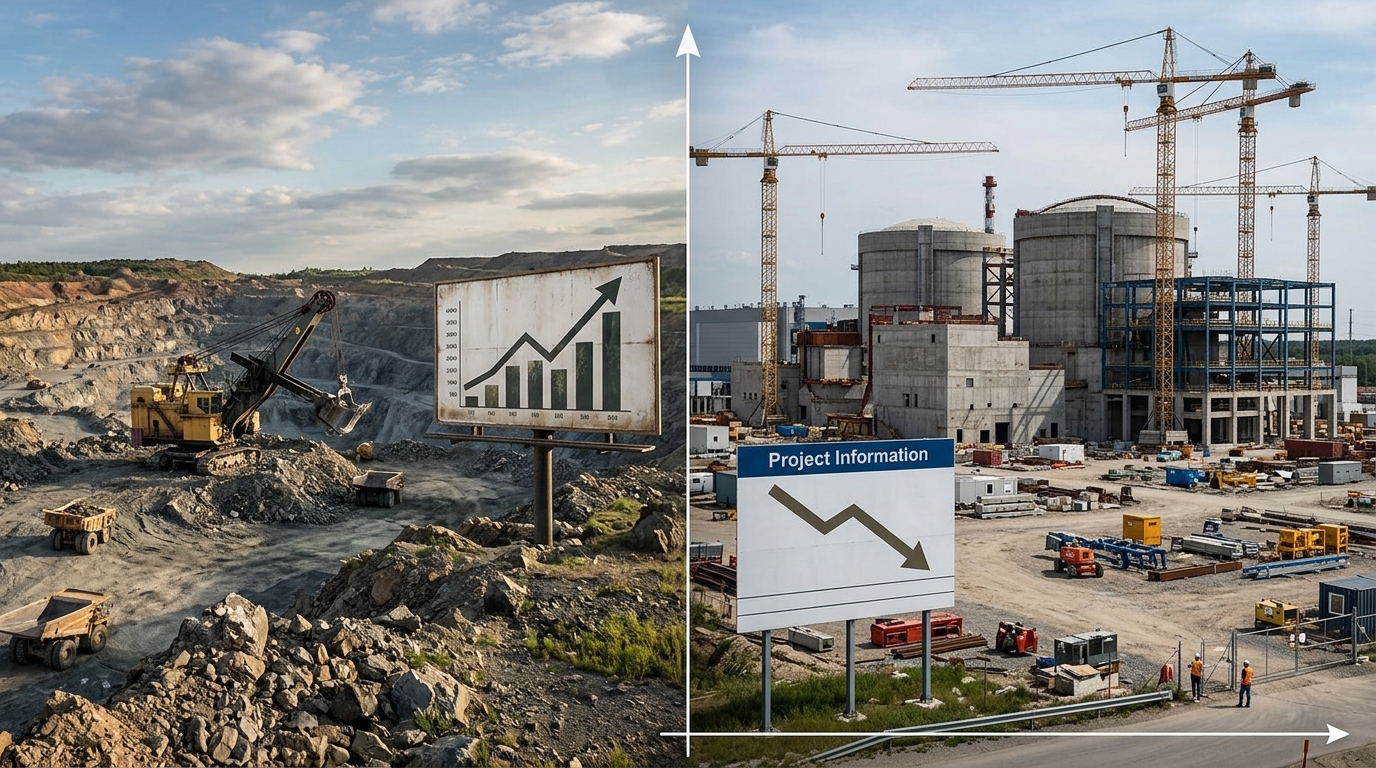
Bonus Content: Uranium Hit a 19-Year High. Reactor Developers Are Collapsing.
Below is an important message from one of our highly valued sponsors. Please read it carefully as they have some special information to share with you.
Dear reader,
After correctly predicting the 2008 and 2020 stock market meltdowns…
Look, I’m not the only one warning.
The research firm Bernstein Research said this AI company “has the power to crash the global economy for a decade.”
The CEO of this AI company also just issued a CODE RED in an internal memo…
Warning his employees that they’re dealing with a critical situation.
Another company executive even implied they might need a government bailout.
The last time I saw something like this was in 2008…
When I predicted a stock market meltdown…
Just three weeks before Lehman went under.
Make no mistake…
The stage is set for a meltdown of historic proportions.
So please click here and I’ll show you why I believe this is a $1.4 trillion ticking time bomb…
That will destroy the foundations of the entire AI economy…
And ruin the retirement of millions of unprepared Americans.
The good news is you don’t have to be a victim.
In fact, I’m recommending you take these five simple steps to prepare, before it’s too late.
Regards,
Jim Rickards
Uranium Hit a 19-Year High. Reactor Developers Are Collapsing.
Uranium’s long-term contract price reached $96.50 per pound at the end of September, above the $95 peak set in 2007, making it the strongest reading in nearly two decades. On Monday, October 12, 2026, NuScale Power (SMR) answered that milestone by dropping 7%. The two markets are now moving in opposite directions, and understanding why is the most important thing a precious metals investor can do right now.
NuScale shares fell to $6.72, leaving the stock down 53% year to date and below its prior 52-week low. Oklo (OKLO) closed at $32.72, down 6%, while Centrus Energy (LEU) fell 4% to $137.09. None of that touched the fuel. Oklo and NuScale have collapsed roughly 50% alongside each other while the uranium ETF URA has held up far better, exposing developer stocks as the weakest part of the nuclear complex.
Two Different Businesses
The confusion starts when investors treat reactor developers and uranium producers as the same trade. They are not. NuScale designs small modular reactors. It earns revenue when utilities and industrial customers order them. Until firm orders arrive, cash keeps flowing out. Oklo is in the same position: pre-revenue on reactors, burning capital, and marking lower every time a hyperscaler signals it needs power sooner, but not soon enough to translate into near-term project cash flows.
The selloff reflects investor worries about long construction timelines, limited firm orders, and ongoing cash burn, especially for companies like NuScale and Oklo that have yet to generate reactor revenue. UBS cut NuScale to a Sell rating on September 11, citing long construction timelines, limited firm customer commitments, and expected cash burn. None of those concerns have anything to do with the price of uranium. The fuel moves on supply and demand. The developers move on order books and rate expectations.
What Is Actually Driving $96 Uranium
The supply picture has tightened in ways that do not reverse quickly. Kazatomprom has said its Taikonur sulphuric acid plant timeline has slipped, with some reporting pointing to an archaeological finding at the site and a schedule now extending into late 2027. Kazakhstan is also highly exposed to sulphuric acid constraints, including disruptions tied to Russian export restrictions. That is the kind of bottleneck that can cap output even when prices are screaming higher.
Kazakhstan accounts for 28% of uranium delivered to U.S. reactors, so any production shortfall hits the Western supply chain directly.
The prices utilities agree to pay years in advance are now running ahead of the spot market, a sign that buyers are planning for tighter supply later in the decade. That is not speculative momentum. That is structured forward demand. TD Cowen said the move formed on thin volume, and term contracting fell about 15% year over year to just over 38 million pounds as of August 31. Utilities may be sitting on their hands at $96, but their reactors will still need fuel in 2029 and 2030.
Where Producers Stand
Cameco (CCJ) is the clearest bridge between the fuel price and an investable equity. The company has updated its average realized price outlook to between $91 and $96 per pound, and raised its expected uranium revenue to between $2.7 billion and $2.91 billion for 2026. Its contract portfolio supports average annual deliveries of about 28 million pounds of U3O8 for the next five years, with commitments higher than the average in the 2026 to 2028 window.
Uranium Energy (UEC) sold 400,000 pounds from inventory at a weighted average realized price of $93.13 per pound in fiscal 2026.
Risks to Monitor
The gap between the term price and actual contracting volume is real. Utilities are seeing sticker shock on pricing and seem reluctant to contract in any meaningful way. If that hesitation extends into 2027, producers’ revenue growth will lag the headline price. Rising real yields continue to compress the multiples on all long-duration assets. And if the reactor developers stabilize, capital could rotate back toward them and away from producers.
But those are risks to a timeline, not to the supply math. The sulphuric acid bottlenecks in Kazakhstan are not resolved by a Fed pivot. The 28% of American reactor fuel that flows through Kazakhstan does not get cheaper because NuScale missed an order. The fuel price and the developer stocks have decoupled because they were always measuring different things. Right now, the fuel is measuring scarcity. The developers are measuring patience.