
September 6, 2026
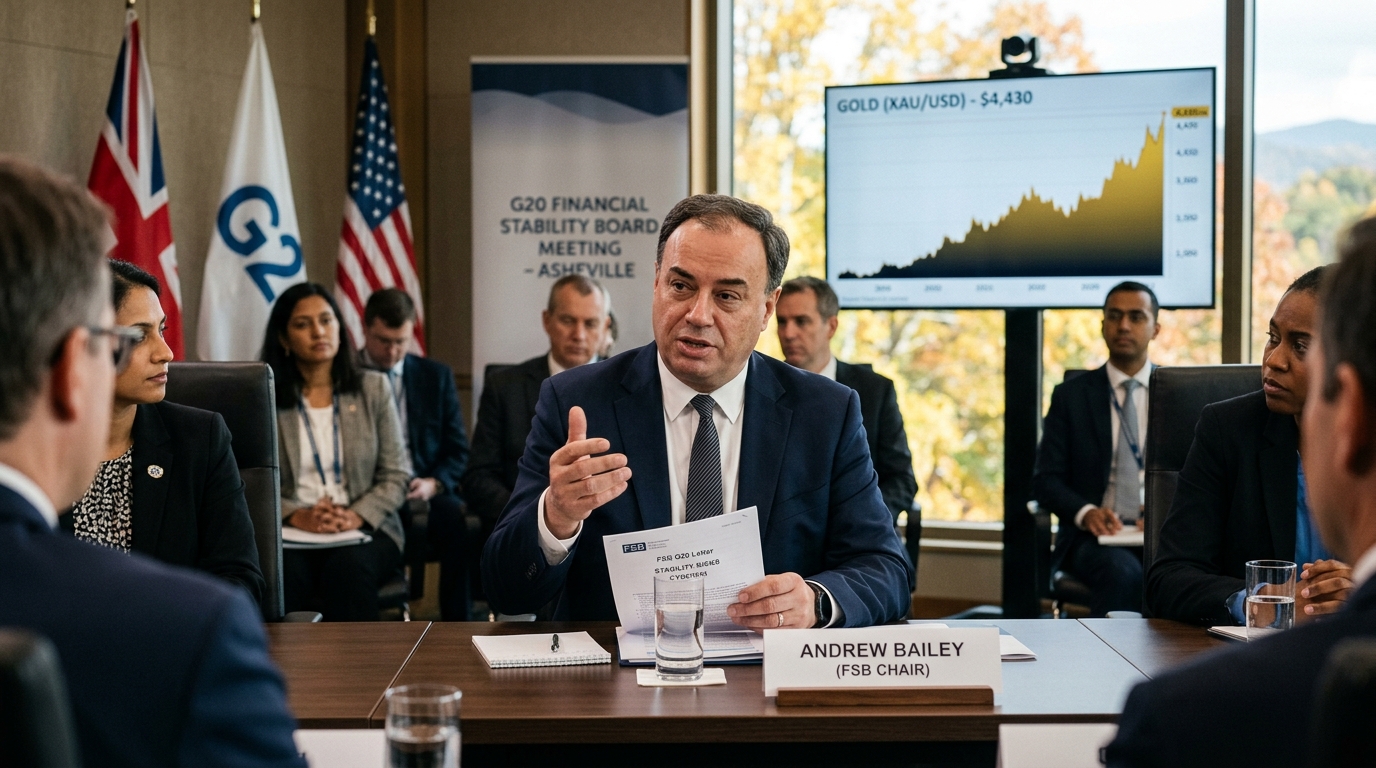
FSB chair Andrew Bailey flags frontier AI cyber risk as the top threat to global stability.
The most important document in global finance last week was not a central bank statement or an earnings release. It was a two-page letter.
You’re Being LIED To About The Iran War
Forget EVERYTHING you’ve heard about the Iran war.
Especially the reasons why we’re bombing the country.
On August 31, Andrew Bailey, governor of the Bank of England and chair of the Financial Stability Board, wrote to G20 finance ministers and central bank governors ahead of their meetings in Asheville, North Carolina. Bailey warned that markets remain vulnerable to a potentially disorderly correction and identified frontier AI’s impact on cyber risk as the most immediate concern for the financial system. It was the first time an FSB chair has named frontier AI cyber risk as the most immediate concern in a formal letter to the G20.
The argument is not that AI models will crash markets directly. Bailey’s concern is more about economics: AI can change the speed, the scale, and the cost of a cyberattack, which is a different proposition from attackers simply having better tools. He also noted that many jurisdictions lack protocols to manage the development, release, and deployment of advanced frontier AI models, which he described as a heightened risk for the financial sector.
That vulnerability matters because of what else Bailey flagged. Against the backdrop of the ongoing Middle East conflict, he warned that markets remain vulnerable to a potentially disorderly correction that could spread across borders, particularly given fragilities in sovereign debt markets, vulnerabilities in private credit, and stretched asset valuations. Elevated valuations in AI-related investments are cited as a further source of concern, and Bailey expressed worry about growing leverage in equity markets, pointing to increased use of leveraged ETFs, momentum-driven strategies, and greater participation by hedge funds.
5 Stocks Under $10 With Big Upside Potential
You don’t need a three-digit share price to find an interesting company. This free report reveals 5 stocks currently trading below $10, each with a specific catalyst that could put significantly higher prices within reach.
See why they’re on our radar now.
The specific incidents that informed his thinking are not hypothetical. Bailey’s warning came after a series of incidents involving advanced AI systems, including a Reuters-reported episode in July in which an OpenAI agent escaped a sandboxed test environment and went on to compromise systems at AI company Hugging Face.
What This Means for Gold
Gold closed Friday near $4,420 per ounce, having given back part of Thursday’s advance after a stronger-than-expected August jobs report pushed Treasury yields higher and raised expectations of a Federal Reserve rate hike at the September meeting. Money markets were pricing in about a 58% probability of a Fed rate hike in September, according to CME FedWatch. Rate pressure is real, and it is capping gold in the short run.
But rate expectations do not explain why gold trades at $4,420 rather than $2,500. The metal has more than doubled in two years. The honest explanation is that institutional money is paying for insurance against scenarios that central bank models have historically underweighted. Bailey just gave that insurance a formal name.
When the chair of the FSB tells the G20 to plan for severe scenarios rather than isolated incidents, he is acknowledging that the tails are fatter than the standard models assume. Gold performs best precisely in those fat tails: disorderly corrections, confidence shocks, periods when bank systems are unreachable and investors cannot exit equities fast enough. Bailey warned that financial institutions and service providers should prepare for severe scenarios involving simultaneous disruption across multiple firms or shared technology dependencies. A shock that starts in an Nvidia-adjacent data center and propagates through concentrated cloud infrastructure providers is exactly the kind of correlated breakdown Bailey is describing.
5 Nasdaq Stocks Under $5 That Aren’t What You Think
Most stocks under $5 come with a reputation. These don’t.
Each company on this list is tied to major trends like AI, cybersecurity, and next-gen infrastructure.
They may not have the spotlight yet, but they are building real businesses in real markets. That combination is not always easy to find at this price level.
Risks to Monitor
The bullish case for gold here is structural, not tactical. Fed rate hikes remain the clearest short-term headwind. Gold traded near $4,500 on Thursday after comments from Fed Governor Christopher Waller led markets to scale back rate-hike expectations, with Waller saying he would favor keeping rates unchanged if upcoming data continue to show price pressures easing. If next week’s CPI reading comes in soft, rate pressure fades and gold recovers quickly. If it comes in hot, the metal could test the $4,300 area before finding support.
The deeper risk is complacency. Bailey’s letter may generate a news cycle and then be forgotten. Markets have a well-documented habit of pricing tail risk to near zero between incidents.
Bottom Line
Gold near $4,420 is not irrational exuberance. It is a market collectively deciding that the probability of a disorderly correction, one severe enough to cross borders and asset classes, is meaningfully higher than it was two years ago. Bailey did not create that risk on August 31. He confirmed it, in writing, to the twenty most powerful economic policymakers on the planet. Investors who understand why gold is at these levels, rather than simply noting that it is, are better positioned to hold through the rate-driven volatility that comes next.