
Dear Reader,
Physical gold has NEVER paid a dividend…
…NEVER generated income…
Its price can rise. But it has never paid you just for holding it.
Tokenized gold can change that. It’s real, vaulted gold that you own as a digital token.
Think of it like real estate.
You already own the house. Instead of letting it sit empty, you rent it out… and collect rent while you still own it.
With tokenized gold, you can deposit your tokens into a shared pool that other investors use to swap between gold and dollars.
Every time someone swaps, they pay a small fee. And a share of every fee goes to you.
The more people trading… the more fees you can collect.
Now, I’ll be straight with you. Those fees rise and fall. And if gold’s price moves a lot, the pool rebalances… so you may end up with less gold and more dollars than you started with.
That’s the trade-off. But for 5,000 years, gold never even gave you the option.
In my free video, I walk you through a real, live pool.
To your wealth,
Alex Grandwileski
Decentralized Masters
P.S. Gold has never paid you to hold it. See how tokenized gold can earn while you hold it →
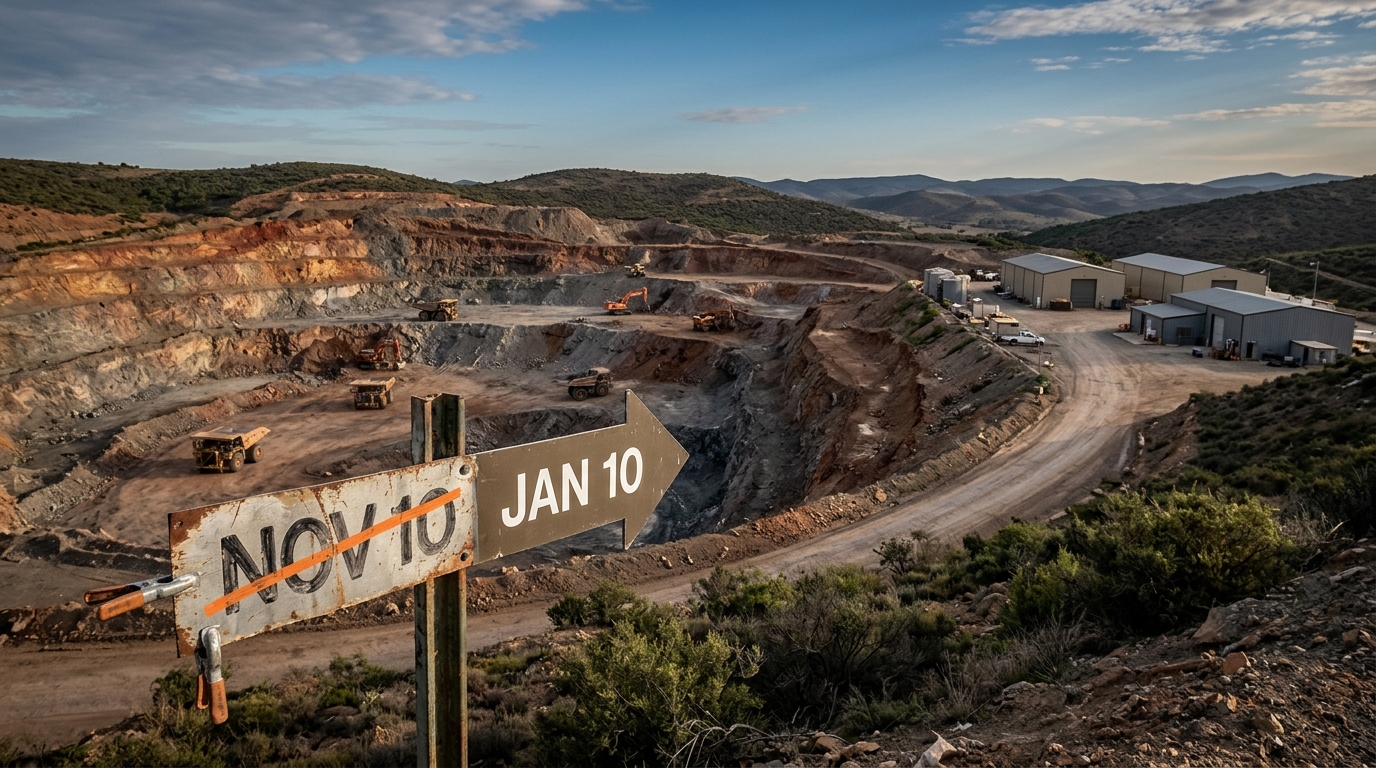
China Gave Rare Earth Miners 60 More Days. The Hard Part Starts Jan. 10.
Markets positioned for the worst heading into Tuesday. China’s Ministry of Commerce had given no public signal it would extend the year-long suspension of its October 2025 rare earth export controls, and the legal deadline was November 10. Then Beijing blinked. China announced on November 9 a two-month extension of export-control waivers that were due to expire this month, pushing the new deadline to January 10, 2027.
The extension comes ahead of Trump’s planned visit to Shenzhen for the APEC leaders’ summit later this month, giving both governments a window to negotiate rather than manage an immediate supply shock. It also comes alongside a broader set of trade suspensions China announced on November 9 as it continues talks with Washington over a lasting deal.
The market reaction was immediate. MP Materials stock rose 6.61% on Monday, trading as high as $38.06 after closing the previous session at $35.41. On the ASX, Lynas Rare Earths was up 3.73% to A$13.64 as investors unwound the worst-case positions they had been building into the expiry.
What the Extension Actually Covers
The relief is real but incomplete, and investors pricing in a full reset are making an error. The April 2025 licence requirement on seven medium and heavy rare earths, including dysprosium and terbium, was not part of the pause and remains in force. Those controls, covering samarium, gadolinium, terbium, dysprosium, lutetium, scandium, and yttrium, have been active since April 4, 2025, and were never suspended.
April licensing requirements for seven medium and heavy rare earths remain in place and were not lifted by this extension, and some Chinese suppliers had already halted rare earth shipments to American customers, with certain U.S. companies waiting over six months for export licenses. The two-month reprieve suspends the broader October 2025 expansion, including the extraterritorial provisions that would have required licenses on foreign-made products containing even trace Chinese-origin rare earth content. That matters enormously for downstream manufacturers like Nvidia and Apple. But the underlying licensing architecture for the most critical magnet inputs remains intact.
What It Means for MP Materials and Lynas
For MP Materials, the extension extends a runway that the company is using aggressively. The company completed the GM magnet qualification process in Q3 2026, with saleable magnet deliveries and revenue beginning in the fourth quarter. Third-quarter revenue rose 176% to $147.7 million. CEO James Litinsky called the GM milestone “an inflection point.” Commercial-scale production of dysprosium and terbium is expected to begin in Q4 2026, while Apple magnet deliveries are expected to start in 2027.
The 60-day extension softens the near-term pressure on MP’s customers and reduces the risk of a supply disruption that could have complicated those ramp timelines. But it does not alter the long-term thesis: China controls a dominant share of global rare earth processing and magnet fabrication capacity, and the rollover buys time without altering the structural dependency of U.S. defense and consumer electronics manufacturers on Chinese exports.
Lynas is in a similar position. Lynas remains the highest-rated buy among rare earth producers, with A$977.9 million in FY2026 revenue and established heavy rare earth production, though its roughly 56x earnings multiple demands valuation discipline. Its September 2026 quarterly report showed sales revenue of A$310.1 million, up 55% year on year. The extension keeps competing Chinese supply flowing at current volumes, which limits near-term upside on NdPr pricing. The bigger prize for Lynas is in heavy rare earths, precisely where Beijing’s April licensing is tightest.
Risks to Monitor
The extension lands in proximity to another major deadline: the Pentagon’s January 1, 2027 cutoff in defense procurement rules that tightens restrictions on certain magnets and related materials from China and other covered countries. January 10 is not a resolution. It is a compressed negotiating window with hard deadlines converging.
Analysts warn that a two-month reprieve is not supply-chain independence; actual licence approvals and shipment volumes must be tracked, not just diplomatic statements. If the APEC summit produces a broader framework, another extension becomes likely. If talks break down, the October 2025 measures snap back with the April controls still running underneath.
Bottom Line
China’s decision to extend the suspension rather than let it expire removes an immediate supply shock and validates the diplomatic channel heading into APEC. MP Materials and Lynas get 60 more days of orderly market conditions to execute on their downstream ambitions. What investors should not lose sight of: the most economically damaging controls, those covering dysprosium, terbium, and five other medium and heavy rare earths, were never paused. The January 10 deadline will arrive quickly, and the structural argument for Western rare earth producers has not changed. The extension is a reprieve for customers, not a resolution for investors.