
October 23, 2026
Bonus Content: UK Inflation at 3.5% Is Doing More Damage Than the Data Suggests
Silver and gold are obliterating all previous profit records with next-level gains now on-deck for well-timed investors.
We’re talking early-stage, small-cap discovery stories that are only just beginning to unfold.
The early-stage opportunity is taking shape across a historic North American silver-gold district that helped build early fortunes but was never explored as a unified system.
For generations, the district produced high-grade metals at surface.
Yet, the deeper story was never told – not because the metals weren’t there but because the land package was highly fragmented and never explored as a single system.
That has now changed.
For the first time ever, this exceptionally well-run small-cap explorer has brought the entire district under one roof – enabling modern geology and drilling to finally test the system properly from surface to depth across kilometers of previously untouched mineralization.
And the timing couldn’t be better.
Phase-2 drilling is accelerating as you read this… setting up a near-term flow of potential needle-moving results as the discovery picture sharpens.
And that’s not all.
Add in a second nearby district-scale silver-gold asset… and the exploration runway expands even further for this emerging small-cap.
We’ve put together a FREE online report with all the details, including:
✓ A newly unified district-scale silver-gold system in North America
✓ What the first drill results are already confirming
✓ Which targets will see drilling next
✓ How a second district-scale asset expands the discovery upside
✓ Key 2026-27 catalysts as drilling intensifies
Inside, you’ll also find our exclusive, in-depth interview with the company’s president & CEO who brings a true firsthand look at where this discovery is headed next and why the timing is so critical.
Click here to access our FREE online report and see why this Sub-US$1 silver-gold stock is setting up to be one of the most compelling early-stage opportunities of 2026-27.
UK Inflation at 3.5% Is Doing More Damage Than the Data Suggests
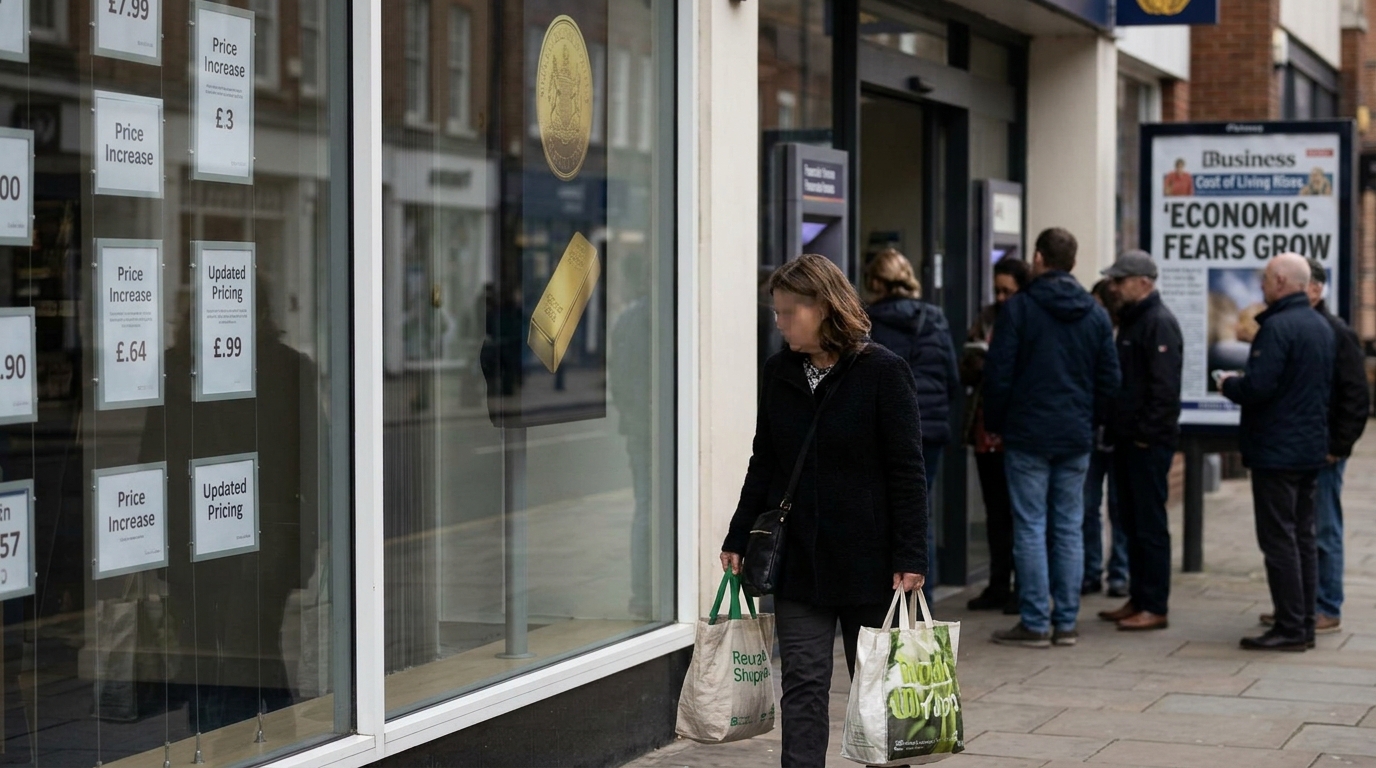
This morning brought two data releases from the ONS and GfK that belong together. Retail sales volumes fell 0.4% in September 2026, missing already-modest forecasts. At the same time, British consumer confidence suffered its sharpest month-on-month fall since early in the COVID-19 pandemic, with GfK’s index dropping 11 points to -24 in October. Both numbers arrived five days before Chancellor John Healey tables his first Budget on October 28.
The September retail slide was not a clean story. Mail order retail sales fell as online clothing retailers reported that sales of autumn and winter ranges were affected by the warmer weather, while supermarket sales also fell following growth in July and August. Warm Septembers are a standard headache for discretionary retail, Next, M&S, B&M all carry meaningful autumn clothing exposure, but this one compounded an already fragile backdrop.
What’s Driving the Market
The confidence drop was the biggest from one month to the next since April 2020, just after Britain entered its first coronavirus lockdown. Excluding the pandemic, the last decline on this scale followed the June 2016 Brexit vote. That framing matters. This is not routine monthly volatility. GfK said no single factor explained the slump and pointed instead to rising inflation, the conflict in the Middle East, and the broader squeeze on household budgets.
The inflation figure is where precious metals investors should slow down and pay attention. British consumer prices rose 0.4% in September from August, above the 0.3% forecast, taking annual inflation to 3.5% from 3.1% and its highest since October 2025. Core inflation, which strips out energy, food, alcohol and tobacco, climbed from 2.6% to 2.8%, giving the Bank of England a tougher call on interest rates.
Higher rates traditionally weigh on gold. That is the conventional read. But the conventional read glosses over what 3.5% CPI running alongside cratering confidence actually means for real household purchasing power, and for sterling. Consumers’ inflation expectations climbed to their highest since April, fuelling concerns that the Bank of England may raise interest rates in November. Expectations driving behavior matter as much as the rate decision itself.
Gold in sterling terms is trading near £3,000 per ounce today, off its year high of about £4,152 reached in January but still historically elevated. A currency that faces dual pressure, rising domestic inflation and a fiscally constrained Budget, tends to be one that slowly erodes the real cost of holding bullion. That erosion is quiet and cumulative, not headline-grabbing.
The Investment Opportunity
The direct link to precious metals from today’s UK data is genuinely faint. No one should build a gold position on the back of Tesco’s supermarket sales falling in September. The more actionable read is structural: the Budget arrives as higher energy prices fuel inflation and government borrowing costs rise, and these external pressures have constrained Healey’s fiscal headroom, which appears much smaller than anticipated in the spring.
A severe global bond selloff briefly pushed the 30-year gilt yield above 6% in October, eroding the government’s fiscal buffer, which stood at about £24 billion in March, with economists now estimating the available headroom ranges between roughly £8.5 billion and £16 billion. A weaker fiscal position for the UK, layered on top of sticky inflation and collapsing consumer confidence, is the kind of environment that quietly sustains demand for assets that sit outside the sovereign debt system. Gold is that asset.
UK companies have come under pressure from growing costs and weak consumer confidence, with 65 UK-listed firms issuing profit warnings in the three months to the end of September, the highest figure since the final quarter of 2024. For UK-listed miners and royalty companies with sterling cost bases, a category that includes several mid-tier producers operating in British jurisdictions, this cost-squeeze environment reinforces the case for revenue backed by dollar-priced gold rather than sterling revenues exposed to domestic demand.
The UK is not the only major European economy where domestic weakness is quietly building the case for gold in local-currency terms. Germany’s manufacturing collapse is running the same logic for euro-denominated bullion holders facing a weakening currency and rising sovereign stress.
Risks to Monitor
The Bank of England’s next rate decision lands November 5. A faster-than-expected tightening path would lift real yields, and that is the clearest near-term headwind for gold in any currency. A Budget on October 28 that credibly meets fiscal rules could also lift gilt sentiment and sterling, which would mechanically reduce the gold price in pounds even if the dollar price holds. Healey has said fiscal discipline will be at the Budget’s core, and as Aberdeen Investments’ Luke Hickmore noted in a Reuters report this month, sticking to the plan could leave room for yields to fall, while surprising the market could bring swift consequences.
Bottom Line
Today’s data is primarily a UK domestic story. Clothing retailers and supermarkets had a poor September; consumers are the most anxious they have been since the pandemic began. But the thread connecting all of it to precious metals runs through sterling and real yields. Neil Bellamy at GfK linked the deterioration in sentiment to sustained cost-of-living pressure and international conflicts, with official data showing inflation at 3.5% last month. An economy where confidence is falling and inflation is rising is one where the real return on cash savings is being steadily destroyed. Gold, priced in pounds, has historically been one answer to that problem.