
October 19, 2026
The supply risk at Chile’s Centinela mine is gone. What the 36-month deal leaves behind matters more.
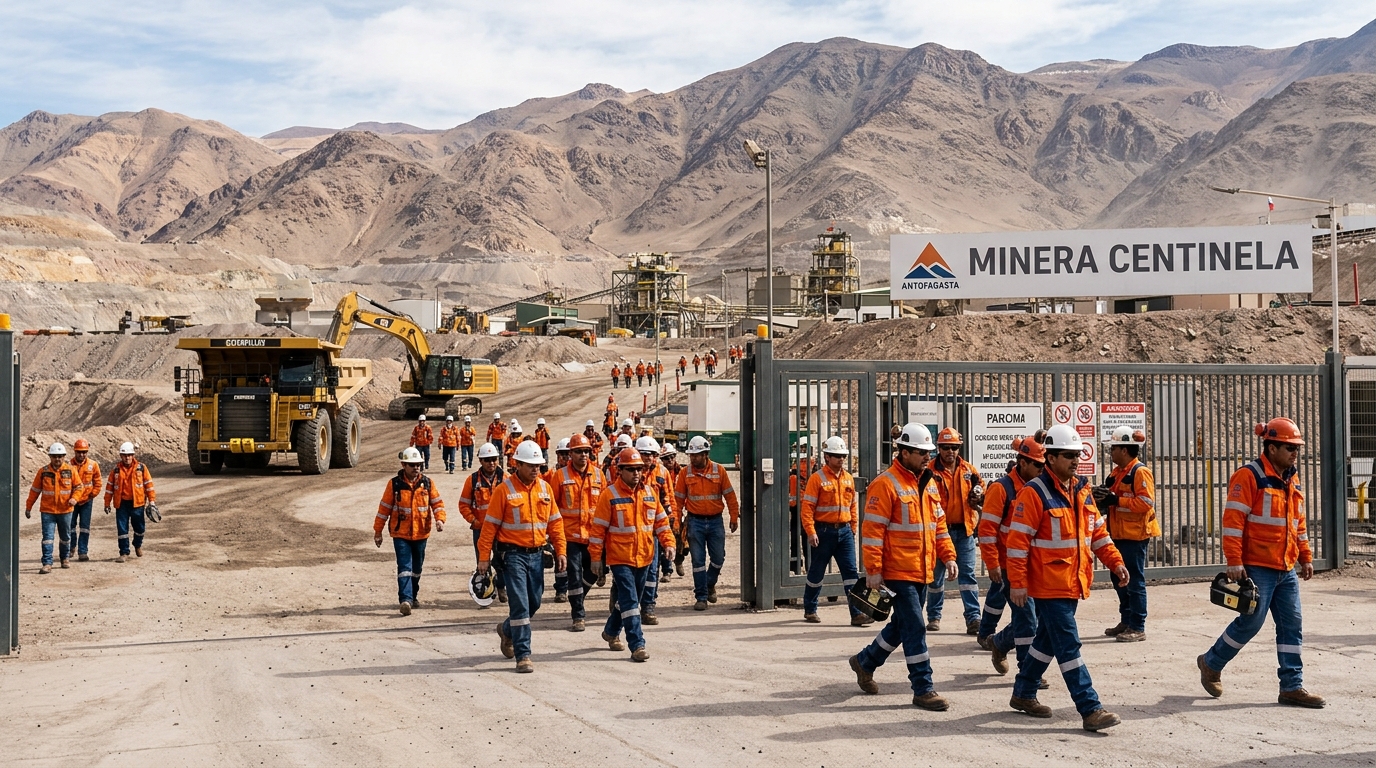
The Centinela strike is over. Workers from two unions at Chile’s Centinela copper mine ratified an agreement with Antofagasta Minerals on a new collective bargaining contract Sunday, ending a strike of more than a week. A full 94.49% of participating workers voted to approve the proposed collective agreement. The market can stop watching the picket line. The harder question is what Antofagasta just agreed to pay for the next three years.
61% of Americans Worry America Could be on the Verge of Another Civil War
Today, more than half of America thinks a civil war is likely.
Former CIA Advisor Jim Rickards agrees.
He just uncovered a fascinating plot by Trump to keep the Democrats out of the White House until 2033.
And while he believes it could be successful, it could also trigger America’s Second Civil War.
The Centinela strike ended after about 11 days with a 36-month deal covering 709 workers and a CLP 24 million bonus. The recurring wage terms remain undisclosed. That gap matters enormously when you are trying to judge what the settlement does to a cost structure that was already moving in the wrong direction before the walkout began.
A Supply Prop That Was Already Overstated
Antofagasta said it had managed to maintain production at normal levels, avoiding the negative effects of the work stoppage. The two unions represent only about 22% of Centinela’s workforce, so minimum services and stockpiles softened the impact. The strike’s biggest contribution to copper prices was psychological, not physical. The strike at Centinela, along with the threat of a strike at BHP’s Escondida mine, had been supporting global copper prices amid fears that it would be difficult to boost supply to meet projected future demand. Supervisors at Escondida approved a new wage deal midweek, averting a strike at the world’s biggest copper operation. Both props are now gone simultaneously.
Copper pulled back from a three-week high after word of a preliminary deal to avert a strike at BHP’s Escondida took some of the supply premium out of the price. The record high is $6.89 per pound, reached on September 9, 2026. With both Chilean labour situations resolved, the market is repricing those strike premiums.
Elon just declared war on your phone
Elon Musk just dropped another bombshell…
He’s going after your cell phone provider.
For months, Elon kept these plans under wraps.
But late last week, he finally showed his hand.
I’ve tracked this story for months, and it’s playing out exactly as I predicted.
Next, I believe Elon could launch a new device that kills the iPhone… and hands early investors his biggest payday yet. Potentially 50 times their money.
The Cost Curve Is the Real Story
This is where investors in Antofagasta (ANTO) should be spending their attention. The Q3 production report, released October 15, arrived with a cost upgrade that had nothing to do with the strike. Antofagasta raised its 2026 cash cost guidance before by-product credits to $2.60 to $2.70 per pound from $2.40 to $2.60, citing persistently elevated global diesel prices. The increase amounts to about 6% at the midpoint and is the second upgrade this year. Copper production for the first nine months fell 8% to 436,900 tonnes due to lower grades at Centinela Concentrates and weaker recoveries at Centinela Cathodes.
Diesel is not a peripheral input for open-pit copper mining — it is the single largest direct operating cost. Diesel refining margins have been running far above historical norms, a structural condition that keeps pressure on any miner with large haulage fleets.
Now layer the 36-month wage settlement on top of that. Recurring wage and benefit terms remain undisclosed, so the true three-year cost cannot be judged, and multiple Chilean negotiations expected in 2026 keep labour cost a recurring risk. Near-record copper prices are emboldening workers to seek a greater share of mining profits as companies look to contain cost inflation, fueling labor tensions in the top-producing country. Centinela’s settlement sets a precedent for those remaining talks.
The Profit Potential of a Rare Producing Copper Mine
The world is in dire need of copper. It can’t just come from anywhere. It needs to be of a certain grade and from a safe mining jurisdiction. Only then will it be able to meet growing demand and only then will traders begin paying attention to it. There aren’t many copper mines that fit that criteria, but one in the Yukon does and anyone who invests in it will do very well in the emerging copper bull market.
Labour costs are not the only structural pressure building across major copper producers. Rio Tinto’s flat copper output against a 37% price rise shows how supply stagnation is holding across the industry, not just at Chilean operations.
What Freeport-McMoRan Shows by Contrast
Freeport-McMoRan (FCX) is the natural comparison. FCX estimates its third-quarter 2026 consolidated average realized price to exceed $6.50 per pound of copper. Freeport has noted that copper produced from leaching costs incrementally less than $1 per pound, compared with a current unit net cash cost of $2.94 in the U.S. and $2.48 in South America. That cost advantage is structural, and it keeps FCX better insulated from Chilean labour cycles than a pure Chilean operator like Antofagasta.
Bottom Line
The Centinela settlement removes a near-term supply scare from a copper market that had priced in disruption. With Escondida also settling, Chilean labour risk as an acute price driver fades for now. What does not fade is the underlying cost pressure at Antofagasta. A labour deal at a mine of this size, landing on a group already under pressure, can say more about where costs are heading than about lost tonnes. Copper’s structural bull case, built on electrification demand and a decade of underinvestment in new supply, remains intact. But for ANTO specifically, the next disclosure investors need is what the recurring wage terms actually cost over three years. Until that number is known, the settlement is only half a story.