
Hey there, bargain hunter.
Two things can be true at once. A business can be genuinely excellent and still be priced for outcomes that reality cannot deliver.
That is the tension sitting at the center of the most interesting debate in the industrial sector right now.
Caterpillar reported first-quarter 2026 revenues of $17.4 billion, up 22% year-over-year. Adjusted EPS of $5.54 beat the consensus estimate of roughly $4.62 by nearly a full dollar — a 19% beat, the largest in at least five quarters. CEO Joe Creed described a record enterprise backlog of $63 billion, up 79% year-over-year. The company raised its full-year revenue growth outlook to low double digits, up sharply from the 7% it had previously projected. It deployed $5.7 billion in a single quarter through share repurchases and dividends.
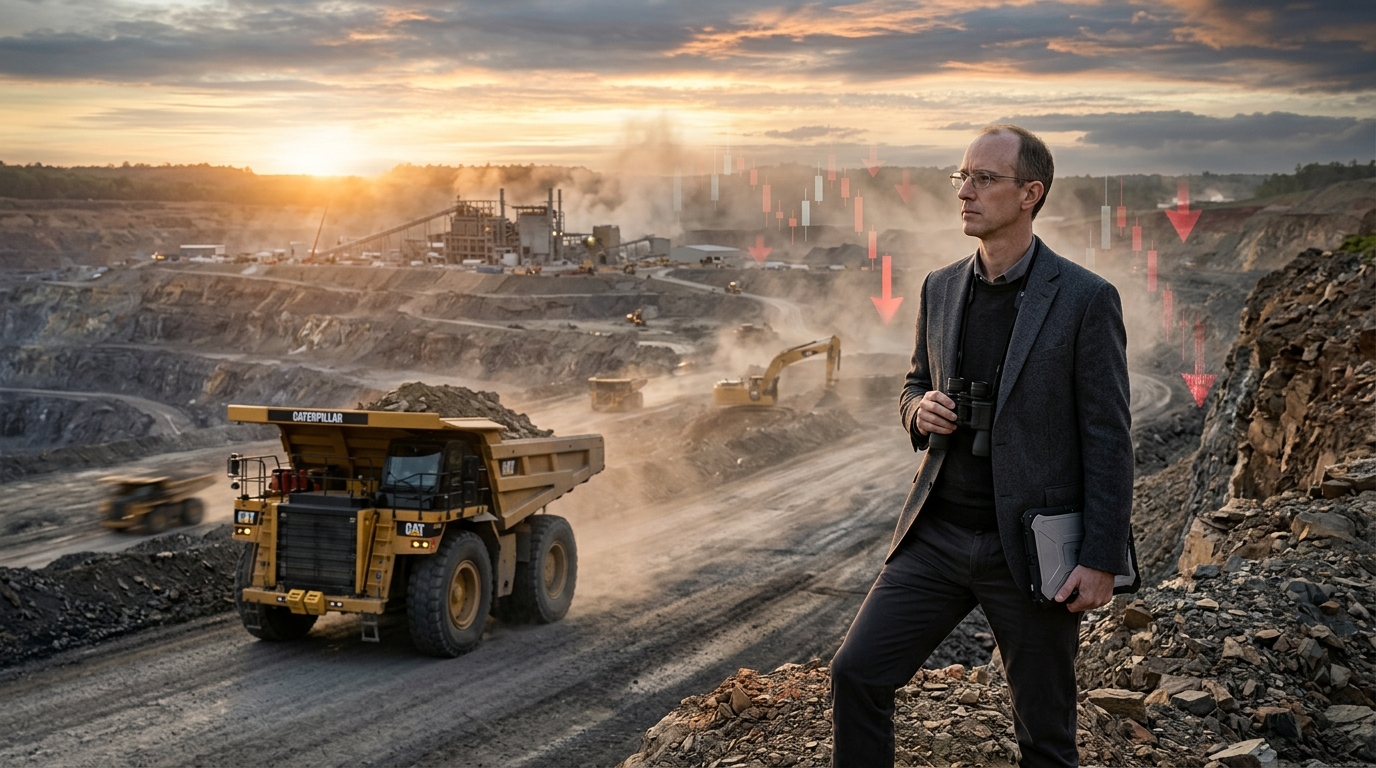
Then, on the last day of June, Michael Burry — who has been a longtime bull on Caterpillar specifically — disclosed his first-ever short position in the stock.
The power story that changed everything
The reason CAT’s numbers look so different from two years ago comes down to one thing: data centers need power, and Caterpillar builds the machines that generate it.
The Power and Energy segment drove $7.03 billion in revenue in Q1 alone. Growth was fueled by electricity generation equipment for data centers — engines, turbines, and turbine-related services. Industrial companies across the sector are reporting average backlog growth of nearly 34% and order growth of nearly 25%. The strongest growth has emerged in power-related businesses, where some companies are delivering approximately 35% sales growth.
This is AI infrastructure demand hitting the physical economy. Not semiconductors. Not software. Diesel generators. Gas turbines. Industrial engines that sit in the mechanical rooms of the data centers running the AI models.
Caterpillar is also one of the largest components of the Dow Jones Industrial Average by price weighting. CAT’s 21.6% monthly surge in June alone contributed roughly 2.5 percentage points to the Dow’s total monthly gain. The rotation into industrials and away from tech mega-caps is, in part, a CAT story.
Where Burry’s concern lives
The business is not broken. Burry himself acknowledged that. The concern is the multiple.
CAT is currently trading at approximately 53 times earnings — expensive by almost any framework for a company whose normalized earnings power, across a full industrial cycle, has historically been significantly lower. For context, peers like Cummins trade at roughly 14 to 30 times forward earnings.
The backlog is real. The data center power demand is real. But backlogs can be delayed, deferred, or canceled. Tariff costs hit CAT by roughly $600 million in Q1 alone. Power and Energy segment operating margins came in at approximately 20.6% in Q1, down 170 basis points year-over-year — compressed precisely when the revenue line was accelerating.
And insider selling has picked up. Company insiders have collectively sold approximately $167 million more than they bought over the past 12 months.
What Burry’s trade is really asking: how much of the $63 billion backlog represents durable, repeating demand versus a one-time surge that inflated order books as hyperscalers front-ran capacity concerns? The AI data center buildout is a multi-year story. But it is also a story that has already been priced into CAT at roughly 53 times earnings.
The June dividend raise of 8% — bringing the quarterly payout to $1.63 per share — signals management confidence. The record backlog signals demand visibility. But the multiple signals that a lot of good news is already embedded in the price.
CAT reports Q2 earnings in late July. The segment operating margin in Power and Energy will be the number to watch. If margins recover as management projected, the Burry thesis loses some of its urgency. If margins stay compressed while backlog continues to grow, you have a business firing on all cylinders that still cannot convert revenue growth into proportionate earnings growth.
That is not a simple story. It is also not a simple trade.