
The Setup
With inflation cooling toward the Fed’s target and unemployment holding below 4.2%, consumer spending data for Q1 2026 came in stronger than most desks expected. Personal consumption expenditures rose 3.1% annualized – and the market is now aggressively repricing which retailers are positioned to capture that wallet share.
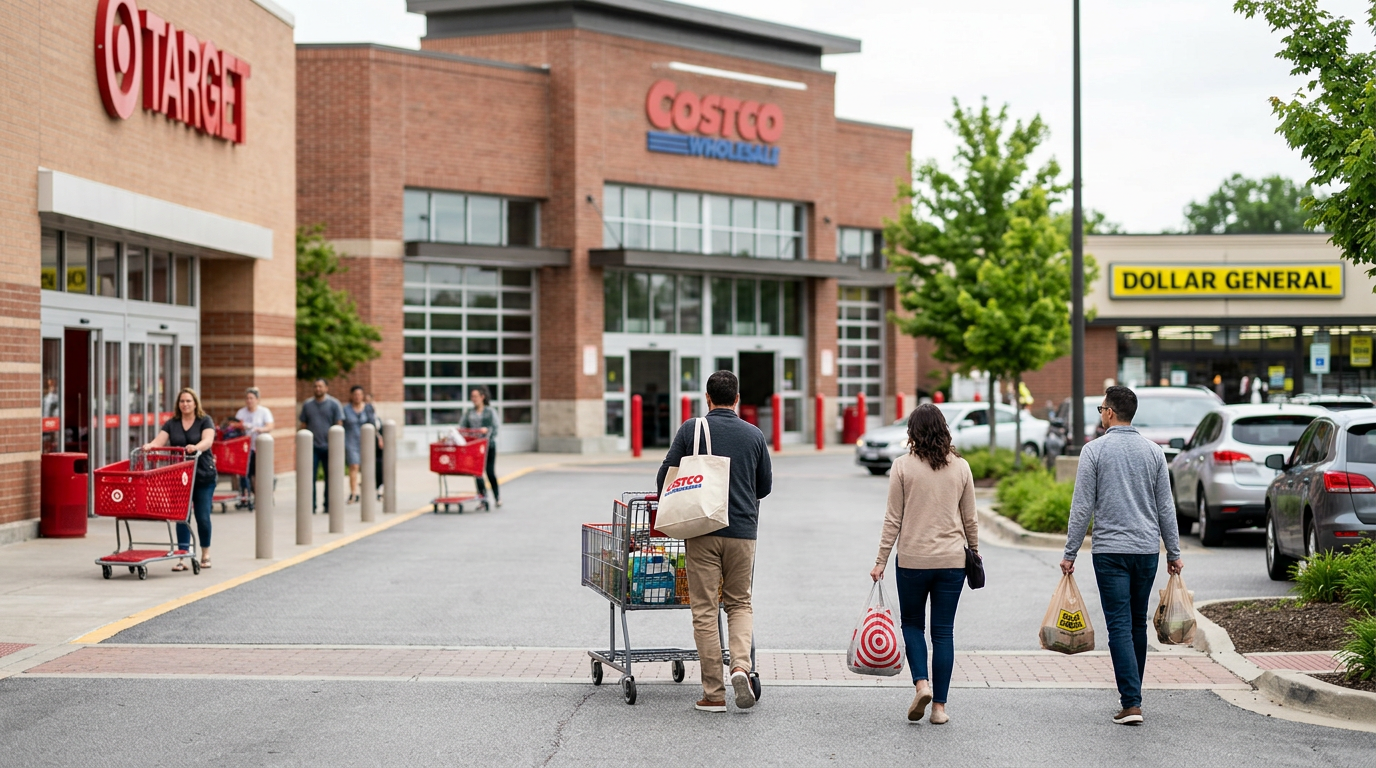
The divergence between premium and value-oriented retail has never been sharper. Costco (COST) is trading near all-time highs after reporting membership renewal rates above 93%, while Dollar General (DG) continues to lag, weighed down by shrink losses and a core customer base still feeling the residual pressure of cumulative price inflation.
What the Numbers Are Saying
- Costco Q2 FY2026: Revenue of $63.7B vs. consensus $62.1B; EPS of $4.02 vs. $3.84 expected
- Target Q1 2026: Comparable sales +2.8% YoY – first positive comp in five quarters
- Dollar General: Gross margin contracted 90bps; guidance range trimmed at midpoint
- Consumer sentiment (May 2026): University of Michigan index at 71.4 – recovery trend intact but not euphoric
Why This Trade Has Legs
The macro story here is nuanced. Upper-income consumers are spending freely on experiences and trade-up categories. Middle-income households are selectively upgrading – Costco’s food and sundries volume growth of 6.4% YoY suggests the bulk-buy trade is accelerating as a budgeting strategy, not retreating.
The more actionable signal is in private label penetration. Across all major retailers, store-brand attachment rates have risen 4 to 7 percentage points versus pre-pandemic baselines – and that structurally improves gross margins for the retailers who own those SKUs.
What to Watch
- June retail sales print (July 15 release) – the next clean read on spending momentum
- Target’s inventory turnover metrics in Q2 – the operational recovery story depends on execution
- Any Fed commentary signaling a rate cut timeline – lower rates are a direct tailwind for big-ticket discretionary categories
For informational purposes only.