
October 7, 2026
Bonus Content: What Clarkson’s Freight Surge Tells Metals Investors
Below is an important message from one of our highly valued sponsors. Please read it carefully as they have some special information to share with you.
Dear Reader,
Whenever this man issues a stock market warning…
You should stop and listen because…
He’s the famous economist and best-selling author who predicted the two biggest stock market crashes of the last two decades.
He predicted the 2008 meltdown…
Just three weeks before Lehman Brothers imploded and the stock market collapsed…
And he predicted the Covid meltdown…
Again just three weeks before the stock market suffered the fastest drop in history.
He’s now predicting we’re about to see an AI meltdown of historic proportions…
Similar to what happened in 2000 during the dotcom bust…
When the stock market crashed almost 80%…
Ruining the retirement of millions of Americans.
In short, he believes the most important AI company in the world is about to go bust…
In a meltdown that will be 10 times bigger than Lehman Brothers…
…sending a ripple effect through the market that could crater the entire AI industry.
And he’s warning everyone to take these five simple steps to prepare.
Regards,
Aaron Gentzler
VP of Research, Paradigm Press
What Clarkson’s Freight Surge Tells Metals Investors
Gold sits at roughly $4,130 this morning, down about 5% from its one-month high and facing pressure from a firm dollar and elevated Treasury yields. Yet beneath the precious metals complex, a different market is flashing something worth tracking. On Tuesday, Clarkson PLC (LSE: CKN), the world’s largest shipbroker, issued a trading update that sent its shares up as much as 8% and raised full-year guidance sharply. The firm now expects underlying pretax profit of at least £135 million for 2026, a figure Peel Hunt noted was roughly 17% above the £115.3 million FactSet consensus.
The driver was not a structural change in Clarkson’s business. Trading in August and September was very strong, with geopolitical complexity creating volatility across commodity and freight markets, and in some areas freight rates hit record levels, feeding through into asset prices. The benchmark VLCC route from the Middle East to China earned $451,000 per day on September 12, an all-time high. The ClarkSea Index, which averages across the whole fleet, stood at $56,567 per day as of September 16, up 91% year on year.
For precious metals investors, the direct link to gold pricing is thin. Clarkson’s core business is shipbroking, not metals trading. But the dry bulk read matters indirectly, and here is why.
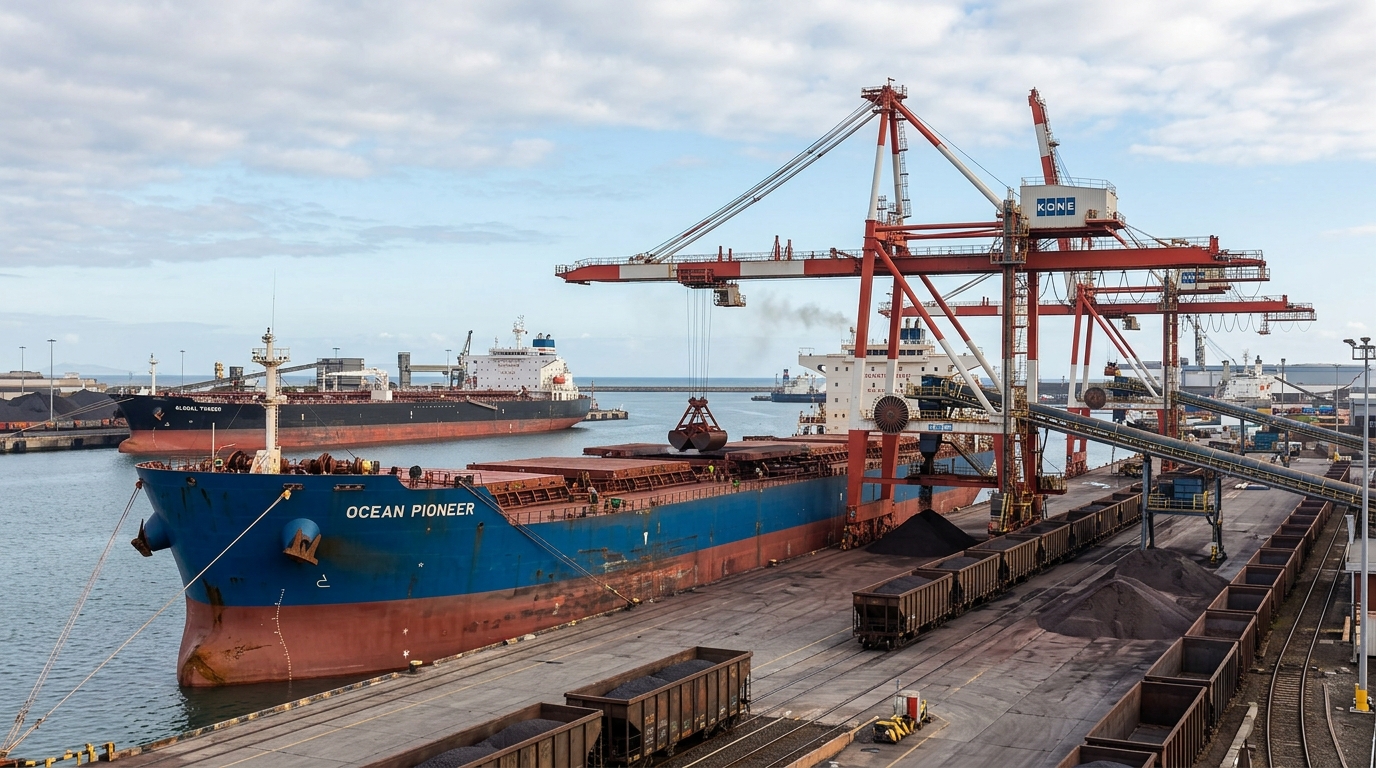
The Baltic Dry Index tracks freight rates for Capesize, Panamax, and Supramax vessels, ships transporting raw materials such as iron ore, coal, and grain. Iron ore is the single largest driver of Capesize demand, and iron ore moves to steel mills, which consume enormous quantities of energy and industrial inputs. Rising seaborne volumes of key commodities in 2026 are boosting Capesize freight rates. When those freight rates surge, cost pressures ripple through the steel supply chain and add to the broader commodity inflation picture that has kept gold elevated above $4,000 since late 2025.
There is a more pointed connection in tankers. Geopolitical disruption rerouting crude and diesel cargoes lengthens voyage distances and absorbs vessel supply. A stronger dollar and rising Treasury yields continue to pressure precious metal prices lower, even as safe haven demand from other countries props prices up. That safe haven bid is partly a function of the same geopolitical stress that is driving tanker rates higher. The two markets are drawing from the same well.
Peel Hunt said the new guidance was around 17% ahead of the FactSet consensus and implied earnings per share of roughly 325p. Clarkson has also delivered 23 consecutive years of dividend growth. That record of consistency through volatile shipping cycles makes the guidance upgrade more significant than a one-quarter windfall.
Risks to Monitor
Clarkson cautioned that the trading environment remains very volatile. Freight rates that spike on geopolitical disruption can reverse just as quickly when tensions ease. Markets have scaled back bets on an October Federal Reserve rate hike following weaker-than-expected job growth in September, with traders now pricing less than a one-in-five chance of a hike this month and around a 60% to 70% probability of a move in December. That December hike risk remains the clearest near-term ceiling for gold.
Bottom Line
Clarkson’s blockbuster August-September is not a precious metals story. But the forces behind it, sanctions-driven rerouting, record tanker earnings, and a commodity trade complex under geopolitical strain, are the same forces sustaining gold’s floor above $4,100. When the world’s leading shipbroker raises guidance by 17% above consensus because geopolitical disruption reshaped global freight flows, it confirms that the macro environment driving gold demand is not fading. That context matters more than any single day’s price move.