
September 15, 2026
Warehouse deliveries are arriving and the physical squeeze is easing
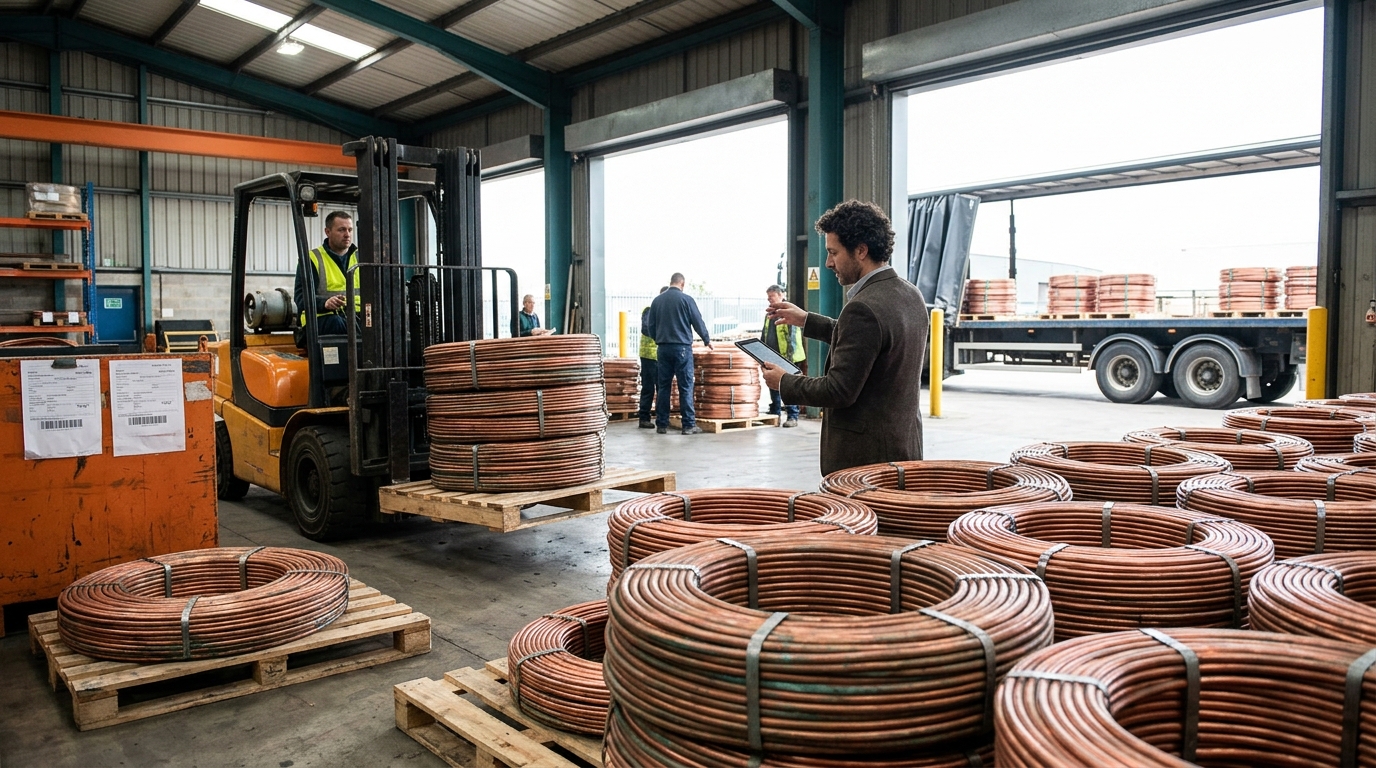
Comex copper is trading near $6.31 a pound this morning, a long way from the record $6.8885 settlement on September 9, 2026. The December contract fell as much as 5.4% the following session, a day after that record close. Now, fresh metal is flowing back into exchange warehouses, and the squeeze that powered the run is visibly unwinding.
Iran War TRUTH: What Was Revealed Behind Closed Doors
There’s a strategy behind the Iran war.
I know because I heard it directly in a closed-door meeting with a source whose connections run deep into global power networks.
He walked me through the real purpose and the massive deal tied to it.
The mechanism behind the rally was never mysterious, even if its speed surprised. Prices pulled back sharply since rallying to a record high last week, when traders were diverting supplies to the United States in anticipation of tariffs on refined metal, leaving the rest of the world starved of supply. The collapse came after a US producer price report and crude oil above $105 a barrel pushed Federal Reserve rate-hike odds to roughly 70%, and a report that the White House copper tariff plan had stalled pulled the rug from under a metal that had set records in four straight sessions.
As of this morning, copper has steadied near $14,000 a tonne on the LME, well off the week’s peak near $14,875, as fresh deliveries of stockpiles into exchange-tracked warehouses signal genuine supply relief. Copper’s climb this year was driven largely by an imbalance in global inventories rather than a genuine excess of demand, even as longer-run drivers like energy-transition build-out and AI data-centre demand continue to underpin the bull case.
That distinction matters enormously for precious metals investors trying to read cross-market signals. When copper moves because real-world consumption is outpacing supply, it tends to carry a genuine growth message. When it moves because traders are racing metal across oceans ahead of a tariff deadline, the signal is logistical noise, not economic acceleration. This rally was the second kind. The International Copper Study Group reported a 221,000-metric-ton refined copper surplus for the first five months of 2026, up from 117,000 metric tons a year earlier. The tightness was manufactured in US warehouses, not mined out of existence.
430+ Gigawatts in Power Requests, One Company is Developing It
Large electricity users across Texas have requested more than 430 gigawatts of new grid power. That’s nearly 5x the state’s current peak capacity. American PowerGen is developing a 22 gigawatt natural gas pipeline across 16 projects, with 3 gigawatts of construction starting in 2027 and land, gas, and permits already secured on its lead projects. Shares are $2.50, $1,000 minimum.
Invest by September 30 to earn up to 17% bonus shares
Disclosure: This communication relates to a Regulation CF offering. Please review the offering materials, risk factors and required disclosures before making any investment decision.
The stocks that amplified the move are now absorbing the reversal in kind. Freeport-McMoRan sank 8% and Southern Copper fell 7% after White House tariff uncertainty erased the record copper rally in a single session. Freeport carries an operational overhang from the September 2025 mud-rush at Grasberg in Indonesia, with the flagship mine continuing to run below full capacity through the second half of 2026. At the peak, that drag was easy to overlook. At $6.31, it is not.
Southern Copper (SCCO) has a more straightforward story. It leans on a deep growth pipeline through Peruvian and Mexican projects including Tía María, Michiquillay, and Los Chancas. Those are real assets with real timelines, and they hold value independent of where a tariff announcement lands. But in the near term, all three names trade off the same copper price curve, so a same-day repricing of the metal drags them together regardless of company-specific factors.
Glencore sits in an interesting position here. Glencore chief executive Gary Nagle has argued that a tariff announcement, whichever way it falls, would take the heat out of prices simply by ending the uncertainty. He is probably right. Resolution removes the arbitrage that drove metal into US warehouses. When that metal returns to the global deliverable pool, the squeeze unwinds further and price discovery returns to fundamentals.
Inside the Nuclear Revival Reshaping Energy Markets
Governments worldwide are investing billions to revive a proven energy source. Supply chains are tightening, demand is rising, and select companies stand to benefit. The Nuclear’s Second Act report explains what’s happening next.
The underlying fundamentals are not bearish. Mine output was down 1.1% in the first half of 2026, and concentrate output was down 2.6%, according to ICSG data cited in industry reporting, with disruptions affecting major producing regions including Chile, Indonesia and the Democratic Republic of Congo. Supply is genuinely challenged over a multi-year horizon. The problem for copper bulls today is that short-term policy noise is obscuring that structural story.
For gold investors, the read is this: the metals complex rallied this year on a mix of real tightness and tariff-driven distortion. As the distortion clears, what remains is the part that actually matters, constrained mine supply, dollar softness, and central bank diversification. Gold, which does not get hoarded in warehouses ahead of tariff deadlines, reflects those fundamentals more cleanly. The copper correction is not a warning about demand destruction. It is noise resolving. Watch where copper settles once the warehouses are restocked and the tariff headline is history.