
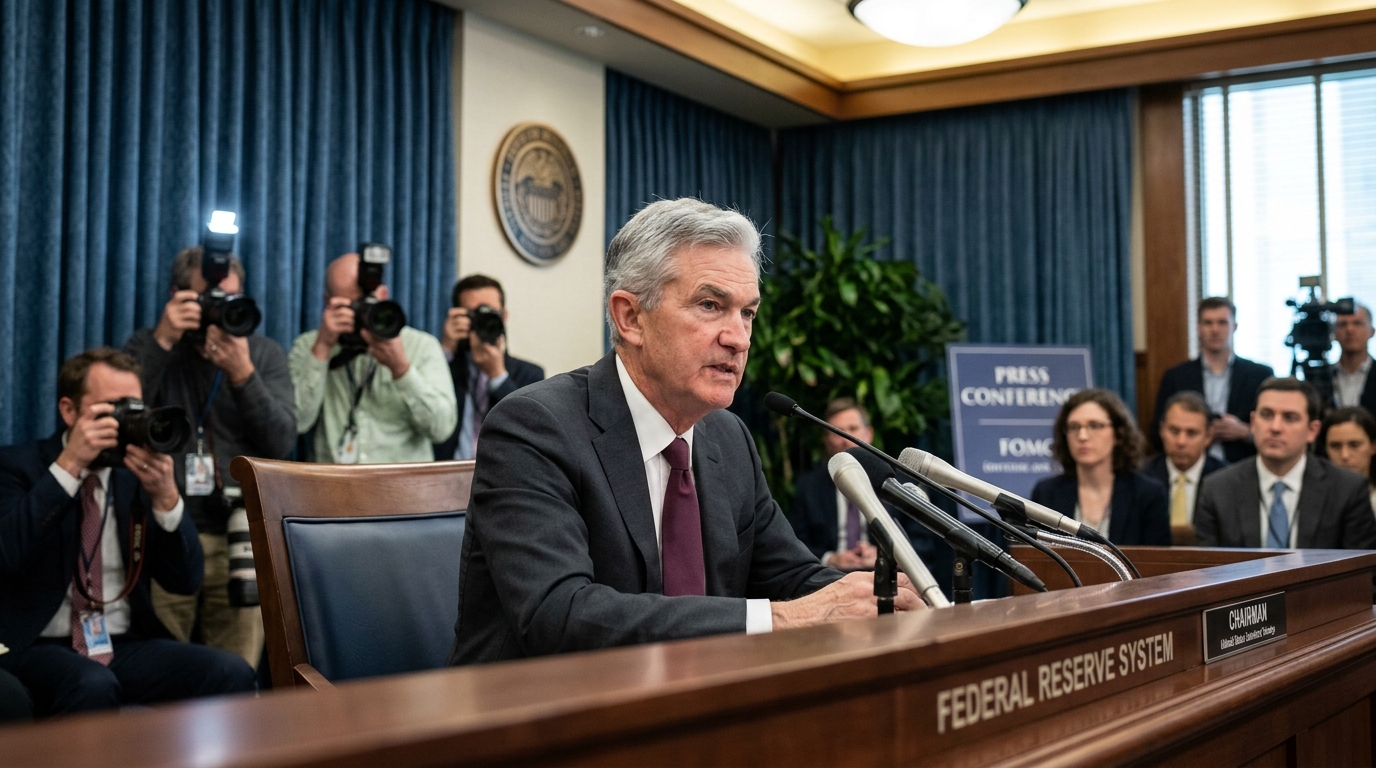
Today is the second day of the June 16–17 FOMC meeting, and by 2:00 p.m. ET the Federal Reserve will release its rate decision. Nobody expects a move. The federal funds rate is staying at 3.50%–3.75%. That much is priced in at roughly 97% probability across futures markets.
But this meeting is different from the last several. This one matters for a reason that has nothing to do with the rate itself.
Kevin Warsh’s First Press Conference
Jerome Powell’s tenure as Fed Chair ended May 15, 2026. Kevin Warsh was sworn in on May 22. The June 16–17 FOMC meeting is his first as chair — and traders will be watching the 2:30 p.m. press conference as closely as any rate decision in recent memory. Not for what he says. For how he says it.
Warsh has a reputation as a more hawkish voice than Powell. There’s already chatter that he may scrap or restructure the dot plot starting as early as this meeting. And with fed funds futures now pricing a rate hike — not a cut — as the more likely year-end move, the communication shift from this press conference could matter more than any single data print in months.
The Inflation Picture Hasn’t Cooperated
Here’s the backdrop Warsh is walking into: May CPI came in at 4.2% year-over-year, driven partly by a 23.5% energy-price surge tied to geopolitical tensions. That’s well above the Fed’s 2% target. The labor market added 172,000 jobs in May, unemployment holds at 4.3%, and above-trend GDP prints have reinforced the higher-for-longer case across the Street. Roughly 70% of economists now expect rates unchanged through year-end, with Goldman Sachs pushing its projected cut timeline all the way to 2027.
The structural problem: the Fed’s dual mandate calls for rate cuts when inflation is tame and the labor market is weak. Right now the opposite is true on both counts.
What Markets Are Actually Watching
The rate decision is a non-event. The real trade is in how Warsh frames the path forward.
- Does he remove the easing-bias language that’s been in every statement for months?
- Does the dot plot show more officials penciling in a hike this year?
- Does he signal patience — or signal that patience has limits?
A hawkish hold — rates unchanged but language tightened — historically trades like a quiet rate hike. Two-year yields reprice, the dollar firms, and rate-sensitive growth stocks feel the compression in discount rates. Tech and AI names that have run hard in 2026 are the most exposed to that dynamic.
The Part People Skip
Markets have been remarkably calm heading into today. The S&P 500 is up 24% over the past year, Nasdaq 100 has surged, and investor sentiment has been buoyed by AI infrastructure spending commitments north of $750 billion from the four major hyperscalers. That optimism has created a situation where bad news from the Fed gets absorbed faster than it should.
The risk isn’t a crash. It’s a slow, grinding recalibration in rate-sensitive sectors that happens over weeks, not days. Growth stocks with lofty multiples are the most vulnerable if Warsh signals the easing cycle is genuinely over.
Watch the press conference. The rate is the headline. The tone is the trade.
For informational purposes only.