
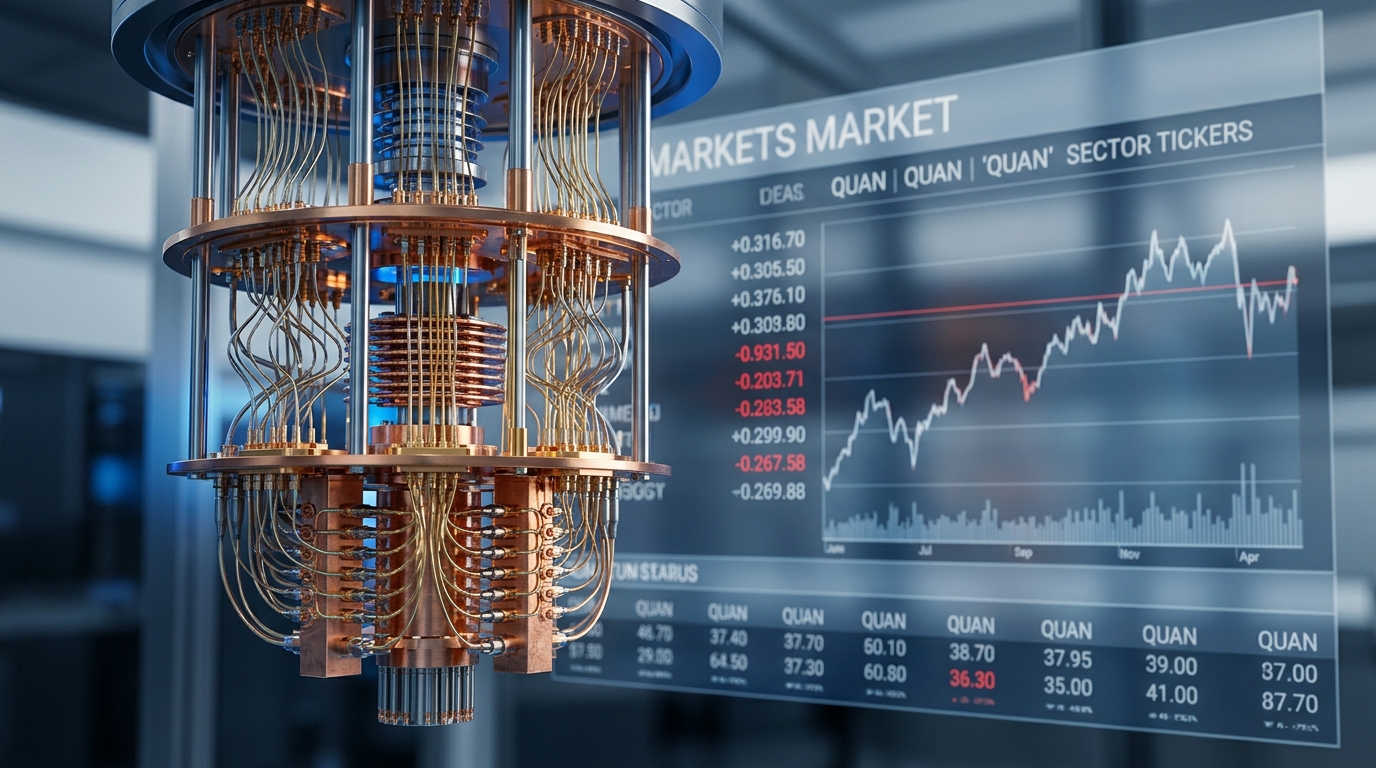
The sector roared back through May and into June. Single-day moves of 20%+ became routine. Rigetti surged 24% in one session. D-Wave followed with 25% in another. The quantum basket is hot again – and if you weren’t paying attention over the last few weeks, the tape has been making up for lost time.
But there’s a number worth sitting with before you chase: $931 million. That’s the collective amount insiders at IonQ, Rigetti, and D-Wave have moved to sell, according to recent filings – a signal that the people who know these businesses best aren’t exactly adding to their positions into the rally.
What the Numbers Actually Show
The fundamentals are genuinely improving, which is what makes this sector hard. IonQ’s remaining performance obligations grew 554% year over year to roughly $470 million in Q1 2026, anchored by government defense contracts including the Space Development Agency and the Missile Defense Agency’s SHIELD IDIQ vehicle. That’s not vaporware – that’s real backlog.
Rigetti shipped its 108-qubit Cepheus-1 system to general availability in Q1 at roughly 99.1% median two-qubit gate fidelity. IonQ sold a 256-qubit system to the University of Cambridge. D-Wave held an Investor Day at the NYSE in early June, unveiling a gate-model roadmap targeting 100 logical qubits by 2032 – a significant strategic pivot from its annealing roots.
D-Wave’s stock is up 72% over the past year. Rigetti is up 101%. IonQ sits at a $26.9B market cap with a year-to-date gain of over 21%.
The Part That Keeps This Speculative
Valuations here are pricing in commercial payoff that remains years away. The sector is still in what researchers call the NISQ era – noisy intermediate-scale quantum – where error rates require aggressive correction and enterprise revenue is still thin. Rigetti’s Q1 revenue was $4.4 million. D-Wave’s Q1 bookings were $33.4 million – not revenue. These are research-stage financials dressed in momentum-stock clothing.
Slight tangent, but it matters: Quantinuum’s rumored IPO is adding competitive pressure to the pure-play names. If a better-capitalized, Honeywell-backed player enters the public market, it could compress the premium retail investors are paying for IonQ and Rigetti’s speculative positioning.
Boston Consulting Group foresees quantum computing adding up to $850 billion in global economic value by 2040. That long-term number is compelling. The short-term question is whether the valuations sitting on top of these companies today can hold if the AI momentum trade cools and sector rotation continues.
Watch the government contract wins. Watch dilution. And watch what insiders do next – because right now, they’re not buying.
For informational purposes only.