
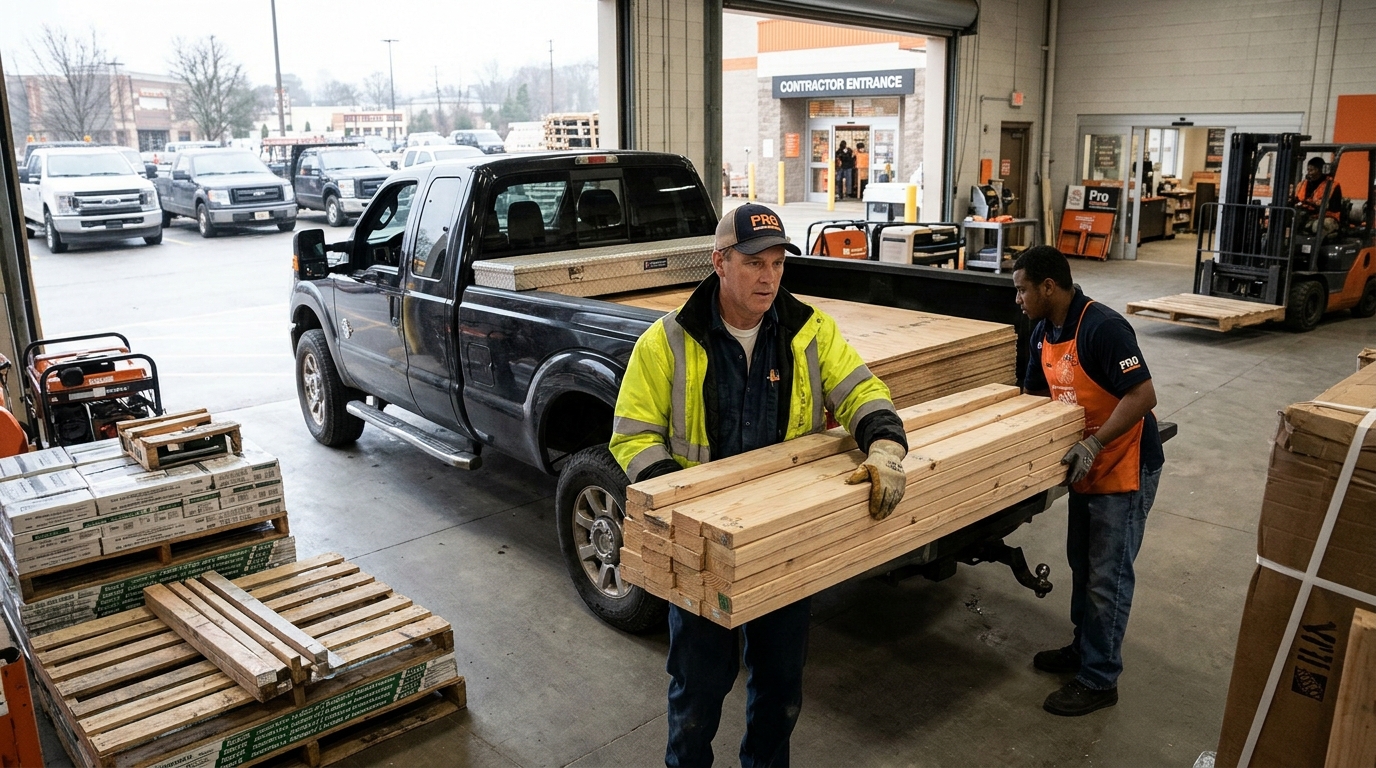
Here is the question that matters this morning: can professional contractors carry a home improvement retailer when Americans have essentially stopped selling their homes?
Total existing-home sales fell 5.5% in October to a seasonally adjusted annual rate of 3.75 million, the lowest reading in more than 16 years, according to the National Association of Realtors. The average 30-year fixed mortgage rate rose to 7.33% in October from 6.86% in September, according to Freddie Mac data cited by PNC. That is the housing market Home Depot woke up to on the morning of its fiscal third-quarter report.
Home Depot reports Q3 fiscal 2026 results today, with analysts expecting EPS of $3.84 on revenue of $42.81 billion. In the same quarter a year ago, the company posted $3.74 per share on $41.35 billion in revenue. The numbers themselves are almost secondary. What investors are really scoring is whether the Pro ecosystem is growing fast enough to insulate the business from a housing market that keeps making new lows.
The Pro Ecosystem Is the Whole Thesis
Home Depot completed the acquisition of SRS Distribution in June 2024 for total purchase consideration of about $18.0 billion. Then, through SRS, it completed the acquisition of GMS Inc. for a total enterprise value of approximately $5.5 billion. Together, those two deals represent a roughly $23.5 billion commitment to professional contractors, the largest strategic wager in the company’s history.
The logic was straightforward: professional customers make up a small slice of Home Depot’s customer base but represent more than half of its sales. SRS brought roofing, landscaping, and pool supply distribution. GMS added drywall, ceilings, steel framing, and complementary products for residential and commercial remodeling.
In Q2 fiscal 2026, Home Depot posted total comparable sales growth of 1.7%. Over the 12 months through the August earnings call, 90% of Home Depot stores had closed a sale through SRS using QuoteCenter. That is early but meaningful integration evidence.
What the Numbers Need to Show
A gross margin above 33% is expected to strengthen the bull case; a figure near 32% could prompt management to lower full-year 2026 guidance. For fiscal 2026, Home Depot guides to comps of flat to 2% and an adjusted operating margin of 12.8% to 13.0%.
Analysts will also focus on comparable sales and transaction growth. Positive transaction growth would signal that more customers are shopping, rather than results being driven only by pricier items.
The full-year guidance range of $14.69 to $15.28 EPS will be scrutinized closely. After two quarters of reaffirming it, any narrowing or lowering today would signal that the Pro offset is not running fast enough to compensate for the DIY drag.
Bull Case, Bear Case
The bull case rests on a simple sequencing argument: housing transactions eventually recover, and when they do, Home Depot now controls far more of the contractor wallet than it did two years ago. NAR chief economist Lawrence Yun has said there could be sizable pent-up demand if mortgage rates decline, and Home Depot would be first in line to benefit from that release.
The bear case is harder to dismiss this morning. Despite soft housing data, HD stock rallied 19.5% since October, trading above its five-year median forward earnings multiple, according to Zacks. Zacks also noted its consensus EPS estimate for the third quarter was trimmed 0.2% over the past 30 days, so the move came from investors paying more for the same earnings, not from higher forecasts. A miss or a guide-down at this valuation would sting.
What to Watch
Three numbers will tell the story: comparable sales in the U.S. specifically (not the blended figure that includes SRS), gross margin, and whether management narrows the full-year EPS range upward or downward. If that gap is widening in Q3, the thesis is intact. If Pro comps are softening too, the stock’s October rally is on borrowed time.