
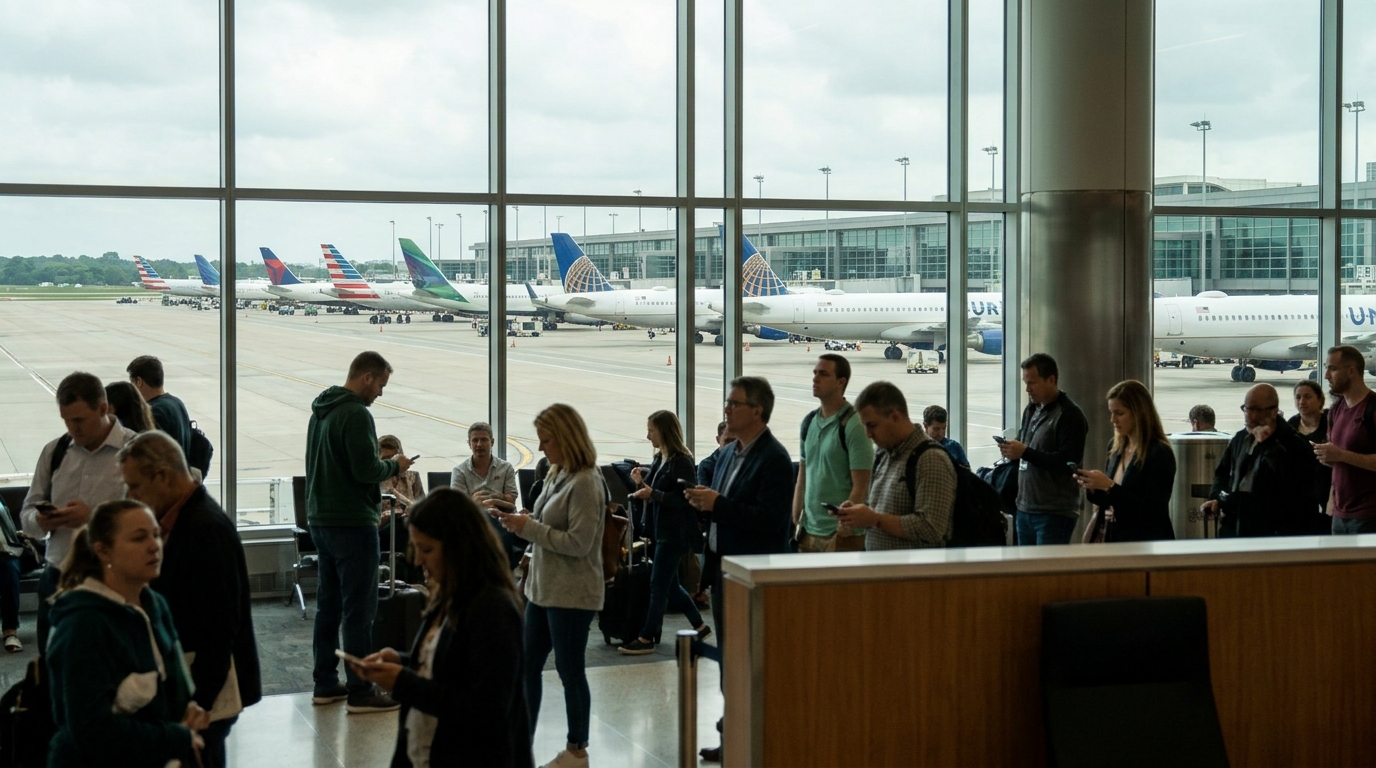
Friday afternoon, the United States stopped flying. The FAA issued a nationwide ground stop at 3:54 p.m. Eastern and lifted it at 8:15 p.m., a span of roughly four hours and 21 minutes. That made it the longest nationwide ground stop in about 25 years. More than 10,000 flights were delayed and more than 4,000 were canceled, according to FlightAware tallies cited by multiple outlets.
What Actually Failed
Transportation Secretary Sean Duffy blamed old switches and routers in the FAA’s communications network, which got overwhelmed with data and began producing instability in communications and radar. As the agency put patches into the system and added new equipment and new technology, it was overwhelming the older system. CBS News, citing multiple sources, reported that an update to the private communications network caused the system to reboot, triggering a crash and communications outage, and identified that network as the FAA Telecommunications Infrastructure, known as FTI, operated by defense contractor L3Harris.
The communication issue affected all 22 air route traffic control centers. Homeland Security Secretary Markwayne Mullin said there was no indication, as of the initial briefing, that the outage was tied to a cyberattack or a nefarious act. That framing matters for investors: the event was a maintenance and modernization failure on aging systems, not a confirmed security breach requiring a different category of response.
The Recovery Airlines Are Racing Through
A ground stop leaves planes and crews in the wrong cities, and pilots and flight attendants hit legal limits on how long they can work. Airlines entered Saturday with aircraft and crew members out of position, complicating efforts to restore normal schedules.
American Airlines warned customers to expect residual delays and cancellations as carriers reset schedules and reposition crews and aircraft. JetBlue canceled the rest of its Friday evening flying, with limited exceptions for certain international departures. Delta said it had resumed departures after the FAA lifted the stop, while also warning it would take time to reset its operation. United said it was resuming operations, including some Friday night flights. The gap in those recovery speeds matters: carriers that repositioned aircraft fastest over the weekend arrive at Monday morning in better shape to absorb the incremental demand building toward Thanksgiving.
The Thanksgiving Overhang
Eleven days separate today from the start of the Thanksgiving travel surge. Duffy said he expects operations to be back up and running as the peak Thanksgiving travel period arrives. The disruption is not expected to impact the Thanksgiving rush itself, though travel chaos can linger into the weekend as airline crew and aircraft remain displaced.
That optimism deserves a stress test before investors price it in. Aviation analysts warned it can take days for airlines to restore schedules after a nationwide grounding that lasted more than four hours. Any airline still operating recovery flights deep into next week risks entering the peak demand window with a compressed buffer. Revenue per available seat mile for Q4 carries the residual risk of rebooking credits, fee waivers, and passengers who quietly chose to drive.
The Investment Read
For the major carriers, American, Delta, United, Southwest, Alaska, JetBlue, the near-term earnings damage from Friday is real but bounded. The rebooking credit wave is manageable if schedules normalize by midweek. The larger risk is consumer confidence: a passenger who waived a fee this week and rebooked is a passenger who may decide next summer to build in an extra cushion by buying refundable fares, which carry lower yields.
Duffy called on Congress to fund what he described as an “incredibly old” air traffic control system, pressing for $50 billion. Congress has already approved $12.5 billion for air traffic control improvements, including major telecommunications upgrades that are now underway. Whether the Friday event accelerates the remaining authorization is now the central variable for companies tied to ATC infrastructure spending.
Duffy’s warning about the old equipment was blunt: “It failed, and listen, it’s going to continue to fail.” That statement, more than any single canceled flight, is what airline investors should read carefully heading into Q4 earnings season.