
Dear Reader,
Billionaire Sam Altman recently made an extraordinary admission.
“I basically just took all my liquid net worth and put it into these two companies.”

This was not a casual investment.
Altman, CEO of OpenAI – creator of ChatGPT – placed nearly everything he could readily access behind a new, emerging field…
A new fusion with AI and another branch of science…
One Elon Musk himself said is capable of “Jesus level miracles.”
See, Elon was not finished with Space X. He has been quietly building yet another company – in this field…
And like all other investments before it…
Tesla, OpenAI, SolarCities, and PayPal…
Elon enters a new space…
Then capital floods in and new investment opportunities appear around him.
Former Fox Business analyst Matt McCall calls this pattern the “Musk Stampede.”
Elon innovates…
Capital floods in…
And dozens of new opportunities are created.
So what is Elon building now?
And how could ordinary investors take advantage of the opportunity developing around it?
Matt recently sat down with former Fox anchor, Corrina Sullivan, to share his findings.
Click here for the full presentation.
To your wealth,
Stephen Prior, Publisher
Monument Traders Alliance
P.S. A fast approaching catalyst beginning November 14th could bring this emerging field much closer to the mainstream.
Automated Ports Are Cutting Bottlenecks. The U.S. Is Paying a Price to Stay in the Race.
The global port automation wave is no longer a forecast. It is a live performance gap, and it is widening every month.
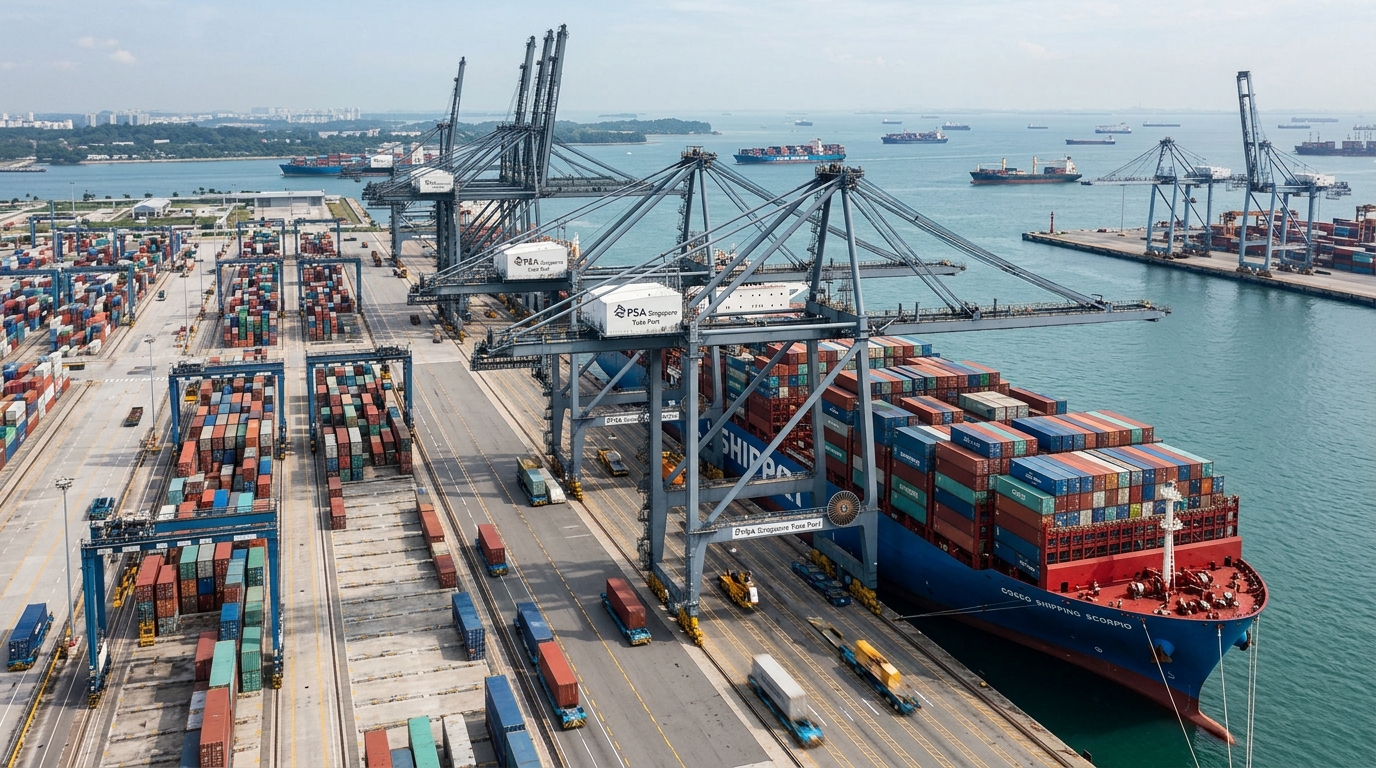
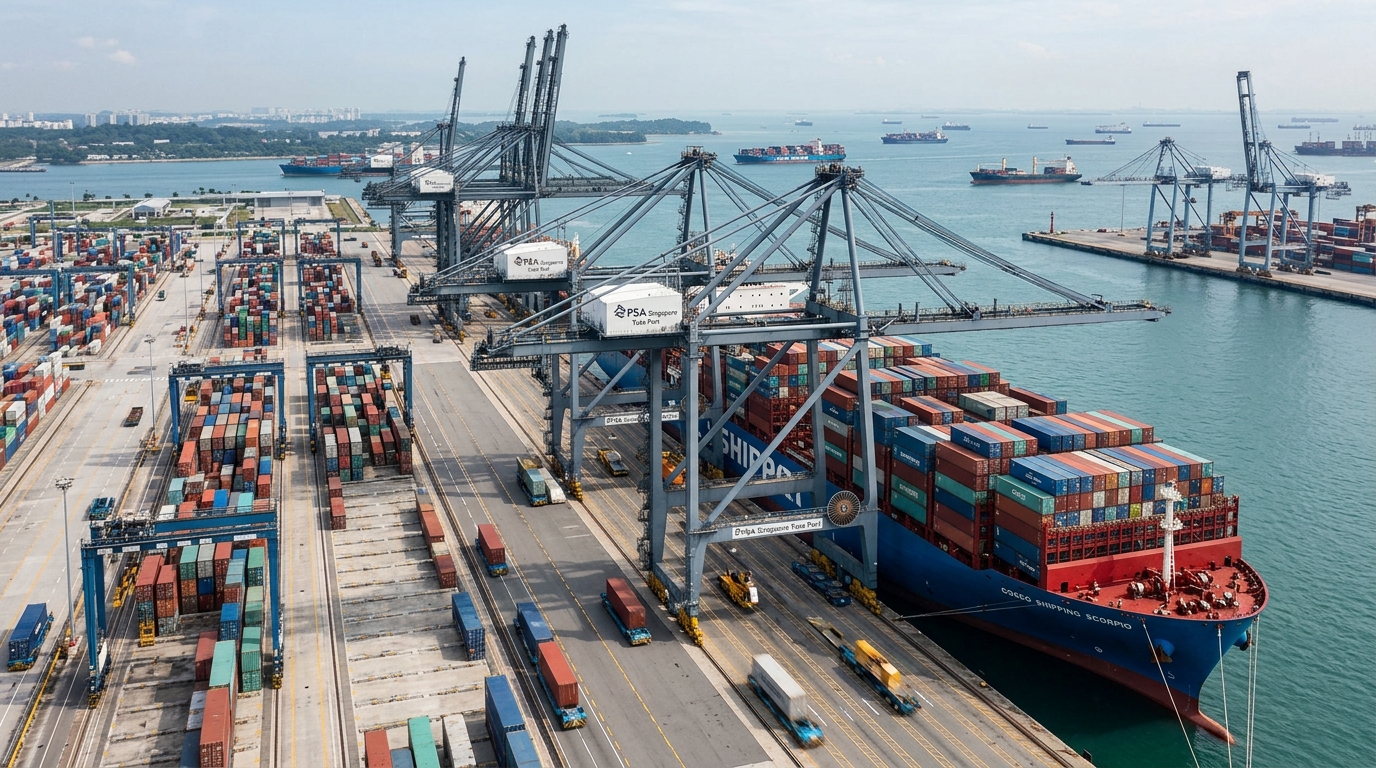
PSA Singapore crossed 25 million TEUs handled at Tuas Port in August 2026, just under four years after operations began in September 2022. That milestone matters less as a volume figure and more as a proof of throughput velocity. Singapore’s Tuas Port has highlighted its use of automation, including automated yard cranes and automated guided vehicles. The integrated systems allow around-the-clock operations, and the data they generate feeds predictive maintenance loops and continuous process optimization. The result is a port that absorbs vessel surges instead of fracturing under them.
The mechanics driving this are not exotic. AI-powered anti-sway technology has reduced the operator skill once needed to stabilize swinging crane loads. Intelligent control algorithms can detect load movement and apply corrective adjustments in real time. Pair that with predictive yard logistics, where yard plans reserve space and retrieval paths before vessel discharge even begins, and the bottleneck that plagued ports during 2021 and 2022 becomes structurally harder to recreate. Evidence on automation’s impact on speed is mixed across terminals and technologies, but operators and agencies have reported potential gains in efficiency, safety, and capacity in the right operating context.
Where does this leave the U.S.? In a difficult spot.
A 25% tariff on certain ship-to-shore cranes was set under the Biden administration’s Section 301 tariff modifications, with implementation beginning in late September 2024 for covered entries. Separately, the U.S. also pursued a Section 301 investigation into China’s targeting of the maritime, logistics, and shipbuilding sectors, including proposed tariffs on ship-to-shore cranes. Still, the details and timing have been fluid, with some proposals reported as delayed or suspended at points. As a result, the policy signal has often been clearer than the on-the-ground certainty that ports need when they are signing multi-year equipment contracts.
No U.S. companies manufacture ship-to-shore cranes at scale. A joint AAPA and Maritime Administration survey found 44 of the 55 cranes currently on order for U.S. ports are sourced from China, and over the next decade, roughly 80% of the 151 cranes American ports need are projected to come from Chinese suppliers. The tariff adds cost without adding a domestic alternative. It also does nothing to resolve the larger security and dependency debate around the digital systems that increasingly arrive bundled with modern equipment, because the risk profile is not limited to the steel.
For precious metals investors, the angle is less about the politics and more about what this divergence signals for industrial demand. Automated crane manufacturing depends on steel, copper wiring, and permanent magnets, with supply chains that remain heavily concentrated in Asia. Cranes are widely cited as the largest segment of the port equipment market, and forecasts for more autonomous operating modes imply sustained growth in automation-related capex. That is a sustained, multi-year pull on specialty steel, copper wiring, and rare earth magnets. The ports building autonomy are not slowing down. The question is who supplies the metal that makes the machines.
Risks to Monitor
High capital expenditure for brownfield retrofits deters many terminal operators, and cybersecurity threats loom large as interconnected systems multiply. A disruption at any major automated hub, whether from a software breach or a parts shortage, could reverse throughput gains quickly. The efficiency of fully automated terminals also concentrates risk at single nodes. When Singapore’s Tuas flows, global trade flows with it. When it does not, the cascade is proportionally larger.
Bottom Line
Port automation is not eliminating supply chain risk. It is reshaping where that risk concentrates. The terminals investing in predictive yard logistics and autonomous cranes are building resilience into their operations. The markets still dependent on aging manual infrastructure are accumulating exposure. For investors tracking metals demand, the crane buildout is a durable structural bid, complicated in the U.S. by a tariff regime that can raise the price of the very hardware needed to compete.