
September 26, 2026
Bonus Content: China’s Gold Jewelry Demand Is Breaking Down. What It Means.
I am often asked what my favorite dividend stock is.
So I want to share the one single stock that’s by far my favorite right now.
Unlike many dividend-paying companies… which rely on boring income through utilities, rent or oil…
This company owns the bestselling drug in the world, which brought in $19.9 billion in revenue last year.
And it has a pipeline of other blockbuster drugs, which are expected to generate $35 billion in sales.
It doesn’t take a genius to know that healthcare is at the forefront of everyone’s mind right now, including the folks on Wall Street.
Last year, this company’s stellar drug sales allowed it to pay shareholders $5.6 billion in dividends.
That’s cash you can claim a piece of.
And today, I want to give you the name, the ticker symbol and my full analysis completely free – no strings attached.
Sincerely,
Marc Lichtenfeld
Chief Income Strategist, The Oxford Club
P.S. When I say FREE, I mean it. There is no catch. You get my entire Ultimate Dividend Package… including my No. 1 dividend stock… free of charge. Here’s how.

China’s Gold Jewelry Demand Is Breaking Down. What It Means.
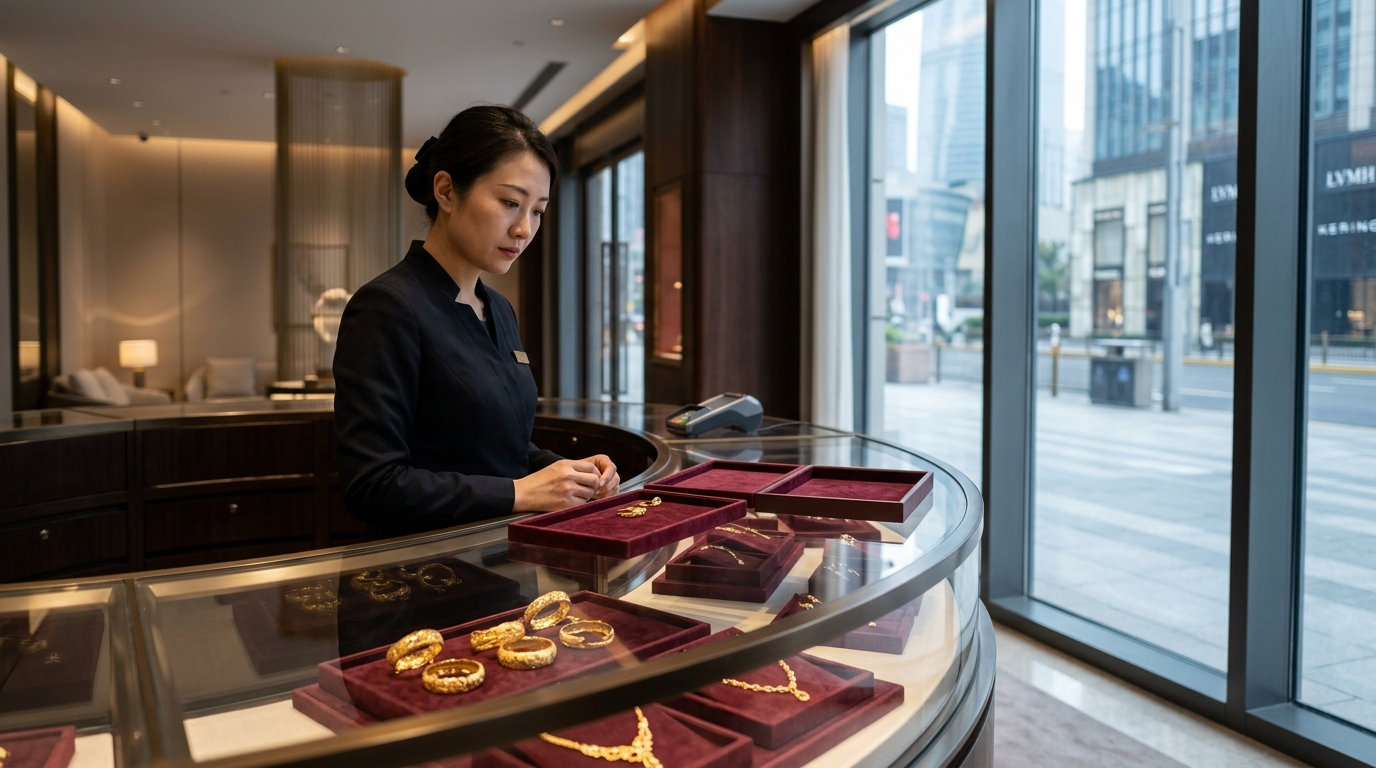
Paris Fashion Week opens Monday, September 28, and the sector arriving at it is in open de-rating. Shares in Kering, owner of Gucci, have surrendered every gain recorded since chief executive Luca de Meo took charge on September 15, 2025, while LVMH has fallen sharply since the beginning of 2026. Third-quarter sales updates from the majors begin in mid-October. This is the last clean week to think clearly about what that wreckage means, before the earnings noise begins.
The LVMH decline is not simply a valuation reset after a strong run — the customer base itself has contracted in ways that complicate any near-term recovery thesis. why LVMH’s H1 results masked a deeper loss of 70 million customers examines how the group beat a low bar while the structural problem continued to widen, which is the same dynamic now weighing on the broader luxury sector heading into October earnings.
The easy read is that this is a fashion story. It is not. It is a consumer story, and gold investors need to understand which half of it they own.
The Same Engine Drove Both Markets
The cycle that ran from 2021 through 2023 was powered by a specific buyer: the aspirational middle-income consumer in China, spending up on handbags, ready-to-wear, and gold jewelry as visible markers of progress. Executives and industry advisers now expect difficult trading conditions to persist as luxury brands contend with changing consumer behavior and economic uncertainty. China started 2026 on a weak footing, with jewelry demand down 32% year-on-year to 85 tonnes in the first quarter, undermined by relatively weak consumer confidence and lackluster real income growth.
The full first-half picture confirmed it was not a one-quarter blip. Demand for gold jewelry fell 33.88% year-over-year to 132.13 tonnes in the first six months of 2026, with consumers hesitant amid high retail prices. The same middle-income buyer who stopped refreshing their Gucci wardrobe also stopped buying a new gold necklace from Chow Tai Fook.
Where the Gold Story Diverges From the Fashion Story
This is where precious metals investors need to pay close attention, because the two markets are splitting in ways that matter. Fashion brands have no refuge when their aspirational customer disappears. Gold does.
In the first half of 2026, China’s gold jewelry demand was 30% lower year-on-year at 136 tonnes, even as value was higher. Less weight, more value. Chinese consumers are not abandoning gold. They are redeploying it.
Investment demand saw bar and coin purchases rise to 339.336 tonnes, an increase of 28.42%, with strong investment demand offsetting the still-sluggish jewelry sector overall. That rotation is not a negative for gold prices. It is a different kind of positive, one driven by preservation rather than adornment.
Understanding why Chinese savers are making that shift requires looking beyond household sentiment to the policy signals coming from Beijing itself. how Beijing’s yuan policy and PBoC reserve moves are driving gold to new highs traces the institutional logic that is reinforcing the same preservation instinct now showing up in retail bar and coin demand across China.
The Investment Opportunity: Hard Jewelry Over Soft Luxury
Within the luxury complex, Richemont is the name that most clearly straddles the boundary between fashion and precious metals fundamentals. A widely cited view from analysts is that the group can capture demand at both ends of the pyramid: one-off high-jewelry pieces for the ultra-wealthy, and entry price points for middle-class customers who reason that a bracelet worn daily holds its value better than another handbag. That second argument, the value-retention case for gold jewelry, is precisely the logic Chinese consumers are now applying when they do spend.
Jewelry was the standout category in luxury in 2025, growing an estimated 4% to 6% globally in constant currency, with shoppers showing a clear preference for hard luxury goods that offer more tangible, lasting value over soft goods like handbags and apparel. Richemont’s Cartier and Van Cleef and Arpels brands sit exactly where that preference lands.
Risks to Monitor
The bear case for gold jewelry demand is straightforward: if the gold price stays at current levels, tonnage in China continues to fall, and any VAT complications further dampen appetite at the retail end. Recent sector commentary on European luxury emphasizes a mixed backdrop, with continued normalization in China, where high-end spending has become more selective. Selective is not the same as absent, but it does mean jewelry retailers cannot rely on volume recovery alone.
The bull case rests on the investment rotation holding, on PBoC accumulation continuing to signal gold’s reserve credibility to domestic savers, and on the recognition that self-purchase has been rising as a motive for gold jewelry buying in China in recent years.
The same tension between high gold prices and jewelry volume is playing out in Western retail, not just in China. what Signet’s results reveal about jewelry demand at record gold prices offers a real-time read on whether consumers in a different market are absorbing elevated prices or stepping back — a useful cross-check on whether the demand rotation is a China-specific story or something broader.
Bottom Line
The runway shows opening in Paris this week will feature extraordinary clothes aimed at a shrinking audience of buyers. That is the fashion story. The gold story is different: the Chinese middle-income consumer who once drove both markets is pulling back from branded handbags entirely, but is still buying gold, just in lighter pieces, and increasingly in bar form. LVMH down sharply since January and Kering erasing gains since de Meo took over tells you the aspirational spending cycle is over. It does not tell you gold is in trouble. It tells you the form gold demand takes is changing, from jewelry gifting to wealth preservation, and that is a more durable foundation than a seasonal handbag cycle ever was.