
September 18, 2026
Bonus Content: Japan’s Rate Hike Splits the Nikkei in Two
Dear Income Seeker,
If you’re struggling to find high-probability income trades…
Or think you’ve found them…
Only to be frustrated – and disappointed – with the money you’re bringing in…
You owe it to yourself to check out this website.
Because it will give you the opportunity to get your hands on a little-known 1-hour trading secret… 100% free of charge.
Do your future self a big favor and claim a copy now.
Because at some point soon, it won’t be free.
To better trading,
– Drew Day
Partner
Base Camp Trading
Japan’s Rate Hike Splits the Nikkei in Two
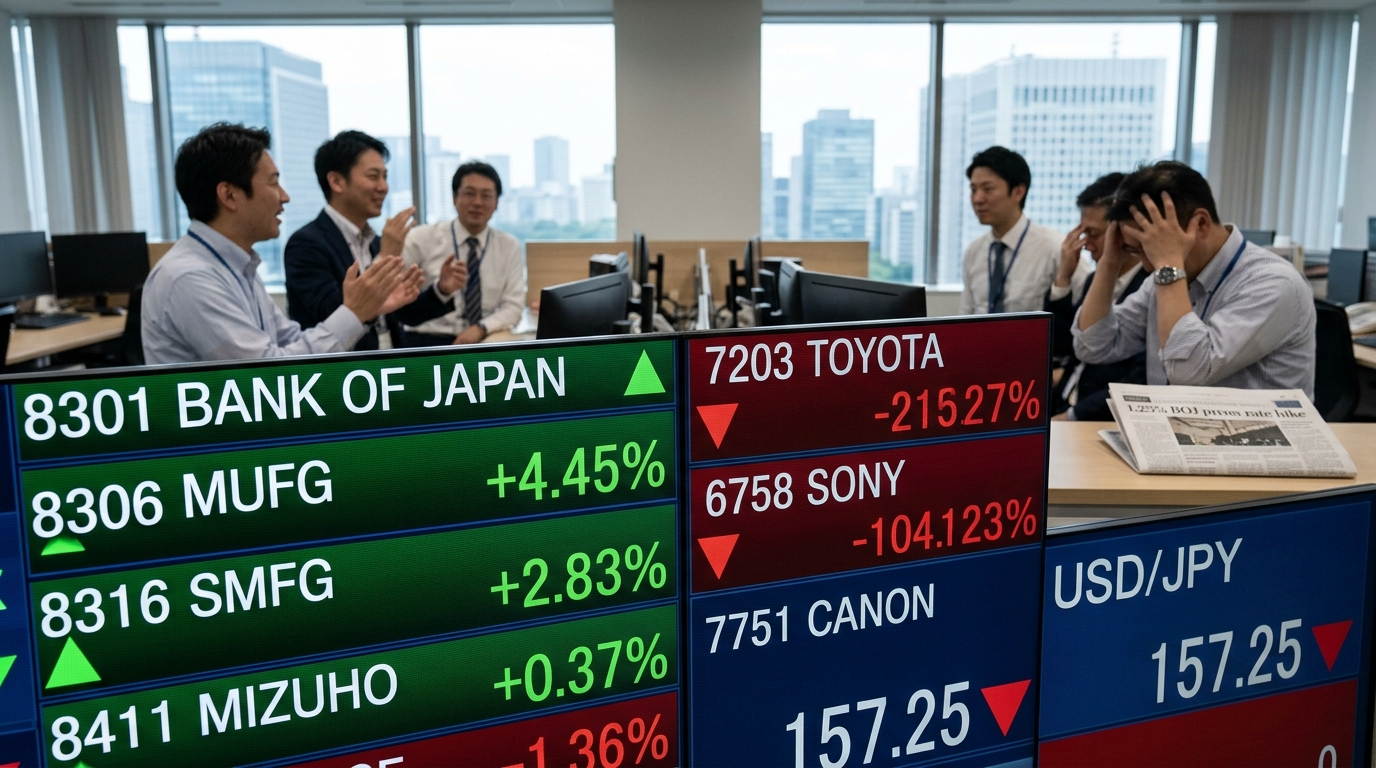
The Bank of Japan raised its benchmark rate 25 basis points to 1.25% on Friday, the highest level since 1995, coming just three months after its previous increase. Governor Kazuo Ueda said monetary policy had entered a new phase at a time of growing upside inflation risks. The market’s reaction, however, was anything but clean. The yen weakened past 157 against the dollar, the 10-year Japanese government bond yield slipped, while the Nikkei 225 gained about 1.4%.
That combination sounds contradictory until you understand what the two dissents did to sentiment. The decision to hike was split 7-2, with board members Toichiro Asada and Ayano Sato dissenting from the verdict. Experts pointed to the split decision as the reason for the uncharacteristic market reaction, since it indicated the bank might not take a too hawkish stance. Traders essentially heard a dovish signal wrapped inside a hawkish act, and sold the yen accordingly.
What’s Driving the Market
The tightening cycle, which began in March 2024, reflects pressure from a weak yen, higher fuel prices, and wage growth. Real wages in Japan rose 2.4% year-on-year in July 2026, a robust gain that suggests the kind of wage-price dynamics the central bank once desperately tried to engineer. Underpinning it all is a bond market that has already moved well ahead of the policy rate: Japan’s 10-year government bond yield climbed to about 3% in early September 2026, reaching its highest level since September 1996, as the global bond selloff deepened amid surging energy prices.
Another hike could come around December, but experts disagree over where rates will ultimately peak. Economists at S&P Global Market Intelligence have noted that “with crude oil prices remaining elevated, the Bank of Japan is expected to implement an additional rate hike sooner rather than later.”
The Investment Opportunity
The most direct beneficiaries of this cycle sit inside Japan’s financial sector, not its export giants. For banks, higher rates equate to higher net interest margins. Among the largest banks, Mitsubishi UFJ and Sumitomo Mitsui have both indicated that a 25-basis-point increase in the policy rate can add roughly ¥100 billion to annual net interest income, though the sensitivity depends on balance-sheet mix and deposit betas.
Mitsubishi UFJ Financial Group is one of the clearest ways to play a potential Bank of Japan hiking cycle, because its earnings are closely tied to domestic lending spreads and net interest margins. Sumitomo Mitsui sits on a broad lending and deposit base that is sensitive to higher domestic rates, especially if the Bank of Japan pushes ahead with further tightening. The contrast with Japan’s exporter bloc is sharp. Automakers earn a significant portion of revenue in USD and EUR, and a stronger yen can take a meaningful bite out of reported profits. Today’s yen weakness at 157 per dollar softens that headwind temporarily. If the next hike arrives in December and the yen finally strengthens in response, exporter earnings revisions follow.
Risks to Monitor
The dissents matter beyond the symbolism. Two of the nine-member board dissented, expressing concerns about the strength of Japan’s economic growth. Higher rates may also weigh on the economy because of heavier borrowing costs for small and medium-sized enterprises, as well as higher mortgages. Fiscal policy adds another layer of complication: analysts are worried about aggressive public spending promised by Prime Minister Sanae Takaichi, such as tax cuts and defense investments, when public debt is already ballooning. A government spending surge while the central bank tightens is not a stable equilibrium.
The yen itself is the swing variable. Beyond the hike itself, Governor Ueda’s forward guidance is the real market mover. A hawkish tone confirming a quarterly hike cadence accelerates the yen rally and financial sector gains, while a cautious data-dependent tone could offer relief to exporters.
Bottom Line
Japan’s rate cycle is no longer a debate about whether normalization happens. It is a live sorting mechanism inside the Nikkei. Banks accumulate the gains; exporters absorb the earnings risk. The 7-2 vote suggests the pace stays measured, which is precisely why the yen fell. Investors who treat the Nikkei as a single trade are missing the divergence that is already underway.