
September 5, 2026
EV Sales Are Falling.
EV incentives are cooling, hybrids are gaining share, and hybrids are unusually hungry for platinum-group metals.
August’s auto sales data landed this week with a figure that deserves more attention from precious metals investors than it has received. EV incentives are falling, and the EV share of new-vehicle sales is down sharply from last year. The volume those EVs once claimed did not evaporate. It shifted, and the destination matters enormously for platinum and palladium.
America’s Energy Armageddon
The expert Barron’s describes as visionary premieres a global “shockumentary”
Discover how woke progressives played politics with the energy grid as part of a potential plot to “blackout” the U.S. economy in 2026…
See firsthand who’s being set up to prosper and who could be wiped out (FREE to stream!)
What the Sales Numbers Actually Show
New-vehicle retail sales for August 2026 are projected to reach 1,142,700, a 6.9% decrease from August 2025. According to preliminary data compiled by MarkLines as of September 2, 2026, U.S. auto sales were down 6.3% in August, with strong hybrid demand offsetting broader weakness. The top line looks soft. The composition underneath it is more consequential than the headline decline.
In the first half of 2026, sales of hybrid vehicles rose nearly 20% year over year to a record market share of 15.4%, according to the Center for Automotive Research, almost three times the share of pure EVs. Hybrid vehicles captured 15.9% of U.S. retail sales in July 2026, more than double the EV share of 7%. That ratio is the core of the investment case.
Toyota, Honda and Hyundai Motor Group control 86% of the U.S. hybrid market, according to Baum & Associates. Toyota alone sold more than 600,000 hybrids in the first half of 2026 between its two brands, controlling about half the market. General Motors, which committed heavily to battery electrics, faces a structural problem: when hybrids are driving industry growth, GM does not have the same hybrid ammunition as Toyota, Honda, Hyundai or Kia.
5 Little-Known Stocks Behind Today’s Defense Tech Shift
Behind the headlines, a major transformation is underway.
Modern warfare is being driven by AI, autonomous systems, and next generation technology. A handful of lesser known companies are helping power this shift.
This report uncovers five stocks quietly playing a critical role in the future of defense.
Why Hybrids Consume More Platinum and Palladium Than ICE Vehicles
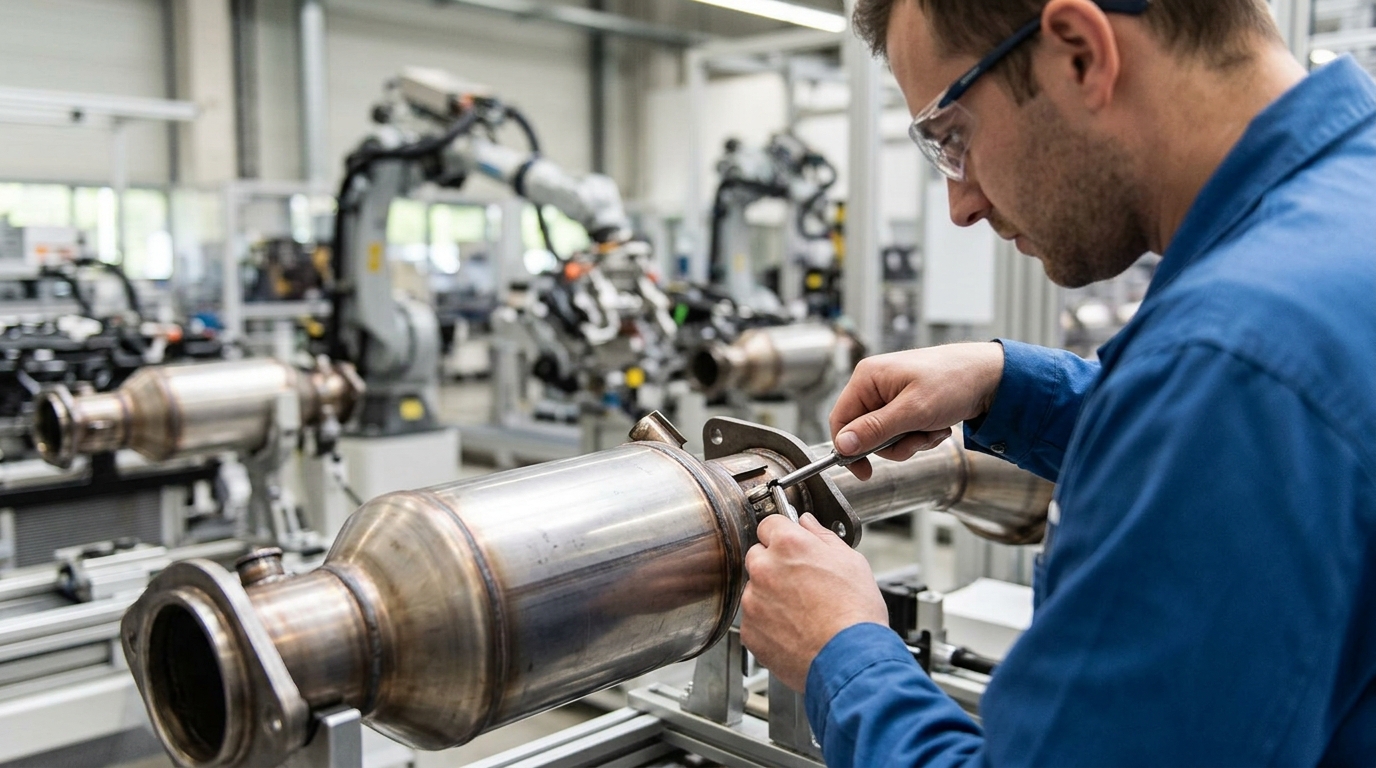
Like regular gas-powered cars, hybrids still require a catalytic converter and platinum or palladium. But the demand per vehicle can run higher than in a conventional internal combustion engine. Catalytic converters operate best at high temperatures. In a traditional ICE vehicle, the engine runs continuously, allowing the converter to reach and maintain those optimal temperatures. In a hybrid, the engine cycles on and off, which causes the catalytic converter to run cooler and less efficiently. To compensate, automakers may increase the loading of platinum-group metals, including to improve cold-start performance.
Importantly, hybrids still require catalyst loadings close to those used in traditional internal combustion vehicles, and in many cases they require more. Metals Focus expects global hybrid output to reach 26.3 million units this year, up 12% from a year earlier. Analysts said this leaves the share of catalyzed vehicles higher than previously forecast. The EV slowdown, in other words, is not just preserving PGM demand. It is concentrating demand in the powertrain that consumes the most of it.
Where Platinum and Palladium Stand Today
Platinum was around $1,811 per ounce on September 4, 2026. Palladium was around $1,416 per ounce on September 4. Both metals are pulling back on a stronger dollar and rising yields, which creates a more favorable entry point for investors watching the hybrid demand thesis play out over months, not days.
A Forgotten Energy Source Is Powering Back Up
While investors chase the next tech story, one long-ignored sector is quietly heating up. A mix of global policy, rising demand, and tightening supply could reignite this market before 2026. See what the latest research reveals.
As emissions rules have tightened, including steps toward Euro 7 and the forthcoming China 7 standard, the required catalyst performance has risen, supporting higher catalyst requirements in some applications. Platinum’s industrial demand is expected to rise about 9% in 2026 to roughly 2.24 million ounces, according to the World Platinum Investment Council. Supply is not keeping up: WPIC has forecast another platinum deficit in 2026, even after a historically large shortfall in 2025.
Risks to Monitor
The bullish case is not without friction. Platinum and palladium can be substituted for each other in some autocatalyst applications, so a sharp divergence in prices between the two could redirect automaker purchasing. A genuine rebound in EV adoption would reduce the hybrid tailwind. And the broader auto market contraction, with retail sales projected to fall 6.9% in August, means fewer vehicles of any kind are being sold this month.
Bottom Line
Most investors read falling EV share as a story about Tesla or GM’s strategy. The more consequential read, for precious metals portfolios, is what replaces those EVs on dealer lots. Hybrids need catalytic converters. They can need more platinum and palladium per unit than the conventional vehicles they are also displacing. And they are the fastest-growing segment in the U.S. market right now. The auto data published this week is not just an industry report. It is a demand signal for two metals whose supply is already tight.