
The question professional investors should be asking this week is not whether Citadel can run an oil field. It is what it means when a firm that makes its money reading markets decides physical barrels are now more valuable than the paper that represents them.
Why Wall Street Cares
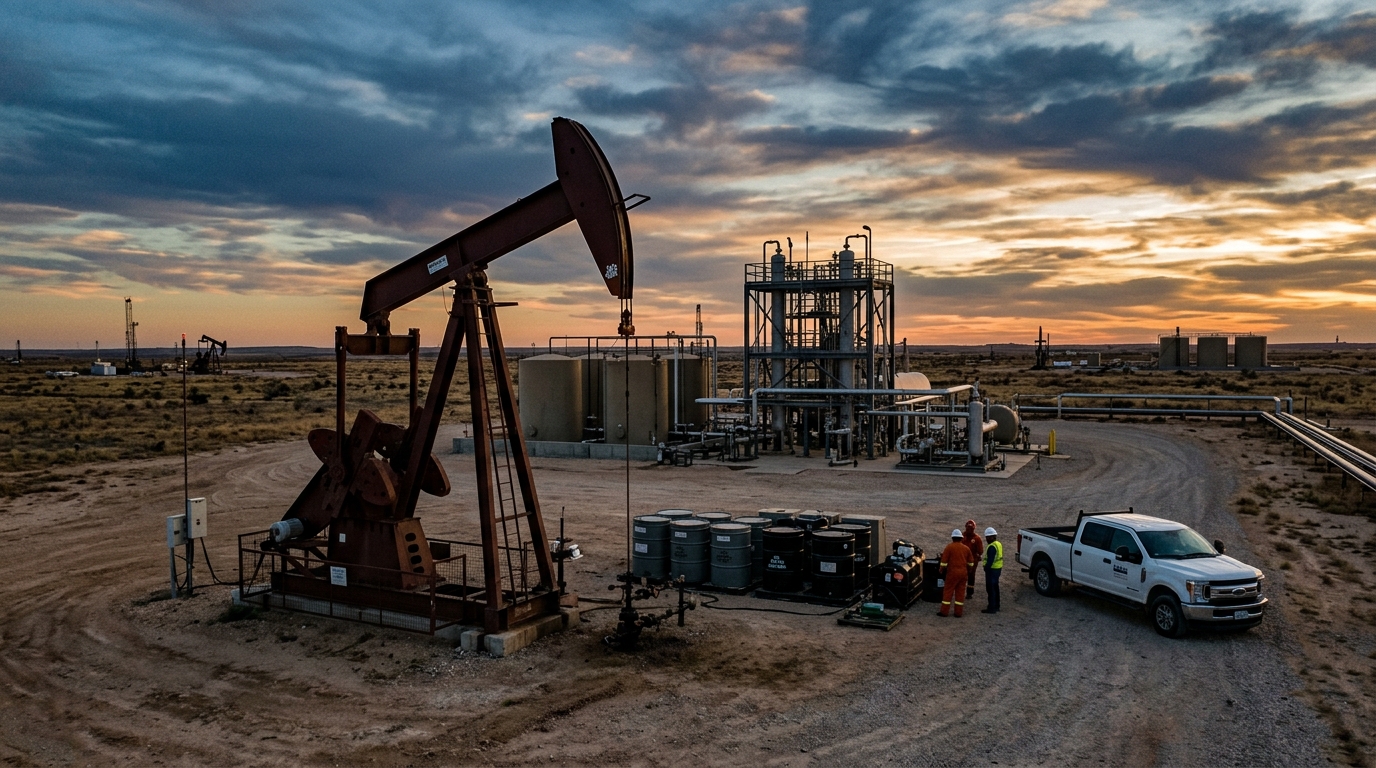
Reuters reported September 4, 2026 that Citadel has held talks to buy U.S. oil production assets, as the hedge fund and commodities trader considers expanding further into owning physical assets. The firm founded by Ken Griffin was among the bidders for WildFire Energy, which was put up for sale earlier this year by buyout firms Warburg Pincus and Kayne Anderson. Magnolia Oil and Gas ultimately won the auction, agreeing to buy the Eagle Ford operator in South Texas for $4.06 billion. Citadel lost that specific bid. But the WildFire engagement was among a handful of talks Citadel has had in recent weeks with private equity firms that own exploration and production companies about buying oil-weighted assets. The auction loss is almost beside the point.
The Bull Case for Owning Barrels
U.S. shale has become particularly attractive this year because its barrels do not need the Strait of Hormuz, Bab el-Mandeb, or another overseas chokepoint to reach Gulf Coast refineries and export terminals. Middle East disruptions have kept crude prices elevated and pushed U.S. producers to some of their strongest earnings in years. Griffin made his view explicit in April. At the Semafor World Economy conference in Washington, Griffin said the global economy is headed toward a recession if the Strait of Hormuz stays shut for much longer: “Let’s assume [the strait is] shut down for the next six to 12 months, the world’s going to end up in a recession. There’s no way to avoid that.”
That is not an academic view from someone watching the crisis on a terminal. Owning U.S. production gives a commodities firm direct exposure to the barrels that become more valuable when overseas supply gets disrupted. Griffin is not betting on oil prices. He is building a position that pays off structurally as long as the geopolitical friction persists.
The Bear Case
Operating shale wells is genuinely different from trading them. Hedges have basis risk, management teams need capital discipline, and a firm that has never run a drilling program can overpay for assets at exactly the wrong moment in the price cycle. Oil prices have remained below their recent peaks even as prospects for a quick reopening of the Strait of Hormuz have faded, which means the tailwind that makes U.S. production look attractive today could compress quickly on any diplomatic breakthrough. Citadel would be acquiring operational complexity at a cyclical high in acquisition multiples.
The Evidence: Citadel Has Already Done This in Gas
This is not a cold start. Reuters reported that Citadel bought Paloma Natural Gas from EnCap Investments in February 2025, renamed it Apex Natural Gas, and then acquired further assets, including assets from Comstock Resources and Azul Resources. The template is clear: buy a platform with an existing management team, then bolt on additional acreage. For Citadel, buying a platform like WildFire would have offered not just producing assets but also an existing management team to operate them and any future acquisitions. WildFire was a fit precisely because of what it came with, not just what it produced.
What Investors Are Missing
The conversation around this deal has focused on Citadel’s ambitions. The more consequential implication is what it says about the competitive landscape for acquisition targets. Citadel is hardly alone: Reuters reported that Vitol in July agreed the sale of its VTX Energy Partners U.S. shale venture, and that Gunvor has been in talks to buy assets in the Haynesville shale for more than $1 billion. When the largest commodities trading firms compete directly with public E&P companies for the same assets, they bring a cost of capital shaped by trading profits rather than equity dilution. Public drillers issuing stock to fund acquisitions are structurally disadvantaged in that auction. With Citadel having already established a natural gas platform and a demonstrated willingness to compete for multi-billion-dollar oil assets, its energy portfolio is likely to keep growing.
Stocks to Watch
Magnolia Oil and Gas (MGY) won WildFire but now carries the integration risk and the debt load that comes with a $4.06 billion deal. In its July 20, 2026 announcement, Magnolia said WildFire adds roughly 53,000 barrels of oil equivalent per day, about 70% oil, and approximately 810,000 net acres in Giddings. The asset quality is strong. The question is whether the public market rewards a mid-cap driller taking on that leverage while a better-capitalized private buyer was in the same auction.
Comstock Resources (CRK) sold assets to Citadel’s Apex last December and repositioned toward the Texas side of the Haynesville. It is now both a reference point for how trading firms value gas acreage and a potential target for the next bolt-on if Citadel’s appetite continues.
SPDR S&P Oil and Gas Exploration ETF (XOP) is the broadest proxy for sentiment across the shale patch. If private capital from trading firms keeps pushing acquisition multiples higher, the public E&P universe gets a valuation floor it has not had from traditional M&A alone. That is not yet in consensus thinking on the sector.