
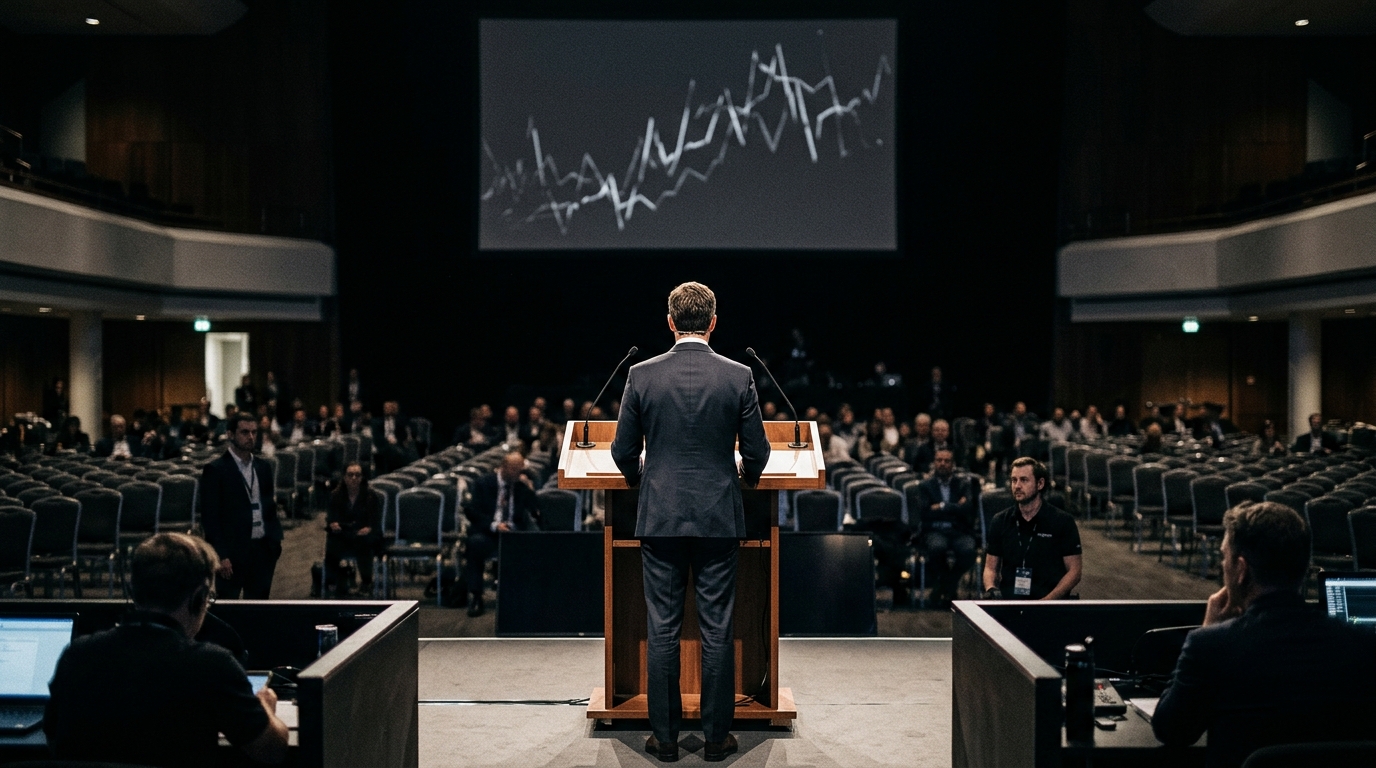
Most pre-event risk management assumes you know something about the speaker. You have prior press conferences, prepared remarks, a pattern of dissent or consensus. Going into Friday morning, active traders have almost none of that.
Kevin Warsh became Fed Chair on May 22, 2026, and under his tenure the Fed has pulled back on telegraphing its intentions ahead of meetings, meaning a major speech from this chair carries genuine information value that his predecessors trained markets to expect in advance. That is not a minor detail. It is the entire position-sizing problem heading into Friday.
What the Data Delivered
US consumers reined in spending in July as inflation remained stubbornly high, with real consumer spending essentially flat from the month prior, a sharp slowdown from a 0.4% gain in June. The PCE price index rose 0.2% month-over-month and 3.7% year-over-year. Core PCE, excluding food and energy, was up 0.2% on the month and 3.3% year-over-year.
The headline beat matters for one specific reason: it removes a potential argument for patience. A miss would have given the doves a clean talking point Friday. Instead, the July reading does little to settle the debate; core PCE remained unchanged from June on a year-over-year basis, and headline stayed at 3.7%.
The Backdrop Warsh Inherits
This is not a clean podium to step up to. The Fed voted 9-3 to hold rates steady at 3.5% to 3.75% at its July meeting, with dissenters Beth Hammack of Cleveland, Neel Kashkari of Minneapolis, and Lorie Logan of Dallas each calling for a 25 basis-point hike. It was the first time since the September 2016 FOMC meeting that three members simultaneously dissented in favor of a rate hike.
Boston Fed President Susan Collins said Tuesday the Federal Reserve will need to raise interest rates soon unless incoming data show a continued decline in inflation, which has become a pervasive concern for businesses and households. She is not a current voting member, but her comments reinforce the hawkish momentum around Warsh’s address.
The Fed’s policy rate, currently in the 3.5% to 3.75% range, has been on hold since December as officials waited for inflation to ease. With headline PCE holding at 3.7% for a second consecutive month, that wait is getting harder to justify internally.
Front End Versus Long End: The Trade Structure
The distinction that matters most for active positioning is where the risk actually lives. The 2-year Treasury is priced for the rate path over roughly the next two FOMC decisions. The 30-year reflects fiscal sustainability, term premium, and long-run inflation expectations. The 30-year yield hit a 19-year high this month even as September rate-hike odds eased, because bond investors are increasingly pricing long-term US debt on fiscal sustainability rather than Fed policy alone. That split means TLT, which is duration-heavy, faces a different risk than a front-end position in rate-sensitive equities tracking September hike probability.
The risk profile of Friday’s speech is asymmetric: a genuinely neutral address moves little; a speech that reads as hawkish triggers rapid repricing in rate-sensitive equities and long bonds; a speech perceived as dovish could produce a sharp dollar decline and a yield drop. Neutral is not the safe outcome. It is the priced-in outcome. That asymmetry should dictate size, not direction.
VIX Term Structure and Position Sizing
Leading into Jackson Hole, implied volatility indices can spike; traders buying options before the speech are betting on a move, and after the speech volatility typically normalizes unless the news is genuinely shocking. The practical implication: the cost of hedging through Friday close is elevated, and holding large directional exposure through the keynote without a defined exit is paying a premium for uncertainty rather than for a view.
With September hike odds sitting near one-in-three, the market has essentially priced a hold but left room for a surprise. Bank of America’s August global fund manager survey described investors as unusually confident in a “no landing” backdrop heading into Warsh’s debut, a reminder that the expected outcome can become the crowded one. Experienced traders recognize that the expected outcome is rarely the one that generates intraday opportunity. The question is not whether to have a position but how large it should be given that even Warsh may not have decided what he will signal until he reaches the podium.
The Trader’s Lesson
Uncertainty about a speaker is not the same as uncertainty about an outcome. When you genuinely cannot model the signal, the disciplined response is to reduce size, define your exit before the event begins, and let the first 30 minutes of price action after the speech do the work of confirming which scenario materialized. Chasing the move after confirmation is slower than entering before it, but it costs far less when the surprise goes the other way. Friday is not the day to be a hero. It is the day to protect the capital you need to trade the month that follows.