
Not many stocks can drop 41% from an all-time high while simultaneously becoming fundamentally stronger businesses.
Constellation Energy is one of them.
CEG hit $412.70 at its 52-week peak. As of July 8, it’s trading near $244.52. That’s a drawdown that looks alarming in isolation. But the underlying business has undergone a transformation the stock price hasn’t fully processed yet, and July 30 earnings are the first real opportunity for the market to reassess the whole thing.
The Calpine Deal Changed the Company’s Scale
On January 7, 2026, Constellation completed its acquisition of Calpine Corporation in a cash and stock transaction for a purchase price of approximately $22 billion, including 50 million newly issued shares and $4.5 billion in cash. Calpine also owns and operates a generation fleet with approximately 23 gigawatts of generation capacity (after divestitures required by certain regulatory approvals).
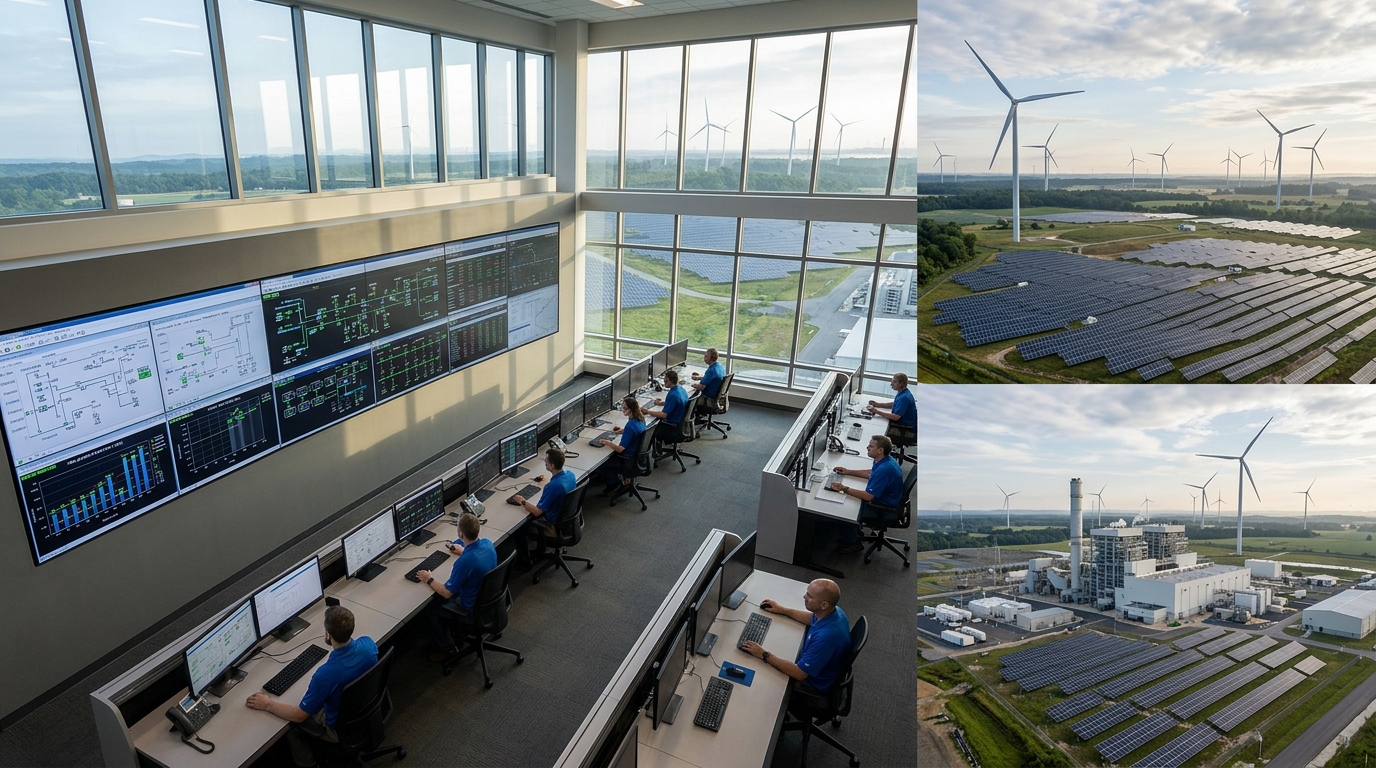
The result: Constellation is now the world’s largest private power producer, operating a roughly 55-gigawatt fleet that supplies approximately 10% of the nation’s clean energy and can power the equivalent of 27 million homes. That fleet spans nuclear, wind, solar, natural gas, and hydroelectric assets. This is not a pure-play nuclear story anymore. It’s a diversified clean power platform with institutional scale, signed hyperscaler contracts, and a specific strategy built around data center power demand.
The company also holds a 20-year power purchase agreement with Meta for 1,121 megawatts from its Clinton Clean Energy Center. Recently, Constellation filed license renewal applications with the Nuclear Regulatory Commission (NRC) to extend operations of Ginna Clean Energy Center and Nine Mile Point Unit 1 in upstate New York through 2049, which adds decades of revenue visibility that most utilities can’t offer.
Q1 Numbers Were a Different Business
Constellation reported Q1 2026 results on May 11. Revenue came in at $11.122 billion, up from $6.788 billion in Q1 2025. Net income attributable to common shareholders hit $1.590 billion versus $118 million a year earlier. Diluted EPS was $4.49, compared to $0.38.
Nuclear operations were a quiet standout: the fleet generated 40 million megawatt hours at a 92.3% capacity factor. A data center power agreement with CyrusOne in Texas was secured during the quarter; Constellation has publicly detailed a 380 MW agreement tied to the Freestone Energy Center site. Management reaffirmed full-year 2026 adjusted operating EPS guidance of $11.00 to $12.00 per share and projected free cash flow before growth of $8.4 billion for 2026 to 2027, rising to $11.5 to $13.0 billion by 2028 to 2029.
That cash flow trajectory is the number institutional holders are modeling. A company trading near $244 with $8.4 billion in near-term free cash flow before growth is a different math problem than the chart suggests.
The AI Power Demand Thesis Isn’t Hype
What ties CEG to one of the biggest structural themes in the market is electricity. Federal Energy Regulatory Commission staff have estimated U.S. data center demand will climb to 35 gigawatts by 2030, up from 19 GW in 2023. The EIA’s Annual Energy Outlook 2026 models data center server electricity use growing to 818 billion kilowatt-hours by 2050, more than 16 times the 2020 level.
Four AI hyperscalers collectively plan roughly $710 billion in 2026 capital expenditure. That spending requires electrons, and a lot of them. Nuclear is the only carbon-free, 24/7 baseload power source capable of matching that demand profile consistently. Tech giants have been signing nuclear capacity agreements at an accelerating pace. Thirty-eight countries have pledged to work together toward the goal of tripling nuclear capacity by 2050.
Constellation sits at the center of all of this. Its ‘powered land’ strategy in ERCOT, where the company is effectively co-locating generation with data center customers, is a legitimate competitive differentiator.
The Valuation Question
CEG currently trades at a forward P/E near 23x (per Zacks). The PEG ratio and “industry average PEG” figures cited in the original draft could not be reliably verified from a primary, consistent source, so they have been removed here.
Citi lowered its price target to $297 from $348 on July 1. Wells Fargo has maintained a Buy rating in recent notes. The broader analyst consensus price target in mid-2026 has been in the high-$350s (around $358, per a compilation of analysts polled by S&P Global).
The stock fell 11.5% in the past month, worse than the Oils-Energy sector’s 7.07% decline. That relative underperformance against a weak sector is where some of the most interesting positioning situations develop. When a fundamentally stronger business sells off harder than its sector, it’s worth asking why.
The Risk Picture
The Calpine acquisition added meaningful leverage, including the assumption of approximately $12.7 billion of Calpine net debt as described at deal announcement. The Calpine lockup schedule also matters: per the deal filings, 50% of the shares received by certain significant Calpine stockholders were set to be released from lock-up on June 30, 2026, with the remainder on June 30, 2027. That first release introduced potential incremental supply that could contribute to price softness.
Integration execution is a real overhang. Absorbing a large gas-and-renewables fleet while maintaining a ~92% nuclear capacity factor is an operational challenge that shouldn’t be dismissed. Any slippage on the nuclear fleet, or adverse regulatory developments, would pressure both earnings and the stock multiple simultaneously.
Technical Structure
CEG has been trading between $236 and $248 over the past week. The 52-week range sits between $228.63 and $412.70.
The critical question is whether the $228 to $236 zone holds as support. A break below $228 would put the 52-week low at risk and likely accelerate selling from momentum funds. A recovery above $260 would suggest the worst of the post-Calpine dilution pressure has been absorbed and open a path toward the $280 to $297 zone where some analyst targets are clustered.
Scenario Framework
Bull Case: July 30 Q2 earnings deliver EPS at or above the $2.24 consensus with revenue near the $7.51 billion estimate. Full-year guidance is reaffirmed. Management provides constructive commentary on hyperscaler pipeline expansion and debt reduction trajectory. Calpine integration is tracking ahead of plan. Stock re-rates toward $280 to $297 in the weeks following.
Base Case: Q2 earnings are solid, not transformative. Nuclear capacity factor holds near 92%. Debt reduction commentary reassures institutional holders. Stock grinds from current levels toward $260 to $270 through August as the Calpine integration story matures and energy sector sentiment stabilizes with oil prices.
Bear Case: Q2 earnings show margin compression from Calpine integration costs exceeding expectations. Nuclear refueling outage days run above forecast. Debt metrics draw heightened investor scrutiny. Energy sector stays soft. CEG tests the $228 low and potentially breaks below it, opening a path toward $210 to $215 under risk-off conditions.
Active Trader Framework
July 30 is 21 days away. The consensus expects $2.24 EPS, a 17.28% year-over-year improvement, and $7.51 billion in revenue, a 23.16% increase. Those aren’t heroic expectations given the Calpine contribution. What matters is management’s language on three things: the hyperscaler pipeline, free cash flow progress, and debt reduction trajectory. Those items, not the headline EPS number, will define how institutional holders position after the report.
The setup here is unusual. You have a company that just became the world’s largest private power producer, reaffirmed $11 to $12 in full-year adjusted operating EPS, holds a 20-year Meta nuclear PPA for 1,121 MW, and trades about 41% below its 52-week peak. That kind of compression doesn’t mean the stock goes up immediately. It means the asymmetry is worth thinking about carefully before July 30 arrives and the market gets its next data point.
For informational and educational purposes only. Not investment advice. Trading involves risk, including loss of principal.