
September 15, 2026
Bonus Content: ExxonMobil’s 20th Angola Find Changes the Math
This Is the Early Side of the Gold Cycle
Gold is having its moment again.
Central banks are buying. Analysts are raising forecasts. Investors are looking for protection as the usual risks pile up.
But the supply side is where the story gets interesting.
Major new gold discoveries are becoming harder to find. Mature regions have been drilled for decades. And when gold cycles heat up, attention rarely stays with the obvious names forever.
It starts with the producers.
Then it moves deeper.
Earlier-stage projects. New districts. Active exploration. The places where the next round of supply might actually come from.
One small explorer is now drilling in Oceania, a frontier region still known for large, undeveloped and high-potential mineral systems.
The gold cycle may already be pulling attention in that direction.
ExxonMobil’s 20th Angola Find Changes the Math
Five days ago, ExxonMobil and Angola’s National Oil, Gas and Biofuels Agency announced a new hydrocarbon find at the Vicango East-01 exploration well in offshore Block 15. It was the third discovery in the prolific block in the past four years, and the twentieth over roughly three decades of operations in the block. XOM shares closed higher on the news. That reaction tells you something, but not the most important thing.
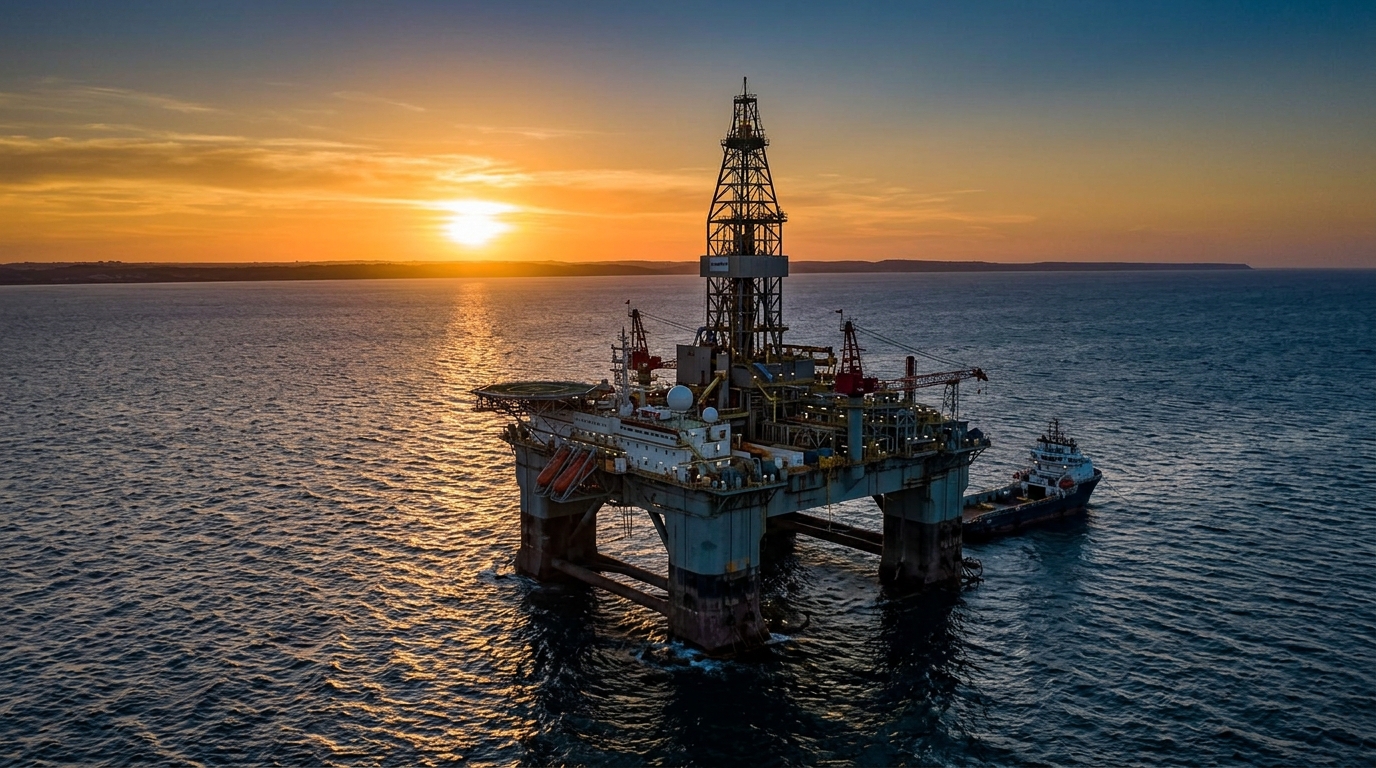
The real story is infrastructure. The well encountered about 25 metres of high-quality, hydrocarbon-bearing sandstone with porosity of 22%, drilled in 940 metres of water by the Valaris DS-9 drillship. Those are strong reservoir numbers. But what makes Block 15 genuinely valuable is that every new barrel found there does not require building a new production platform. ExxonMobil Angola chief executive Brian Unietis has emphasized that new finds can increase the value of existing infrastructure. That is the margin story in one sentence.
ExxonMobil holds a 36% operating interest in Block 15. The block has produced more than 2.7 billion barrels of oil since production began in 2003. Near-field discoveries on a mature, fully depreciated platform convert directly to cash flow at a cost structure no greenfield project can match.
Angola is not Exxon’s only deepwater expansion front. The company has described about $1.5 billion of investment to boost operations in Nigeria’s deepwater, including work around Usan and Owowo. In Nigeria, a $1 billion commitment tied to the Usan Infill Project is expected to contribute up to 40,000 barrels per day of incremental production, with first oil expected within about 18 months of identifying the investment opportunity. Meanwhile, in Guyana, ExxonMobil and its partners reported that daily production reached 900,000 barrels per day in November 2025 after startup of the fourth project, Yellowtail. Breakeven costs in Guyana have been described by project partners as ranging from about $25 to $35 per barrel across the early developments, supporting strong margins even at moderate oil prices.
The logic connecting Angola, Nigeria, and Guyana is the same: ExxonMobil is reinforcing its strategic focus on high-value offshore assets as global oil majors prioritize projects with longer production life cycles and stronger operational efficiency. Deepwater wells are expensive to drill but cheap to operate once infrastructure is in place. The per-barrel cost of an incremental Vicango East barrel is a fraction of what a standalone greenfield would require.
Risks to Monitor
New exploration takes time, and the path from discovery to meaningful production can stretch for years depending on tieback options, appraisal, and approvals. Angola’s fiscal position adds a layer of concern: state producer Sonangol secured $2.65 billion in financing from a bank syndicate in June 2026. A financially stressed host-country partner can complicate timelines and cost-sharing. Commodity price volatility remains the other variable no infrastructure advantage can fully neutralize.
Bottom Line
The Vicango East-01 announcement is not simply a reserve replacement event. It is evidence that ExxonMobil’s deepwater infrastructure, built over decades in Angola, is now generating discoveries at a lower marginal cost than any comparable offshore program. Management has framed its long-term plan around delivering return on capital employed above 17% by 2030, and incremental near-field barrels in a fully built-out deepwater block are among the highest-return barrels the company can produce. That is what investors should understand today that the daily price move does not show.