By Sophie Kiderlin
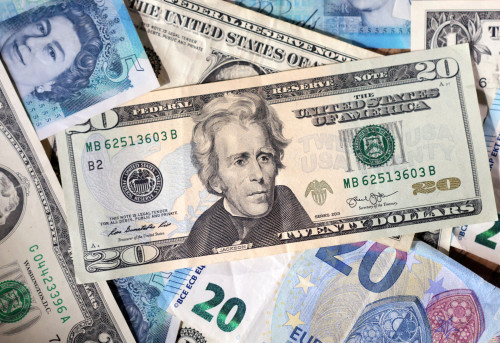
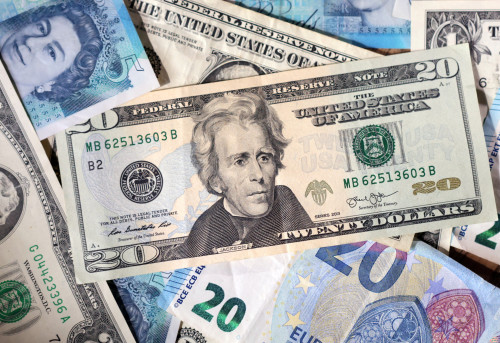
LONDON, March 6 (Reuters) – The U.S. dollar edged higher on Friday and was set for its steepest weekly gain in more than a year as the escalating conflict in the Middle East drove demand for safe-haven assets.
The euro and yen remained on the back foot as the crisis drove oil prices ever higher, spurring inflation risks in economies dependent on energy imports and upending policy expectations for the Federal Reserve and other central banks.
Earlier hopes for a de-escalation of the Iran war gave way to fresh uncertainty and concerns about how long the conflict could drag on. Israel on Friday carried out heavy air strikes on Hezbollah-controlled southern suburbs of Beirut and started a “broad-scale” wave of attacks against infrastructure in Tehran, while Iran said it targeted the heart of Tel Aviv with missiles.
U.S. President Donald Trump on Thursday said he wanted to be involved in choosing Iran’s next head of state after U.S. and Israeli air strikes killed Supreme Leader Ali Khamenei in the early moments of the war. He also encouraged Iranian Kurdish forces in Iraq to launch attacks against Iran as the conflict widened.
Lee Hardman, senior currency analyst at MUFG, said that the dollar was expected to strengthen further near-term.
“The key driver will ultimately be the scale of the energy price shock. Obviously, if we were to see oil prices continue to jump higher and remain higher for longer, then that would be the most supportive outcome for a stronger dollar.”
“Whereas if the conflict started to show signs of kind of petering out, then oil prices started to drop back, then in that scenario, we could see a quicker reversal of the dollar strength we’ve seen,” Hardman said.
The dollar index, which measures the greenback against a basket of currencies, was trading 0.29% higher at 99.334, on course for a 1.7% gain this week that would be the most since September 2024.
The euro was last down 0.4% on the day at $1.1564 and set for an around 2.1% slide this week, its biggest since September 2022. The yen fell roughly 0.2% to 157.86 per dollar, while sterling eased 0.16% to $1.3331.
The greenback was one of a handful of winners in a volatile few sessions this week that have dragged stocks, bonds and, at times, even safe-haven precious metals lower.
“Broadly speaking, we are seeing most clients reduce risk across both G10 and EM currencies,” said Nathan Swami, head of FX trading for Japan, Asia North & Australia and Asia South at Citi in Singapore.
SHIFTING MACRO BACKDROP
The spike in energy prices brought on by the Iran war has stoked fears of a resurgence in inflation, prompting shifts in rate outlooks for major central banks.
Traders have pushed back the time frame for the next easing by the Fed, with expectations for a June cut last only at around 30.5% according to CME Group’s FedWatch tool. Rate-easing expectations from the Bank of England have also been pared back, while money markets increased bets on European Central Bank rate hikes this year.
While the Iran war was firmly front of mind, markets on Friday also looked to February’s U.S. employment report. Nonfarm payrolls likely increased by 59,000 jobs last month after a 130,000 rise seen in January, a Reuters survey of economists predicted. The unemployment rate is expected to have held steady at 4.3%.
Hardman said a stronger-than-expected print would likely trigger “a further scaling back of Fed rate cut expectations,” as well as potentially prompting a global bond market selloff and additional dollar strengthening.
Figures on Thursday showed the number of Americans filing new applications for unemployment benefits was unchanged last week, while layoffs dropped sharply in February, consistent with stable labor market conditions.
In cryptocurrencies, bitcoin fell 1.96% to $69,803.16, and ether declined 1.82% to $2,044.51.
(Reporting by Sophie Kiderlin in London and Rocky Swift in Tokyo; Editing by Shri Navaratnam, Kevin Buckland, Philippa Fletcher)