By Laura Matthews and Samuel Indyk
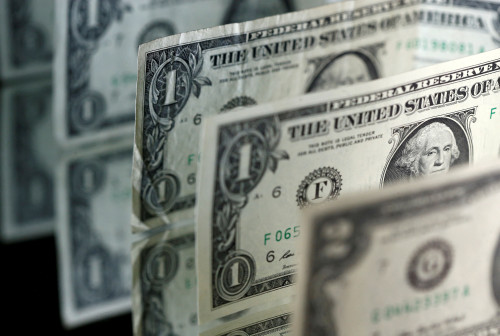
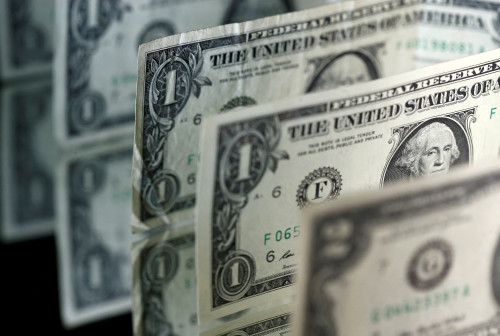
NEW YORK/LONDON, March 24 (Reuters) – The dollar edged higher on Tuesday as investors doubted a quick end to the Middle East conflict, partly reversing Monday’s optimism-fueled market action.
Data released on Tuesday showed U.S. business activity slowing to an 11-month low in March as the war raised energy and other input costs, reinforcing concerns that inflation could accelerate.
“I think that many people recognized what the U.S. and Iranian officials say is part of the psych operations related to war,” said Marc Chandler, chief market strategist at Bannockburn Capital Markets in New York. “The market is less optimistic than it was yesterday. Broadly we’re consolidated within yesterday’s ranges.”
Sterling fell 0.51% to $1.3387 after jumping nearly 1% on Monday, while the euro was last down 0.27% against the dollar at $1.1585 after gaining 0.4% in the previous trading session.
Markets rallied Monday after U.S. President Donald Trump said that the U.S. and Iran had held “very good and productive” conversations about a “complete and total resolution of hostilities in the Middle East.” Iran denied it had engaged in any direct negotiations. Trump’s comment gave investors hope for a short war, but now markets seem to be taking a more measured tone.
EARLY SIGNS OF ECONOMIC IMPACT
Survey data on Friday showed early signs that the war was starting to hit the global economy. Business activity in the euro zone and Britain fell to multi-month lows, suggesting Europe was already suffering economically from the conflict.
“While U.S. PMIs echoed the pattern seen in the earlier euro zone and UK prints of firmer manufacturing and softer services, leading to lower composites, the slowdown was more muted in the U.S., lending support to the dollar,” said Uto Shinohara, senior investment strategist at Mesirow Currency Management in Chicago.
The yen was 0.2% softer at 158.75 a dollar. That left the dollar index, which measures the U.S. currency against a basket of peers, up 0.18% at 99.36 after dipping 0.4% to near a two-week low on Monday.
The index has strengthened 1.7% this month, on track for its strongest monthly gain since October, as the conflict fueled safe-haven demand.
SEVERE DISRUPTION OF ENERGY TRADE
Contrasting comments and a new wave of fighting have left markets in flux, with investors mindful that the war has all but halted shipments of about one-fifth of the world’s oil and liquefied natural gas through the Strait of Hormuz.
Oil prices rose again on Tuesday after plunging more than 10% on Monday.
The expected inflationary impact from the jump in energy prices has also prompted markets to scale back expectations of rate cuts from the Federal Reserve.
Markets have priced in at least two hikes each from the European Central Bank and the Bank of England this year.
The two-year U.S. Treasury yield, which typically moves in step with Fed rate expectations, rose 7.7 basis points to 3.908% on Tuesday after dropping over 6 bps on Monday. [US/]
(Reporting by Laura Matthews in New York and Samuel Indyk in London,’ Additional reporting by Jiaxing Li in Hong Kong and Ankur Banerjee in Singapore; Editing by Kevin Liffey, Barbara Lewis and Ros Russell)