By Saqib Iqbal Ahmed
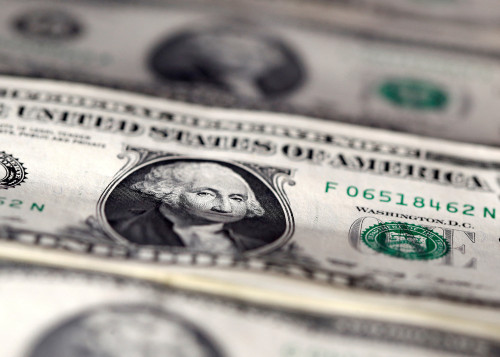
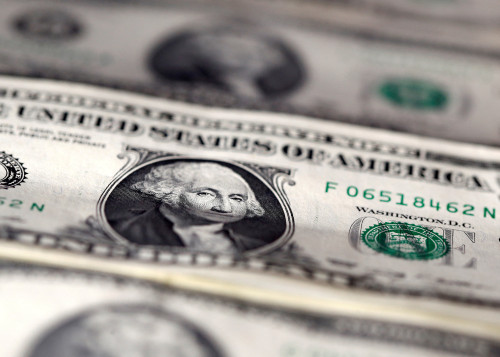
NEW YORK, Dec 4 (Reuters) – The U.S. dollar edged lower, extending its recent bout of weakness, as investors braced for a Federal Reserve rate cut next week, while the yen gained on expectations that the Bank of Japan will raise rates this month.
Investors widely expect a rate cut when the Fed meets next week and will be watching for signals on the policy path ahead. Traders are pricing nearly a 90% chance of a quarter-point rate cut next week, LSEG data showed.
“Traders are doubling down on bets the Fed will cut rates and stop short of delivering an overtly-hawkish message at next week’s meeting,” Karl Schamotta, chief market strategist at Corpay, said.
The dollar index, which measures the U.S. currency against six rivals, was down 0.1% at 98.832, its tenth straight down day. It was languishing near a five-week low and remains down nearly 9% for the year.
The euro rose less than 0.1% to $1.1668, near its strongest level since October 17, after data on Wednesday showed business activity in the euro zone expanded at its fastest pace in 30 months in November.
U.S. data on Thursday that showed the number of Americans filing new applications for unemployment benefits dropped to the lowest level in more than three years last week, allaying fears of a sharp deterioration in labor market conditions, did little to sway expectations for a Fed rate cut next week.
The dollar has also come under pressure in recent days as investors have also been weighing the prospect of White House economic adviser Kevin Hassett taking over as Fed Chair after Jerome Powell’s term ends in May. Hassett is expected to push for more rate cuts.
U.S. President Donald Trump said this week he will unveil his pick to succeed Powell early next year, extending a months-long selection process despite previously claiming he had already decided on a candidate.
A move to appoint Hassett could pressure the dollar, analysts have said, with bond investors expressing concerns to the U.S. Treasury that Hassett could aggressively cut rates to align with Trump’s preferences, the Financial Times reported.
“Seasonal factors are also playing a role — historically, the dollar has often declined into year-end — and the yen’s modest appreciation has added fuel to the move,” Schamotta said.
YEN REBOUND
The yen was up 0.4% at 154.7 per dollar, its highest since November 17, on expectations that the Bank of Japan will raise rates when it meets later this month.
Three government officials told Reuters that the BOJ is likely to raise rates in December, although what comes after remains uncertain, with markets only fully pricing in one more rate hike next year and around a 50% chance of another.
“A still-cautious BOJ, attractive carry for long dollar/yen and persistent topside pressure to JGB yields on potential fiscal expansion is likely to keep the pressure on yen weakness,” Chidu Narayanan, head of macro strategy in APAC at Wells Fargo, said.
Sterling rose 0.2% to $1.338, hovering near its highest point since October 24, as an upward revision of business activity data painted a brighter picture of the economy.
The Swedish crown dipped against the euro and dollar after the pace of annual inflation slowed in November.
Leading cryptocurrency bitcoin took a breather after rising more than 8% over the last two sessions, slipping 1% to $92,528.
(Reporting by Saqib Iqbal Ahmed; Additional reporting by Samuel Indyk and Ankur Banerjee; Editing by Andrew Heavens and Andrea Ricci)